
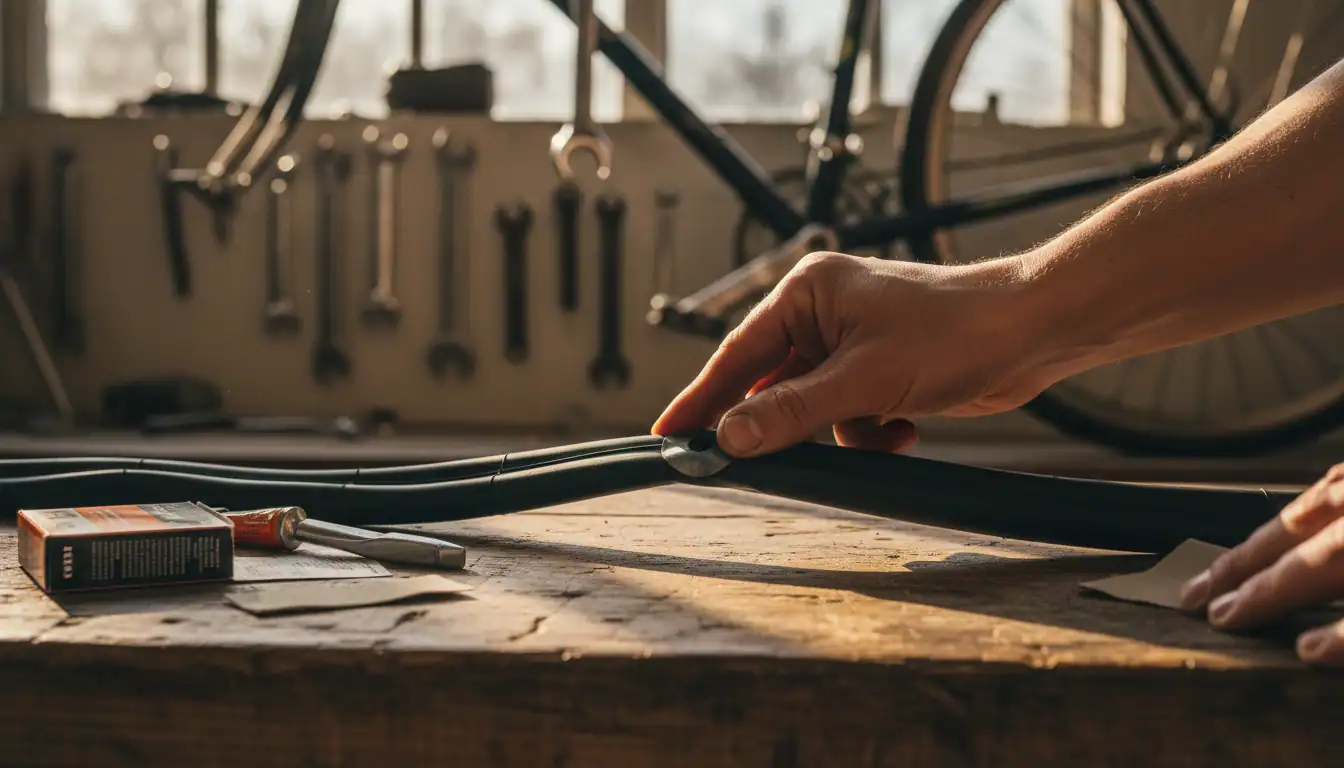
A flat tire is manageable roadside — if you’ve patched a tube before. If you haven’t, these step-by-step instructions will walk you through it. We’ve covered everything from the standard vulcanizing patch method to glueless emergency patches and tubeless tire fixes.
🔧 Tools & parts you’ll need
Keep this in your saddle bag and a flat is a five-minute fix. As an Amazon Associate we earn from qualifying purchases, at no extra cost to you.


 Continental Presta Inner Tubes
carry a spare in your tire size for when a patch won’t do.
VIEW LATEST PRICEWhat You’ll Need
For a standard vulcanizing patch repair:
- Tire levers (2-3 plastic levers — metal levers can pinch the tube)
- Patch kit with vulcanizing cement and patches (see recommended kits below)
- Container of water or puddle to find the puncture
- Sandpaper or metal roughing file (most kits include one)
- Clean rag or paper towel
- Floor pump or mini pump / CO2 inflator
Our Pick
A mini pump is a must-carry for finishing a roadside flat repair, along with a spare tube or patch kit and tire levers. We researched and compared the lightest and highest-pressure options to find the ones actually worth carrying on every ride.
See our top picks →Glueless vs. Glue Patch: Which Should You Use?
Before you start, choose the right method for your situation:
| Method | Best for | How long it lasts | Time to apply | Ease of use |
|---|---|---|---|---|
| Vulcanizing patch (glue) | Permanent roadside or home repair | Permanent — tube outlasts the patch | ~10 min (2-5 min drying) | Moderate — requires dry conditions |
| Glueless / self-adhesive patch | Emergency fix to get you home | Temporary (days to weeks depending on patch quality and tire pressure) | ~3 min | Very easy — peel and press |
| Tubeless plug / sealant | Tubeless tires only | Often permanent for small holes | Under 2 min | Easy once practiced |
For rides longer than 20 miles, or if the patch needs to last, use a vulcanizing patch. Glueless patches are excellent emergency tools to carry — use them on the road to get home, then do a proper vulcanizing repair before your next ride.
How to Patch a Bike Tire: Step by Step
- Remove the wheel. For quick-release wheels: flip the lever open and unscrew slightly if needed. For bolt-on wheels: use a 15mm wrench. Shift to the smallest cog (rear) before removing the rear wheel to make it easier to get the chain out of the way. Let all air out of the tube first by depressing the valve core.
- Remove the tire and tube. Insert a plastic tire lever under the tire bead at any point and hook the lever onto a spoke. Insert a second lever 4-5 inches away and slide it around the rim to pop the bead off one side. With the tire half off, reach inside and pull out the inner tube. Leave the valve in the rim until the tube is free, then push the valve through the hole.
- Locate the puncture. Inflate the tube slightly — just enough to give it shape. Hold it close to your cheek and slowly rotate — you’ll feel escaping air on your skin for small leaks. For hard-to-find leaks, submerge the tube in water (a puddle, water bottle, or container) and look for bubbles. Mark the hole with a pen or fingernail before deflating. Also check inside the tire: run your fingers carefully around the inside to find the glass, thorn, or staple that caused the flat. Remove it — if you don’t, you’ll flat again immediately.
- Prepare the patch surface. Deflate the tube completely. Using the sandpaper or metal rougher from your patch kit, roughen an area slightly larger than the patch you’ll use. The surface should feel dull, not smooth. Remove debris with a clean rag. Don’t touch the roughened area with your fingers — skin oils reduce adhesion.
- Apply vulcanizing cement. Squeeze a thin, even layer of cement over the roughened area — enough to cover it and slightly beyond. Spread it thin with your finger or the tube cap. Wait 2-5 minutes until the cement goes from glossy to tacky. It should feel slightly sticky but not wet. Don’t rush this step — wet cement causes patch failures.
- Apply the patch. Peel the foil backing off the patch (leave the clear film on top if present — it protects the patch and peels off later). Center the patch over the hole, press down firmly from the center outward. Hold firm pressure for at least 60 seconds. The goal is full contact across the entire patch surface, especially the edges.
- Inspect before reassembling. Inflate the tube partially and check the patch area — no air should escape. Also check the tire one more time: look at the tread and sidewalls for embedded objects, cuts, or anything poking through. A tire boot (a small piece of dollar bill, energy bar wrapper, or dedicated boot) placed inside the tire over a cut prevents the tube from bulging through and re-puncturing.
- Reinstall the tube and tire. Push the valve through the rim hole first. Work the tube into the tire evenly, then reseat the tire bead onto the rim starting at the valve and working around each side simultaneously. For the last section of stubborn bead: use your thumbs to roll the bead over — avoid tire levers here as they pinch the tube. Inflate to riding pressure (check the tire sidewall for the recommended PSI range) and check once more for leaks.
Patching a Tubeless Tire
Tubeless tires work differently — instead of an inner tube, sealant inside the tire plugs small punctures automatically while you ride. But larger holes and sidewall cuts need active repair.
Small punctures (thorn, nail, small glass): If your tire is losing pressure slowly, the sealant may not have fully sealed it yet. Add 2 oz of fresh sealant through the valve (remove the valve core first with a valve core tool), spin the wheel to distribute it, and ride. Small holes usually seal within a few minutes.
Larger holes (4-6mm): Use a tubeless plug kit (Dynaplug, Genuine Innovations, or similar). Insert the plug through the hole while the tire is still inflated — the plug fills the gap and sealant finishes the job. No dismounting the tire needed. Carry one of these on every ride.
Sidewall tears or large cuts: These usually can’t be sealed from the outside. Boot the tire from the inside (a small piece of reinforced material placed over the cut) and either convert back to tube or replace the tire. A clean dollar bill folded twice makes a functional emergency boot.
Related: if your Presta valve is losing air even after patching, see our guide on removable Presta valve cores — a loose valve core mimics a slow puncture. Similarly, Schrader valve issues are covered in our Schrader valve leaking guide.
Recommended Patch Kits
1. Maifede Bike Inner Tire Patch Kit – Best Value
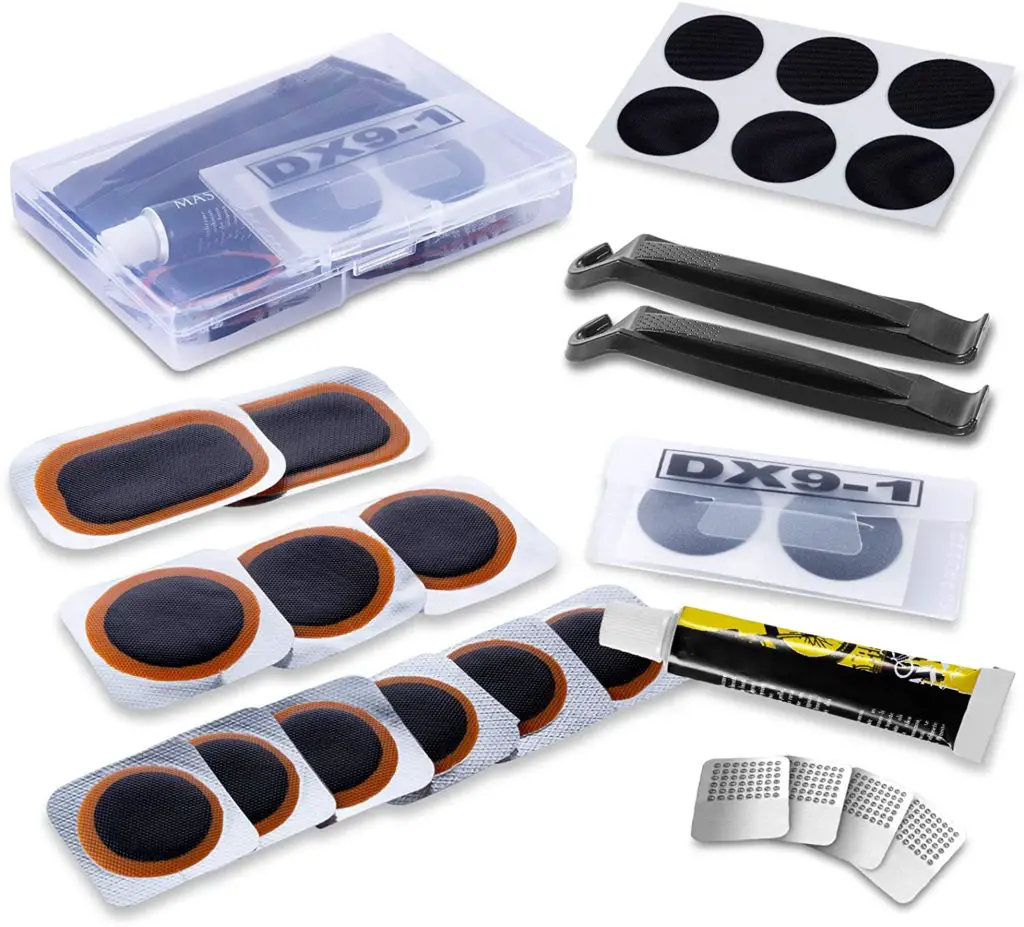
A solid all-in-one kit: includes 11 vulcanizing patches, 6 glueless patches, metal rougher, tire levers, and a storage tin. The vulcanizing patches are thin enough to fit back into the rim without creating a bulge. Good pick for road and mountain bike tubes. The included glueless patches are useful as backup emergency patches.
2. Elmer’s Rubber Cement – Best for Homemade Repair
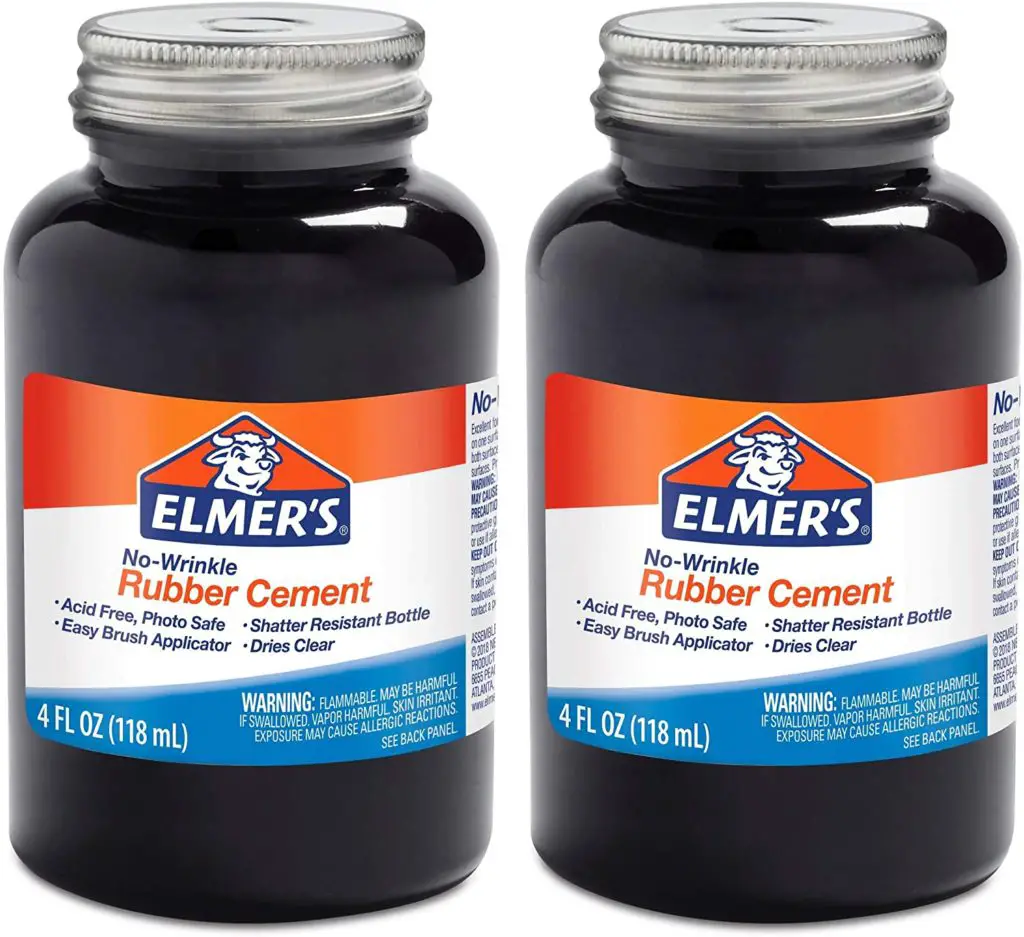
Rubber cement works as a DIY vulcanizing solution when your dedicated bike patch kit runs out of glue. Cut patches from an old inner tube, rough the surface, apply rubber cement on both the tube and patch, wait until tacky, press firmly. The repair is functional but slightly less durable than purpose-built vulcanizing cement — adequate for getting you home and back to the shop.
3. Duck Tape – Emergency Roadside Fix Only
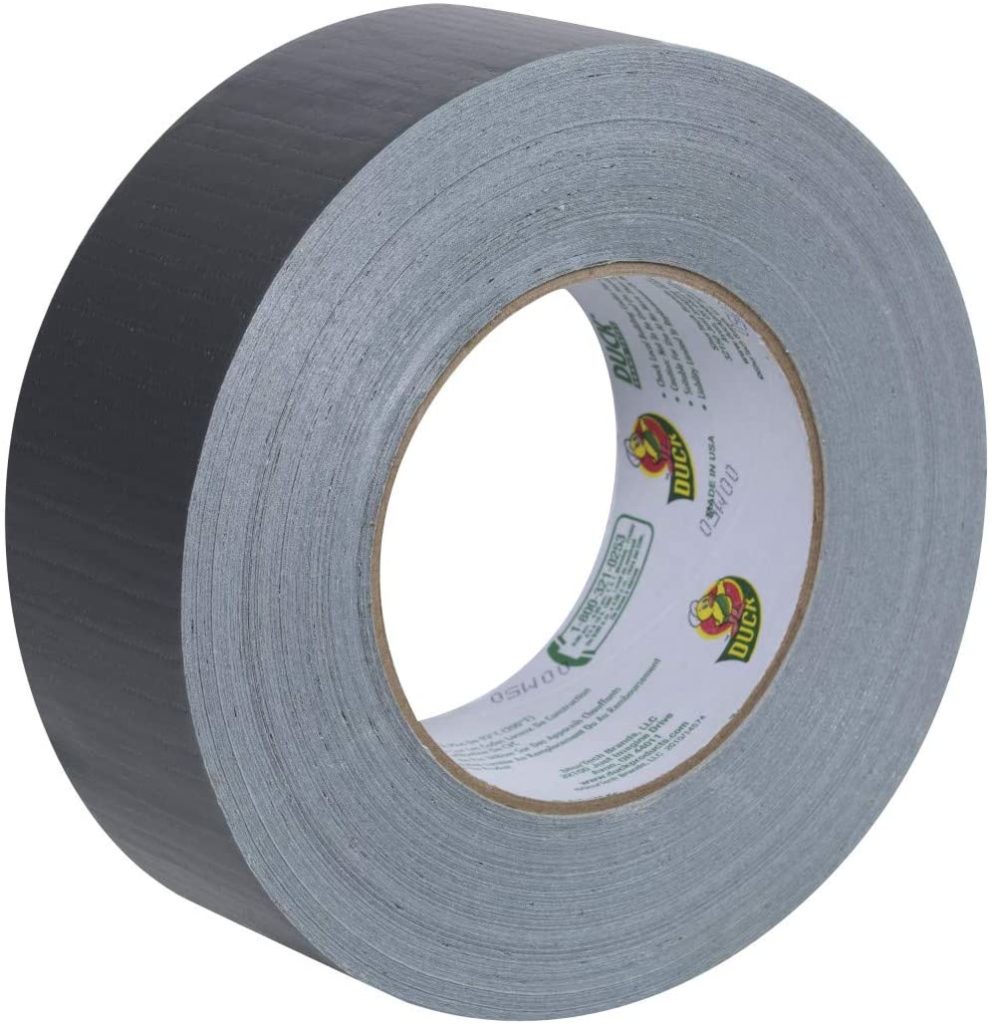
Duct tape works as a last-resort emergency tire boot — not applied to the tube itself, but placed inside the tire casing over a cut or tear to stop the tube bulging through. Fold it a few times for thickness, position it over the damage from inside the tire, then reinstall the tube. A clean dollar bill or energy bar wrapper works the same way. This gets you home slowly; replace the tire or do a proper repair before the next ride.
Riding Kit: What to Carry on Every Ride
- 1 spare inner tube (the right size for your wheel)
- 1 vulcanizing patch kit (Maifede, Park Tool VP-1, or Rema Tip Top)
- 2-3 plastic tire levers
- Mini pump or 1-2 CO2 cartridges
- For tubeless setups: tubeless plug kit (Dynaplug or similar)
A spare tube is faster than a patch roadside — swap the tube, get home, then patch the flat tube for future use. Carry both. For more on keeping your bike maintained, our bicycle grease guide covers the other maintenance task most riders overlook: greasing bearings, threads, and seatposts.
Frequently Asked Questions
How long does a bike tire patch last?
A properly applied vulcanizing patch is permanent — the chemical bond between the patch and the tube is as strong as the tube itself. The patch will outlast the tube in most cases. Glueless (peel-and-stick) patches are emergency-grade fixes – quality and pressure affect how long they hold, and they can start to lift well before a vulcanizing patch would. Don’t use glueless patches as permanent fixes.
Can you patch a bike tire without removing the wheel?
No — you need to remove the wheel to access the inner tube. There’s no way to properly roughen the puncture site, apply cement, and press the patch while the tube is inside the tire on the bike. The good news is that most wheel removals take under two minutes once you’ve done it a few times.
What if the tube has multiple holes?
You can patch multiple holes in one tube — just treat each puncture as a separate repair. However, if the tube has more than three holes, or if any hole is at or near the valve stem, replace the tube. A tube with multiple punctures is more likely to fail again under pressure, and tubes are cheap enough that replacement makes more sense.
Why does my bike tire keep going flat after patching?
The most common reasons: (1) You didn’t find and remove the object that caused the flat — glass, thorn, or staple still in the tire. Always check inside the tire before reassembling. (2) The patch didn’t seal fully — usually because the cement was applied wet or the surface wasn’t roughened enough. (3) There’s a second puncture you missed. Submerge the tube in water to check every inch. (4) The valve core is loose or the valve stem is cracked — see our Schrader valve guide or Presta valve core guide for valve-specific fixes.
🚲 Free: The Smart Bike Buyer’s Cheat Sheet
Get our 2-page PDF - budget tiers, the components that actually matter, and a 12-point used-bike inspection. We'll email you the download link. No spam, unsubscribe anytime.
By subscribing you agree to our Privacy Policy.
