
There are more bike types on the market today than ever before, and picking the wrong one means buying a bike you won’t actually enjoy riding. Road bikes, gravel bikes, mountain bikes, hybrids, e-bikes, fat tire bikes, cruisers, BMX, folding bikes, triathlon bikes, recumbent bikes, and more — each one is built around a specific kind of riding. This guide cuts through the confusion so you can find the right fit on the first try. Once you know the type, our bike size calculator will help you nail down the right frame size too.
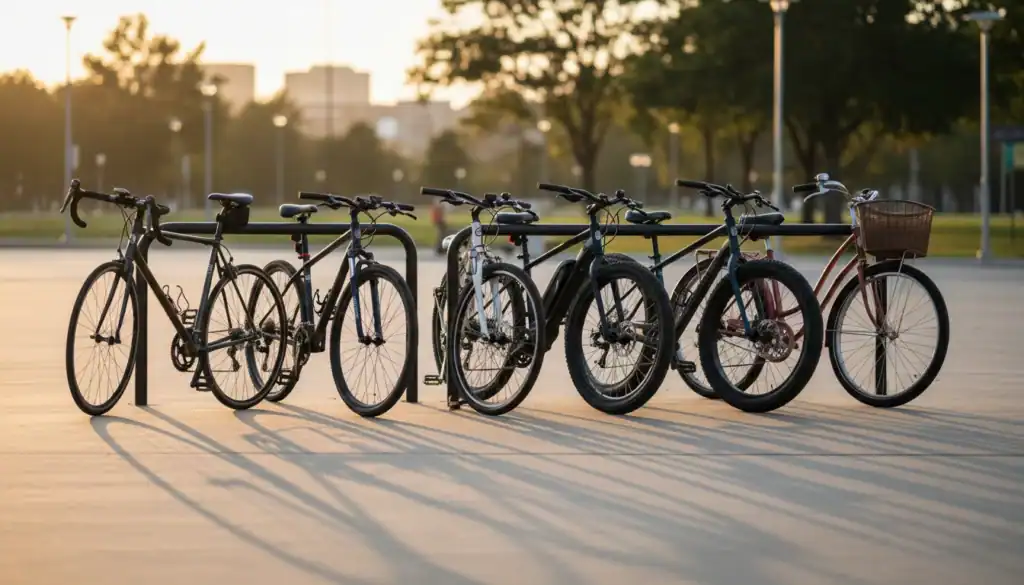
All Bike Types: Quick Comparison Table
Not sure which category fits you? This table covers every major bike type at a glance — terrain, tire width, typical price range, and who it’s actually for.
| Bike Type | Best For | Tire Width | Price Range | Key Feature | Example Model |
|---|---|---|---|---|---|
| Road bike | Paved roads, speed, fitness | 23-32mm | $300-$3,000+ | Drop bars, light frame | Trek Domane, Giant Contend |
| Gravel bike | Mixed terrain, adventure riding | 35-50mm | $500-$4,000+ | Flared drop bars, tire clearance | Trek Checkpoint, Salsa Warbird |
| Mountain bike | Off-road trails, rough terrain | 2.0-2.5 inches | $400-$5,000+ | Suspension, wide tires | Trek Marlin, Specialized Rockhopper |
| Hybrid bike | Commuting, casual riding, paved paths | 28-42mm | $300-$1,500 | Flat bars, upright position | Trek FX3, Giant Escape |
| Electric bike (e-bike) | Commuting, hills, longer distances | Varies | $600-$5,000+ | Motor + battery assist | Rad Power RadCity, Trek Verve+ |
| Fat tire bike | Snow, sand, loose terrain, heavy riders | 3.8-5 inches | $400-$2,000 | Extra-wide tires, stability | Mongoose Dolomite, Framed Minnesota |
| Cruiser bike | Casual beach or neighborhood rides | 26 x 2.0-2.35 | $200-$800 | Swept-back bars, coaster brake | Sixthreezero EVRYjourney, Huffy |
| BMX bike | Tricks, jumps, BMX racing | 20 x 2.0-2.4 | $150-$1,500 | 20″ wheels, strong frame | Haro Race, Sunday Bikes |
| Folding bike | Commuting, transit, small storage | 16-20 inches | $300-$2,000 | Compact folding frame | Dahon Speed D7, Brompton |
| Recumbent bike | Long distances, back/neck issues, comfort | 26-700c | $500-$3,000 | Reclined seating position | Sun EZ-1, TerraTrike |
| Triathlon / TT bike | Time trials, triathlons, maximum speed | 23-28mm | $1,500-$8,000+ | Aero bars, aerodynamic frame | Cervelo P3, Quintana Roo |
| Kids bike | Children ages 2-14 | 12-24 inches | $80-$400 | Scaled frame, coaster or v-brake | Woom, Guardian, Strider |
Which Bike Is Right for You?
Answer these questions to narrow it down fast, or skip straight to our quick bike finder quiz if you prefer an interactive approach:
Where will you ride most of the time?
Paved roads only – road bike or hybrid
Paved roads + some gravel or dirt – gravel bike or hybrid
Dirt trails, roots, rocks – mountain bike
Snow, sand, extreme terrain – fat tire bike
Mostly indoors or trainer – exercise/stationary bike
What’s your main goal?
Speed and fitness – road bike
Commuting and errands – hybrid or e-bike
Adventure and exploration – gravel bike
Tricks and jumps – BMX
Take it on the train – folding bike
Race triathlons – triathlon bike
Casual weekend rides – cruiser or hybrid
Comfort over long distances with back issues – recumbent
What’s your budget?
Under $300 – hybrid, cruiser, or BMX
$300-$600 – decent hybrid, entry road bike, or budget mountain bike
$600-$1,500 – quality hybrid, gravel bike, hardtail mountain bike, or entry e-bike
$1,500+ – performance road, gravel, full-suspension MTB, or mid-range e-bike
Road bike vs. gravel bike: If you ride mostly pavement but want the option to take dirt roads or light trails, a gravel bike gives you that flexibility without sacrificing much speed. See our full gravel bike vs road bike comparison for a deeper breakdown.
types of bikes
Best Bicycle Mirror for Road Safety (2026): Handlebar, Bar-End, and Glasses Mounts
Best Bicycle Front Rack Baskets in 2026 (Wire, Wicker, and Quick-Release)
Best Bicycle Air Compressor Pumps in 2026 (Floor, Mini, and Electric)
Best Bicycle Backpack: 8 Cycling Packs for Trail, Commute, and Hydration
Best Bicycle Tire Pressure Gauge: 8 Digital and Analog Picks
Protective Cycling Gear Every Rider Should Have: Ride Smart, Ride Safe
The 8 Best Bike Trailers for Kids in 2026 (ASTM F1975 & JPMA Certified Picks)
The 8 Best Reflective Bicycle Gear Picks for 2026 (Be Seen at Night)
Best Mountain Bike Accessories in 2026 (12 Trail-Ready Picks)
Best Bike Racks in 2026: Every Type Compared (Hitch, Trunk, Roof & More)
8 Best Bike Helmets with Built-In Rechargeable Lights (2026)
5 Best Bike Helmets for Ponytails (2026) – Compared & Ranked
How to Adjust Bike Disc Brakes (and Stop That Squeal) – 2026 Guide
Mechanical vs Hydraulic Disc Brakes: Which Should You Choose?
How to Fix Bike Brakes Rubbing: Disc & Rim Brake Guide (2026)
Cycling Cap Under Helmet: When to Wear One and Which to Choose
Best Cycling Cleats: SPD, SPD-SL, Look Delta, and Speedplay Picks
How to Remove a Bike Crank (With or Without a Crank Puller) – 2026 Guide
How Much Does a Bike Tune-Up Cost in 2026? (DIY vs Shop Breakdown)
Best Cycling Multi-Tool: 8 Bike Tools With Chain Breaker and Allen Keys
Squeaky Bike Wheel Fix: Step-by-Step Diagnosis and Repair Guide
How to Choose a City Bike in 2026: Frame, Gears, Brakes, and Budget
How to Tighten a Bike Chain With a Derailleur (Step-by-Step Fix)
Slowly Deflating Bike Tire? Here’s How to Find and Fix the Leak
How to Tighten a Bike Chain (Single-Speed & Multi-Gear Guide)
How to Make Your BMX Bike Lighter: 10 Upgrades That Actually Work (2026)
How to Raise the Handlebars on a Mountain Bike: 4 Methods (2026)
How to Measure a Bike Frame: Size Chart & Fitting Guide (2026)
Seatpost Size Chart: How to Measure Seatpost Diameter (2026)
Best Fixed Gear Pedals: 8 Top Picks for Track and Street Riding
Bicycle Frame Maintenance in 2026: Clean, Inspect, and Protect Your Frame
Bullhorn vs Drop Bars: Which Handlebar Should You Choose? (2026)
Bike Frame Materials Guide: Aluminum vs Carbon vs Steel vs Titanium (2026)
Types of Bike Handlebars: Complete Guide (Drop, Flat, Riser, Cruiser, Bullhorn)
Shimano Groupset Comparison: Claris vs Sora vs Tiagra vs 105 vs Ultegra (2026)
Why Are Bicycle Seats So Uncomfortable? Causes and Fixes Explained
Tubular vs Clincher vs Tubeless: The Complete Tire Guide (2026)
Why Do BMX Riders Put Tennis Balls in Bike Spokes? (2026 Guide)
10 Best Bikes for Wheelies in 2026 (Pop Wheelies Like a Pro)
Best Electric Tandem Bikes in 2026: Buyer’s Guide & Top Brands
10 Best Electric Bicycle for Hills in 2026 (Conquer Any Slope)
Are Canyon Bikes Good? Honest Brand Review for US Buyers (2026)
Gravel Bike vs Road Bike: Which One Do You Actually Need? (2026)
Best Bicycle Brands in 2026: 15 Top Picks Ranked by Category
Best Way to Ship a Bicycle: Methods, Costs, and Packing Tips (2026)
How to Install a Bicycle Computer and GPS (Wired and Wireless)
How to Bike Uphill Without Getting Exhausted: Complete Guide (2026)
How to Convert a Bicycle to an Exercise Bike: Trainer Setup Guide
Best Bikes for College Students in 2026 (Built for Campus Life)
The 8 Best Bikes for Older Women in 2026 (Comfort & Step-Through)
Oyma Power Bike Review: Folding Mountain Bike Worth It? (2026)
Windsor Rover 2.0 Review: Budget Hybrid Bike Worth Buying? (2026)
Best Exercise Bikes: Upright, Recumbent and Spin Bike Buying Guide
The 8 Best Shoes for Peloton Bike in 2026 (Look Delta Compatible)
Best Indoor Bike Trainer Stands: 10 Picks From Magnetic to Smart
Schwinn 270 Recumbent Bike Review: Specs, Pros, Cons and Alternatives
Pivot Mountain Bikes: Every Model Reviewed (2026 Buyer’s Guide)
Evil Mountain Bikes: Every Model Reviewed (2026 Buyer’s Guide)
Best Yeti Mountain Bikes in 2026: Models, Reviews & Alternatives
Accessories
Bicycles are a great way to get exercise, especially if you live in an area where it's difficult or impossible for other modes of transportation. These accessories will make your ride even more enjoyable and exciting!
Bicycle brakes
Bicycle brakes are essential for stopping your bike safely. Whether you're commuting to work or cruising down a mountain trail, having good brakes is crucial. Our bicycle brakes are designed for both performance and durability, so you can rest assured knowing that you can stop on a dime when you need to.
Bicycle Clothing
Bicycle clothing is a type of clothing specifically designed for cycling. These garments are usually made of breathable, moisture-wicking materials to help keep the rider comfortable and dry. Here are some popular categories of bicycle clothing:
Bicycle Helmet
A bicycle helmet is an essential piece of safety equipment for any cyclist. These helmets protect the head from impact in the event of a fall or collision.
Bicycle maintenance
Kicking back on your bike and enjoying the scenery is one of life's great joys. But what about keeping it running smoothly? That can be tricky, especially if you don't know much about mechanics or have time to take care of small problems in between rides! Read our posts for helpful tips from experts who've been there before - we'll teach everything from fixing flats (and other common issues) all way up through tune-ups so that when someone asks “So...what do I need today?!” You're ready with an answer at hand!
Bicycle Parts
Bicycle price
Bicycle Pumps
Bicycle pumps are essential for keeping your bike tires inflated to the correct pressure. A well-inflated tire can improve your ride quality and make your bike easier to pedal.
Bicycle Safety
Bicycle Tires
Bicycle tires are something that a lot of people may take for granted. They are simply there, doing their job and not drawing attention to themselves. However, there is a lot more that goes into a bicycle tire than meets the eye. We will explore the different types of bicycle tires available on the market today, as well as what you need to consider when choosing the right set for you. We will also discuss how to care for your bicycle tires so that they perform their best year-round. So, whether you are a seasoned cyclist or just getting started, read on to learn more about bicycle tires!
Bike lights
Bike lights are an important safety accessory, especially if you ride at night or in low light conditions. These lights can be attached to your bike and improve your visibility to others on the road.
Bike rack
If you need to transport your bike by car, a bike rack is a must-have accessory. These racks allow you to carry your bike on the back of your car and are available in various styles to fit different types of vehicles.
Bike trailer
If you need to carry a large load or have children who want to come along on your rides, a bike trailer may be a good accessory to consider. These trailers attach to your bike and can be used to transport items or passengers.
BMX bikes
A BMX bike is a great option for those who are looking for a versatile and durable bicycle. BMX bikes are designed for both tricks and street riding, making them perfect for those who want to explore all that cycling has to offer. Additionally, BMX bikes are often more affordable than other types of bicycles, making them a great option for budget-minded cyclists. If you're interested in purchasing a BMX bike, be sure to read on for our top tips!
Cruiser Bikes
Cruiser bikes are the perfect choice for an effortless, relaxed ride. They offer a comfortable, upright riding position and wide handlebars for an improved sense of control. Their sturdy frames are designed to withstand any terrain, from beachfront boardwalks to city streets. Plus, they can be accessorized with baskets or racks for carrying your things with you on your ride. With their timeless style and unmatched comfort, cruiser bikes are a must-have for anyone looking to explore their surroundings in style.
Cycling Shoes
Cycling shoes are shoes that are specifically designed for cycling. These shoes have stiff soles to help transfer power to the pedals and may also include features such as cleats for use with clipless pedals.
Electric Bikes
Electric bikes are becoming more and more popular as people look for ways to reduce their carbon footprint and save money on transportation costs. But what are electric bikes, and how do they work? We will explain everything you need to know about electric bikes, from the different types available to how they can help you get around town. So read on to learn all about this exciting new technology!
Fat Bikes
Fat bikes have been increasing in popularity over the past few years and for good reason – they’re a blast to ride! If you’ve never ridden one, you’re in for a treat. Fat bikes are perfect for riding on snow or sand, but can also be used for regular trail riding. They provide a ton of traction and are very comfortable due to their large tires. If you’re looking for a new winter hobby, or just want to try something new, fat biking is definitely worth checking out.
Gravel Bikes
How to
These helpful guides will show you how to fix your bike when it needs some assistance! Our experts did a great job explaining everything in these articles so read them carefully and make sure not only is the issue fixed but also safely handled by following all instructions completely, including safety procedures for handling an emergency situation.
Hybrid bikes
Indoor cycling
Exercise bikes have been a popular way to work out for years, but they're not just limited to athletes. They provide an effective form of cardio and can be used by people who want some extra strength training in their routine or as another alternative when going outside would otherwise seem too boring!
Kids
Mountain Bikes
Mountain bikes are designed to handle the most demanding trails. With improved components such as suspension systems, powerful brakes, and stout frames, these bikes allow riders to tackle some of the toughest terrain out there. Not only are mountain bikes built for speed and performance – they also provide plenty of stability on unstable surfaces such as rocks and roots. Whether you’re a beginner looking for an easy ride or a hardcore downhill enthusiast, mountain bikes provide the perfect combination of power and control.
Peloton bikes
Peloton bikes are the ultimate in indoor cycling technology, offering an immersive experience that combines the latest in cycling tech with a streaming library of live and on-demand workouts. With their integrated touchscreens, performance tracking metrics and adjustable resistance levels, you can customize each ride to your unique fitness goals. Plus their sleek designs make them an attractive addition to any home gym setup. Whether you’re looking for intense cardio or focused strength training, Peloton bikes provide a fun and challenging way to stay active from the comfort of your own home.
Road Bikes
Road bikes are the perfect option for those looking to get into cycling. Sleek and lightweight, these bikes combine speed, agility, and maneuverability to make pedaling around town or on off-road trails a breeze. With so many different styles, sizes and gear configurations available, you can find the road bike that meets your specific needs. Whether you’re looking to explore local trails or fly down hills at breakneck speeds, road bikes can take you there with ease.
Seniors
Single speed bikes
Single speed bikes are beloved by urban cyclists who want an easy and straightforward ride. With one gear and no derailleurs, these bikes provide a clean and simple look while offering a smooth and consistent ride. The lack of moving parts means that single speed bikes require minimal maintenance and are perfect for those seeking an economical, low-maintenance option. They also make for great commuters who don’t need the extra range of gears. Whether you’re new to cycling or an experienced rider looking for a change of pace, single speed bikes have something to offer everyone.
Triathlon
Uncategorized
Under $1000
Under $300
Under $500
Women
Frequently Asked Questions
What is the best type of bike for a beginner?
For most beginners, a hybrid bike is the best starting point. It has a comfortable, upright riding position, flat bars that are easy to control, and works well on paved roads, bike paths, and light gravel. If you plan to ride mostly on pavement and want to go faster, a road bike with an endurance geometry (like the Trek Domane or Giant Contend) is worth considering. Budget: most quality beginner hybrids start around $350-$500.
Can I use a road bike on trails?
Road bikes are built for paved surfaces and don’t handle trails well. Their narrow tires (23-32mm) lack the traction needed on dirt or gravel, and the stiff geometry makes rough terrain uncomfortable. A gravel bike is the better choice if you want one bike that handles both pavement and dirt paths — gravel bikes have wider tire clearance (35-50mm), a more relaxed geometry, and flared handlebars for better control off-road.
What is the difference between a gravel bike and a road bike?
The main differences are tire clearance, geometry, and intended terrain. Gravel bikes typically accept tires up to 40-50mm wide, have a more relaxed frame geometry for comfort on rough surfaces, and use flared drop handlebars for better control on gravel. Road bikes use narrower tires (23-32mm), have a more aggressive geometry optimized for pavement speed, and standard drop bars. Gravel bikes are slightly heavier but far more versatile. If you only ride pavement, a road bike is faster. If you ever ride gravel, dirt paths, or mixed surfaces, a gravel bike is the smarter choice.
How do I know which size bike is right for me?
When standing over the bike frame, there should be 1-2 inches of clearance between you and the top tube for road and hybrid bikes, and 2-4 inches for mountain bikes. When seated with your heel on the pedal at its lowest point, your leg should be fully extended — this gives the correct slight bend in the knee when you ride with the ball of your foot on the pedal. Most manufacturers provide size charts based on height and inseam measurement, which is the most reliable starting point.
Is it better to buy a complete bike or build one from parts?
For most riders, buying a complete bike is the right choice. Factory bikes are optimized for the price point — the components are chosen to work well together, and you get a warranty on the whole package. Building from parts makes sense if you have specific component requirements, are upgrading an existing frame, or have mechanical knowledge and enjoy the process. The cost savings of building from scratch are often smaller than expected once you factor in tools and individual component pricing.
Conclusion
The right bike depends entirely on where you ride and what you want to get out of it. A hybrid covers most recreational riders well. A road bike rewards those who want speed on pavement. A gravel bike gives you flexibility across surfaces. A mountain bike opens up trails and off-road riding. And an e-bike removes the barrier of hills and distance for commuters.
If you’re still deciding between two specific types, the gravel vs. road decision is the most common one we see — take a look at our gravel bike vs road bike guide for a side-by-side breakdown. For maintenance basics that apply to any bike you choose, our bicycle grease guide covers what to lube and when.