
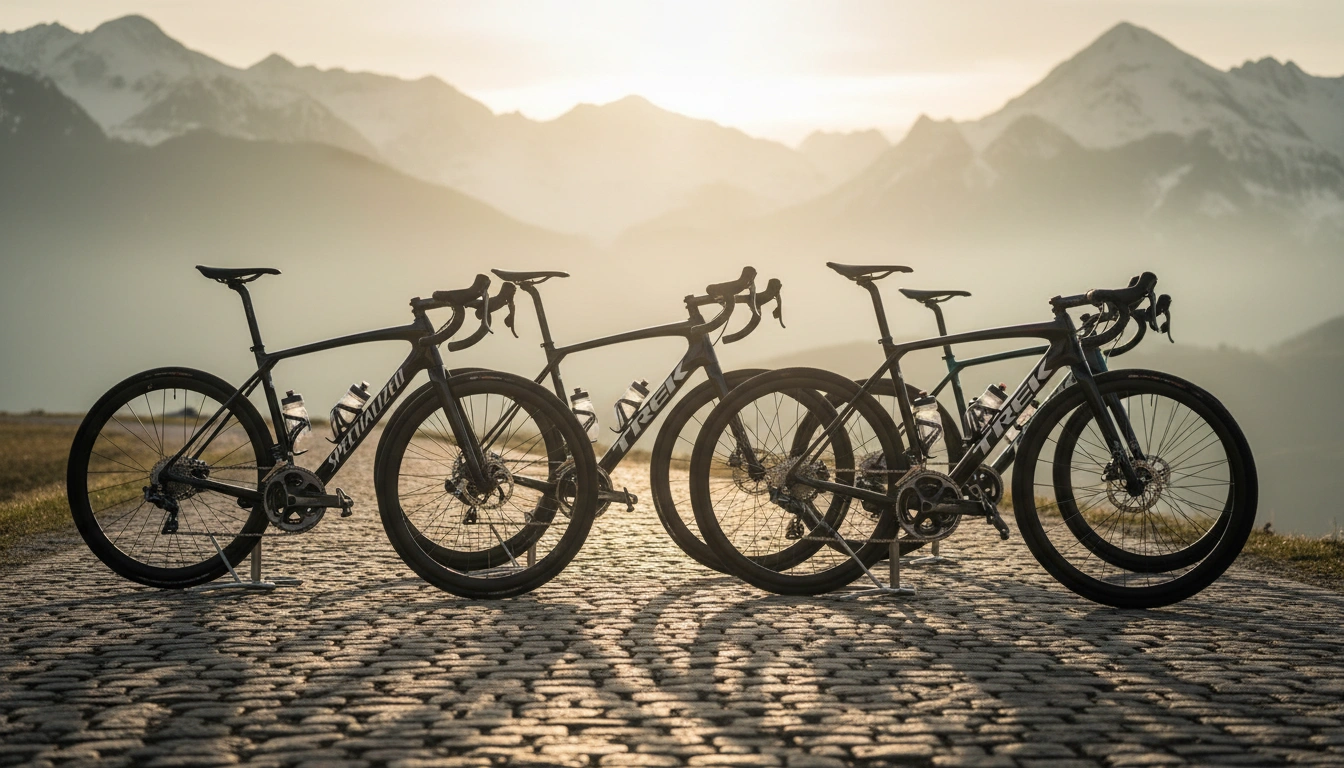
Walk into any bike shop and you’ll feel it immediately – the sheer number of choices. Trek, Specialized, Giant, Cannondale, Scott – and that’s before you even get to the smaller brands doing genuinely interesting things. Picking the wrong brand is not the end of the world, but picking the right one for your riding style can save you hundreds of dollars and years of frustration.
This guide cuts through the noise. Below you’ll find 15 of the best bicycle brands in the world for 2026, organized by tier, with notes on who each brand is really built for – whether you’re shopping for your first road bike, looking to upgrade your mountain setup, or just trying to figure out which names are worth paying attention to. If you’re still figuring out which type of bike you need before thinking about brands, our bike finder quiz is a good starting point.
Quick Brand Comparison by Rider Type
Not sure where to start? This table cuts straight to the point.
| Brand | Best For | Price Tier | Country |
|---|---|---|---|
| Trek | Road, mountain, commuting | $$$-$$$$ | USA |
| Specialized | Performance road and mountain | $$$-$$$$ | USA |
| Giant | All categories, best value | $$-$$$$ | Taiwan |
| Cannondale | Road and gravel performance | $$$-$$$$ | USA |
| Scott | Mountain bikes and triathlon | $$$-$$$$ | Switzerland |
| Santa Cruz | Serious trail and enduro MTB | $$$$ | USA |
| Bianchi | Road and heritage | $$$-$$$$ | Italy |
| Kona | Affordable mountain bikes | $$-$$$ | Canada |
| Marin | Trail MTB and gravel | $$-$$$ | USA |
| Fuji | Road bikes with history | $$-$$$ | Japan |
| Diamondback | Budget all-rounder | $-$$ | USA |
| Sixthreezero | Casual riding and cruisers | $-$$ | USA |
| Pure Cycles | Urban riders, first bikes | $-$$ | USA |
| Salsa | Gravel and adventure cycling | $$$ | USA |
| Critical Cycles | Fixed-gear and urban riding | $ | USA |
Premium Bicycle Brands ($$$$)
These are the names you’ll see on podiums and in the pages of Velonews. They cost more, but the engineering is genuinely on a different level.
1. Trek
Trek is probably the most complete bicycle brand on this list. Founded in a Wisconsin barn workshop in 1976, they’ve grown into one of the largest and most respected bike manufacturers in the world. What makes Trek stand out is not any single product line – it’s the consistency. From a $400 entry-level hybrid to a $12,000 Domane SLR for road racing, the quality control is reliable at every price point. Trek sponsors the Lidl-Trek WorldTour team (formerly Trek-Segafredo, renamed in 2023). Their Marlin series is one of the best-selling entry mountain bikes in the US.
- Price range: $400 – $12,000+
- Best for: Road, mountain, commuting – any discipline
- Pros: Widest dealer network, reliable quality, excellent resale value
- Cons: Premium pricing; less cutting-edge than Specialized at the top end
2. Specialized
If Trek is the reliable all-rounder, Specialized is the brand that pushes harder on performance innovation. Founded in California in 1974, they released the first mass-produced mountain bike in 1981 – the Stumpjumper – and they’ve been chasing performance gains ever since. The S-Works line sits at the absolute top of road and mountain bike engineering. On the accessible end, the Rockhopper and Sirrus offer solid performance for riders not spending four figures.
- Price range: $500 – $15,000+
- Best for: Road racing, trail mountain biking
- Pros: Best-in-class performance products, innovative engineering
- Cons: Aggressive geometry not ideal for casual riders; prices have climbed steeply
3. Cannondale
Cannondale does things differently. Started in 1971 in a Connecticut loft above a pickle factory (really) – initially making camping gear – they launched their first bicycle in 1983 and quickly made their name building large-diameter aluminum frames when every other brand was still using steel. That engineering mindset never left. Today they’re known for their distinctive lefty fork, SAVE micro-suspension on road bikes, and some of the most interesting gravel bikes available. The SuperSix EVO is a perennial road favorite; the Topstone series is one of the top gravel platforms.
- Price range: $700 – $12,000+
- Best for: Road, gravel, innovative MTB designs
- Pros: Unique engineering, excellent gravel lineup, strong racing pedigree
- Cons: Lefty fork divides opinions; dealer network smaller than Trek/Specialized
4. Santa Cruz
If you’re serious about trail and enduro mountain biking, Santa Cruz is a name you already know. Founded in California in 1993, they build some of the most coveted mountain bikes on the planet. What sets them apart is the VPP (Virtual Pivot Point) suspension platform – one of the most refined rear suspension designs in mountain biking. Their Hightower, Megatower, and Bronson models are spotted at the most technical trails worldwide. These are not starter bikes – prices start around $2,500.
- Price range: $2,500 – $10,000+
- Best for: Trail, enduro, all-mountain MTB
- Pros: Best-in-class VPP suspension, exceptional resale value, serious trail credibility
- Cons: Premium prices; not for beginners
5. Bianchi
Bianchi is the oldest bicycle brand in the world, founded in Milan, Italy in 1885. It’s remarkable that a bike company has been operating for 140 years and is still relevant at the top level of the sport. Their signature celeste green color is iconic in cycling. The Oltre and Specialissima compete directly with Trek and Specialized’s top road offerings. Bianchi pioneered the front-wheel brake on production bicycles, and their racing pedigree runs through multiple Tour de France eras.
- Price range: $800 – $12,000+
- Best for: Road racing and endurance riding
- Pros: 140 years of heritage, iconic design, genuine racing pedigree
- Cons: Smaller dealer network in the US; premium pricing for the brand name
Mid-Range Bicycle Brands ($$$)
This is where the best value in cycling lives. These brands build bikes that serious riders actually race and ride hard – without the premium brand tax you pay at Trek S-Works or Specialized levels.
6. Giant
Giant deserves mention at multiple tiers because of their manufacturing scale. Founded in Taiwan in 1972, Giant is the world’s largest bicycle manufacturer by volume. They built OEM frames for many major brands in their early decades – a history that speaks to the depth of their manufacturing capability. The Talon series offers genuine trail capability at under $700. The TCR and Defy road bikes punch well above their weight class. If you’re shopping seriously on a budget, Giant should be near the top of your list.
- Price range: $400 – $8,000+
- Best for: All categories – genuinely no weak spots
- Pros: Best value at every tier, excellent manufacturing quality, comprehensive lineup
- Cons: Less brand cachet than Trek/Specialized; slightly harder resale in some markets
7. Scott
Scott started in 1958 as a ski pole manufacturer in Sun Valley, Idaho. They got into bikes in the 1980s and made an immediate impact: in 1989, Scott introduced the aerodynamic handlebar design that revolutionized triathlon cycling. Today those bars are standard on every time trial bike in the world. Scott’s strength is mountain bikes and triathlon – their Scale hardtail and Spark full-suspension are consistently rated among the best in their categories. Their Addict road bikes are used at the WorldTour level.
- Price range: $700 – $10,000+
- Best for: Mountain bikes and triathlon
- Pros: Excellent MTB engineering, strong triathlon legacy, wide range
- Cons: Smaller US dealer presence; less brand recognition stateside
8. Salsa
Salsa is the brand that essentially invented the modern gravel bike category. Founded in 1982 and now based in Bloomington, MN, Salsa has always been about adventure cycling – bikes designed to go far from pavement and stay comfortable. The Warroad and Cutthroat are among the most respected long-distance gravel and bikepacking platforms available. They also made the first carbon fat bike frame (the Beargrease). If your cycling involves mixed terrain, loaded touring, or multi-day adventures, Salsa deserves serious attention.
- Price range: $1,200 – $5,500
- Best for: Gravel, bikepacking, adventure, fat bikes
- Pros: Category-defining gravel bikes, adventure-ready geometry, respected in the community
- Cons: Limited dealer network; niche brand not ideal for pure road or trail riding
9. Kona
Kona has been building trail bikes since 1988 and has never chased trends – they just keep building solid mountain bikes at prices that make sense. Founded in Vancouver, Canada, Kona built their reputation on reliable hardtails and expanded to full-suspension trail bikes and gravel setups. The Process series is one of the best value full-suspension trail platforms in the mid-range. The Hei Hei hardtail is a long-running XC favorite. They’re not flashy – they just make bikes that work well and last.
- Price range: $700 – $4,500
- Best for: Trail and all-mountain MTB
- Pros: Excellent trail geometry, strong value, proven reliability
- Cons: Limited road and gravel options; smaller brand recognition
10. Marin
Marin is one of those brands that serious riders know and respect, but casual buyers often overlook. Founded in 1986 in Marin County, California – the birthplace of mountain biking – the company has never strayed from its roots. The Rift Zone and Alpine Trail series are well-regarded in the trail and enduro community. Their gravel lineup (Pine Mountain, Four Corners) is genuinely strong. At the entry level, Marin makes some of the best sub-$1,000 mountain bikes you can buy. They’re quietly good.
- Price range: $600 – $4,000
- Best for: Trail MTB and gravel
- Pros: Strong trail geometry, underrated quality, good gravel options
- Cons: Smaller dealer network; less brand prestige hurts resale value
11. Fuji
Fuji is one of the oldest bicycle brands in continuous operation, founded in Japan in 1899. Their engineering contributions are significant: Fuji built the first titanium frame bicycle in 1986. Today Fuji focuses primarily on road bikes and has a strong following among cyclists who care about ride quality over brand prestige. Their Gran Fondo and Sportif series are well-regarded endurance road bikes. If you want a quality road bike without paying for the Trek or Specialized logo, Fuji is worth serious consideration.
- Price range: $600 – $3,500
- Best for: Road cycling and endurance riding
- Pros: 125+ year heritage, first titanium frame builder, solid ride quality
- Cons: Limited MTB and gravel options; US dealer presence has shrunk
Budget Bicycle Brands ($ – $$)
Budget does not have to mean bad. These brands have carved out real niches by building decent bikes at prices that do not require a second mortgage.
12. Diamondback
Diamondback started in 1977 making BMX bikes and gradually expanded to cover pretty much every category. They operate primarily direct-to-consumer online, which cuts dealer margins and keeps prices lower than comparable bikes from the big brands. The Overdrive hardtail and the Release full-suspension are popular picks for riders who want real mountain bike performance on a budget. For recreational and intermediate trail riders, Diamondback delivers reliable value.
- Price range: $400 – $2,000
- Best for: Budget mountain bikes and gravel
- Pros: Strong value, reliable quality for the price, good online purchase experience
- Cons: No physical dealer network; customer service can be slow
13. Pure Cycles
Pure Cycles was founded in 2010 by three college friends who noticed that bikes were too expensive for the average campus commuter. They set out to fix that, and to a meaningful degree they succeeded. Pure Cycles sells direct-to-consumer and keeps their lineup focused on affordable urban bikes, single-speeds, and fixies. They’ve built a solid following in the US urban cycling market. If you need a commuter or a first bike, Pure Cycles is a reasonable choice.
- Price range: $300 – $700
- Best for: Urban commuting, single-speeds, fixies
- Pros: Affordable, good-looking bikes, strong urban following
- Cons: Not for performance riding; limited product range
14. Sixthreezero
Sixthreezero was founded in 2005 by friends who wanted to shake up the casual cycling market with bikes that had genuine style. They focus mainly on beach cruisers and leisure bikes. What makes Sixthreezero unusual is their test-ride policy: you can buy a bike, ride it for a year, and return it if you’re not satisfied. That kind of confidence in the product is rare at any price point. They’ve also expanded into e-bike cruisers in recent years.
- Price range: $300 – $1,200 (e-bikes)
- Best for: Beach cruisers and casual leisure riding
- Pros: Great styling, one-year test ride policy, expanding e-bike range
- Cons: Not suitable for performance or trail riding
15. Critical Cycles
Critical Cycles has done something fairly rare in cycling: they’ve become genuinely respected in the fixed-gear community while staying in the budget tier. Founded in 2009, they focus primarily on fixies and single-speed bikes for urban riders – and they do it well enough that lifetime frame warranties come standard. If you’re getting into fixed-gear riding or want a no-fuss urban single-speed, Critical Cycles offers good quality at prices that are hard to argue with.
- Price range: $200 – $600
- Best for: Fixed-gear and single-speed urban bikes
- Pros: Lifetime frame warranty, good quality for the price, respected in the fixie community
- Cons: Very limited product range; no performance or trail bikes
Which Brand Is Right for You?
The best bike brand depends almost entirely on what you plan to do with the bike. Here’s a quick breakdown to help you decide without overthinking it.
| Rider Type | Best Brand Pick | Why |
|---|---|---|
| First-time buyer (any budget) | Giant | Best quality control at every price point, wide dealer network |
| Serious road cyclist | Trek, Specialized, or Cannondale | All three offer deep road lineups from entry to pro-level |
| Trail mountain biker | Kona, Marin, or Santa Cruz (if budget allows) | Kona and Marin for value; Santa Cruz for premium performance |
| Gravel and adventure cyclist | Salsa or Cannondale | Salsa owns the adventure category; Cannondale Topstone is excellent |
| Urban commuter (tight budget) | Pure Cycles or Critical Cycles | Practical, affordable, not over-complicated |
| Casual and leisure rider | Sixthreezero or Diamondback | Good style and value for non-performance riding |
| Heritage and aesthetics matter | Bianchi or Fuji | Deep racing history, distinctive designs |
| Electric bike focus | Trek, Specialized, or Giant | All three have strong e-bike lineups with proper dealer support |
How to Choose a Bicycle Brand: What Actually Matters
Most people focus too much on brand and not enough on the factors that actually determine whether a bike will work for them. Here is what to think about before you commit.
Dealer network and support
Trek and Specialized have the widest dealer networks in the US. When something breaks, you want to get parts and service locally. Smaller brands like Kona and Marin have more limited dealer coverage, which can mean longer wait times for warranty work or specialty parts.
Price-to-component ratio
At any given price point, the components matter more than the brand on the frame. A $800 Giant with Shimano Deore will ride better than an $800 bike from a lesser-known brand with lower-tier components. Check the drivetrain spec before buying (that’s the shifters, derailleurs, and gears). On road bikes, Shimano 105 is a solid mid-range reference point, with Tiagra and the newer CUES parts a step below. On mountain bikes, Shimano Deore, SLX, or XT, or SRAM’s NX and GX, are the mid-range names to look for.
Fit and geometry
Different brands build with different geometry philosophies. Specialized tends toward sportier, more aggressive geometries. Trek often offers a more relaxed, endurance-oriented fit. Giant falls somewhere in between. If you’re buying online without a test ride, research the geometry charts carefully.
Resale value
Trek, Specialized, and Santa Cruz hold their value better than most. A used Santa Cruz trail bike will typically sell for 60-75% of retail even after several years of use. Budget brands lose value quickly and can be harder to sell secondhand.
Top Bicycle Brands by Riding Category
Already know what type of riding you want to do? Here is a quick reference organized by discipline.
Best brands for road cycling
For pure road cycling, Trek, Specialized, Cannondale, and Bianchi consistently appear at the top of both the amateur and professional racing scene. Giant offers outstanding road bike value at mid-tier prices. For a full guide, see our complete road bike buying guide or our roundup of the best road bikes under $1,000.
Best brands for mountain biking
Santa Cruz, Specialized, Trek, Scott, Kona, and Marin dominate mountain biking. Santa Cruz and Specialized lead on the premium end; Kona and Marin offer the best mid-range trail bikes. For a full breakdown, check our best mountain bikes guide.
Best brands for electric bikes
Trek, Specialized, Giant, and Cannondale have all invested heavily in e-bike development. Our best electric bicycle brands roundup covers the full picture, and our complete e-bike buying guide can help you navigate the options.
Best brands for hybrid and commuter bikes
Trek FX, Specialized Sirrus, and Giant Escape are the three most recommended hybrid bike platforms. For budget commuters, Pure Cycles and Diamondback also make solid options. Browse our best hybrid bikes guide for ranked picks, or check our city bike buying guide for the key decisions.
American Bicycle Brands Worth Knowing
Several common search queries ask specifically about American-made or American-founded brands. Most bikes sold under American brand names are manufactured in Taiwan or China, but the following brands are founded in the US, headquartered there, or have meaningful US design and R&D presence:
- Trek – Wisconsin (still assembles some bikes in the US)
- Specialized – California (design and R&D in the US)
- Cannondale – Connecticut-founded, now part of Pon Holdings (acquired 2021)
- Santa Cruz – California
- Salsa – Bloomington, Minnesota
- Marin – Marin County, California
- Diamondback – Washington state
- Pure Cycles – Los Angeles, California
- Sixthreezero – Los Angeles, California
True American-assembled bikes from small-batch builders (Waterford, Independent Fabrication, Richard Sachs) exist but are hand-built and priced accordingly. At the mass-market level, American manufacturing is essentially nonexistent at reasonable price points.
Frequently Asked Questions About Bicycle Brands
These are the questions that come up most often when people are researching bicycle brands for the first time.
What is the best bicycle brand in the world?
There is no single best brand because different brands excel in different categories. For overall quality, breadth of lineup, and dealer support, Trek and Specialized are consistently the most respected names globally. For pure manufacturing quality and value, Giant is hard to beat – they actually build frames for many competing brands. The best brand for you depends on your riding discipline and budget.
What are the top 3 bicycle brands?
If forced to pick three: Trek, Specialized, and Giant. These three consistently lead in sales, brand recognition, dealer networks, and product quality across the widest range of categories and price points. Cannondale, Scott, and Santa Cruz round out a strong second tier.
Is Trek or Specialized better?
This is cycling’s version of Ford vs. Chevy – both are genuinely excellent and the difference comes down to personal preference. Trek tends to offer slightly more variety and a wider dealer network. Specialized tends to push harder on performance innovation. Test-ride both if you can; the right choice will be obvious from the saddle.
What bicycle brands are made in the USA?
Most bikes sold under American brand names are manufactured in Taiwan or China. Trek assembles some bikes in Waterloo, Wisconsin. Waterford Precision Cycles, Independent Fabrication, and Richard Sachs Cycles are true small-batch American frame builders, but they are hand-builders, not mass-market brands. At the mass-market level, true American manufacturing is essentially nonexistent at reasonable price points.
What is the best bicycle brand for adults?
For adults shopping in the $500-$1,500 range, Giant, Trek, and Specialized all offer excellent bikes. Giant’s Escape (hybrid), Trek’s FX series, and Specialized’s Sirrus are three of the most recommended adult bikes in this price range. For adult riders on a tighter budget, Diamondback and Pure Cycles offer solid options starting under $500.
Which bicycle brand has the best resale value?
Trek, Specialized, and Santa Cruz hold their value the best in the secondhand market. Santa Cruz particularly stands out – a used trail bike will typically sell for 60-75% of retail even after several years of use. Giant and Cannondale also hold value reasonably well. Budget brands depreciate quickly.
Is Giant a good bicycle brand?
Giant is an excellent bicycle brand – arguably the most underrated name in cycling. They are the world’s largest bicycle manufacturer and actually produce frames for several competing brands. Their quality control is consistently strong, and they offer genuinely performance-capable bikes at prices below what Trek and Specialized charge for comparable specs. For actual riding quality, Giant is outstanding at every price point.
What bicycle brand is best for beginners?
For beginners, Giant is a top pick across most budgets. Trek and Specialized are also excellent choices because of their dealer networks – having a local shop to tune the bike and answer questions matters a lot when you are starting out. For urban beginners on tight budgets, Pure Cycles and Diamondback make the shortlist. Avoid no-name brands from big-box stores – quality control is unpredictable and support is essentially nonexistent.
What are the best bicycle brands for women?
Most major brands – Trek, Specialized, Giant, and Cannondale – now design women’s-specific geometry options across their main lineups. Modern women’s bikes feature different frame geometries, shorter reach, and adjusted saddle width. For comfort-focused riding, check out our guide to the best bikes for older women.
Looking for more specific guidance? Browse our full hybrid bike guide, the e-bike buying guide, or jump straight to our roundup of the best electric bikes if battery-assisted riding is on your radar.
🚲 Free: The Smart Bike Buyer’s Cheat Sheet
Get our 2-page PDF - budget tiers, the components that actually matter, and a 12-point used-bike inspection. We'll email you the download link. No spam, unsubscribe anytime.
By subscribing you agree to our Privacy Policy.
