
Walk into any bike shop and ask for a “city bike” and you’ll get blank stares, a shrug, and maybe a finger pointing at six very different bikes. That’s because the category is huge, vague, and packed with bikes that look similar but ride like strangers.
If you want something for coffee runs, 3-mile commutes, and the occasional grocery haul, you don’t need a carbon race machine or a 50-pound e-cargo beast. You need a bike that’s quiet, comfortable, and honestly a little bit boring (in the best way). This guide walks you through the exact decisions that matter in 2026, from frame shape to brakes to the weird but important stuff like chain guards and dynamo lights.
What actually makes a city bike a city bike?
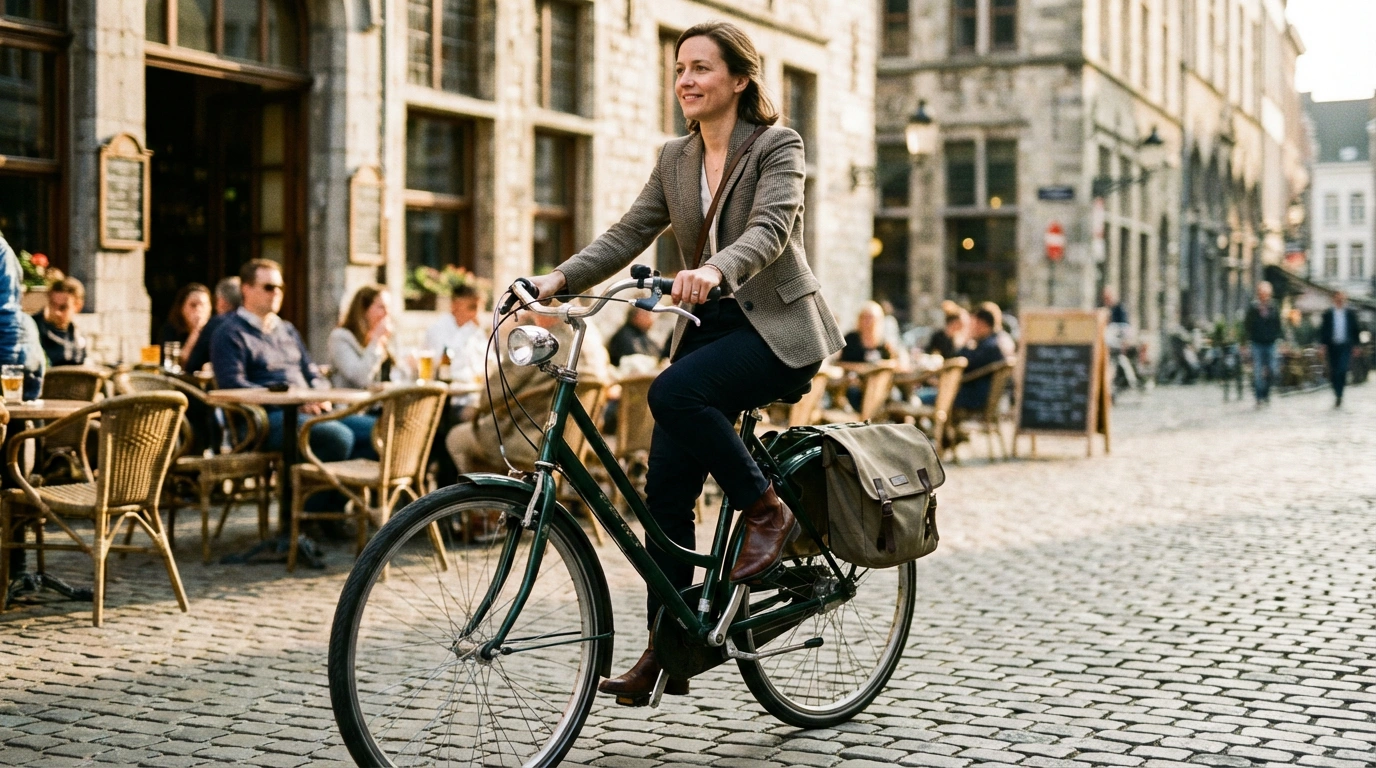
A city bike is basically a road bike that stopped trying so hard. Relaxed geometry, upright position, puncture-resistant tires, and enough practical add-ons to let you ride in normal clothes without arriving at work looking like you just finished the Tour de France.
The key traits:
- Upright riding position (easier on your back and neck)
- Medium-width tires, usually 32-42mm, built tough
- Mounts for fenders and racks (or they come pre-installed)
- Gearing that handles mild hills without 22 speeds
- Chainguard so your pants survive
If your city has real hills, potholes, or winter, lean toward a hybrid bike which sits one notch more rugged than a classic Dutch city bike. Not sure which category fits you? Our types of bikes guide breaks down all the main styles.
The frame decision that changes everything
Frame shape isn’t just style. It decides how easy the bike is to get on, how you sit on it, and whether you’ll actually use it when you’re wearing a skirt or carrying groceries.
Your three realistic options:
Step-through frames have no top tube, or a very low one. You swing your leg through instead of over. Great for people in work clothes, anyone with reduced mobility, and riders who hop on and off a lot. The old stigma of “women’s bike” is dead; step-throughs are just practical.
Diamond (traditional) frames have the classic top-tube triangle. Stiffer, slightly lighter, better for sporty riders or anyone planning to add weight like a rear child seat. Downside: mounting and dismounting takes more effort, especially with a loaded rack.
Mixte frames split the difference with twin lateral tubes running from the head tube to the rear axle. They look vintage-cool and offer easier mounting than a diamond without looking like a commuter tank. Rarer in 2026 but worth hunting for if you like the aesthetic.
Material matters less than frame shape for a city bike. Aluminum is the default (cheap, light, doesn’t rust). Steel rides smoother and lasts decades but adds 3-5 pounds. Carbon is overkill unless you’re racing your commute.
Gearing: how many speeds do you actually need?
The bike industry would love to sell you 22 gears. Your 4-mile commute needs about 7.
Single-speed or fixed-gear: zero maintenance, cheapest option, fine for flat cities like Amsterdam, Copenhagen, or most of Chicago. Skip if you have hills or plan to carry weight.
External derailleur (7-11 speeds): standard for most mid-range city bikes. Works great, widely serviceable at any shop, but the chain and derailleur are exposed to rain, salt, and grit. Expect occasional cleaning.
Internal gear hubs (Shimano Nexus 3/7/8, Shimano Alfine 11, Sturmey Archer): all the gears are sealed inside the rear hub. No exposed chain, no derailleur to bend, shift while stopped at lights. The pure city-bike solution. You pay a premium and hubs are harder to service, but the low-hassle lifestyle is worth it if you’re doing daily year-round riding.
If you live somewhere with real elevation, an e-bike geared for hills is worth the extra cost more than any gearing upgrade.
Wheels and tires: where city bikes earn their keep
City streets eat tires. Glass, staples, small sharp everything. Your tire choice matters more than almost any other component.
Wheel sizes you’ll see:
- 700c (roughly 29 inches): the standard adult size, faster rolling, tons of tire options
- 26-inch: common on older step-throughs and some compact city bikes, slightly slower but easier to control
- 20-inch: folding bikes and small-wheel commuters like Brompton or Bike Friday
Tire width is the big one. Anything skinnier than 28mm is asking for trouble on city streets. The sweet spot is 32-40mm with puncture protection (Schwalbe Marathon, Continental Contact Urban, Vittoria Randonneur). Pay the extra $15 per tire; you’ll lose it back the first time you skip a Sunday morning patching job.
If your route has brutal road surface, check our guide on quieting noisy wheels because worn bearings and misaligned rims announce themselves loudly on rough streets.
Brakes: the rim-versus-disc question (finally settled)
Disc brakes won. In 2026, even entry-level city bikes ship with mechanical disc brakes, and for good reason.
Discs work in the rain (rim brakes don’t, really), stop harder with less hand pressure, and don’t wear out your rims. The old complaint about disc brakes being heavy and overkill on a commuter is outdated; modern mechanical discs are light and cheap to service.
Rim brakes still live on budget bikes and classic Dutch city bikes. They’re fine if you live somewhere dry, flat, and predictable. Everyone else should pick discs.
Hydraulic vs mechanical discs: hydraulic feel better (lighter lever pull, self-adjusting) but cost more and require occasional bleeding. Mechanical discs are simpler, cheaper, and any shop can adjust them with an Allen key. For a city bike, mechanical discs are the practical pick.
Accessories that aren’t optional (even though they’re sold separately)
A bare-bones city bike is a promise waiting to disappoint you. These add-ons separate a “bike” from an actual commuter.
Fenders (mudguards): not optional if you ride in anything but perfect weather. A stripe of wet grit up your back ruins every outfit. Full-coverage fenders with mud flaps block most of the spray.
Rear rack: the single biggest upgrade to your riding life. Pannier bags beat a backpack every single day because your back doesn’t sweat and you can carry real weight without unbalancing the bike.
Lights: USB-rechargeable is standard now. Dynamo lights (powered by a front hub) never need charging and are the right answer if you commute daily. Minimum 200 lumens front, a bright rear with side visibility.
Bell: legally required in many cities, socially required everywhere. A loud ding saves you from pedestrians stepping into the bike lane with headphones on.
Lock: a good U-lock (Kryptonite New York, Abus Granit) plus a cable for the wheel. Budget minimum 10% of the bike’s value. Anything less and you’re paying rent to thieves.
Kickstand: weirdly controversial in road-bike circles, essential for a city bike. Park upright, load groceries with both hands, done.
Optional but nice: a cycling cap under your helmet to soak sweat, and if your current saddle is agony, read up on why bike seats hurt and how to fix it.
Getting the fit right (this is where most people mess up)
A wrong-size city bike is worse than no bike at all. You’ll sit weird, hurt your wrists, and eventually stop riding.
Rough sizing by height:
- 5’0″ – 5’3″ (152-160 cm): XS frame, usually 47-49 cm
- 5’3″ – 5’6″ (160-168 cm): S frame, 50-53 cm
- 5’6″ – 5’9″ (168-175 cm): M frame, 54-56 cm
- 5’9″ – 6’0″ (175-183 cm): L frame, 57-59 cm
- 6’0″ – 6’3″ (183-190 cm): XL frame, 60-62 cm
Numbers vary by brand. The real test: stand over the top tube and you should have 1-2 inches of clearance on a diamond frame, or zero issue at all on a step-through. Saddle height is right when your heel touches the pedal at its lowest point with your leg fully extended.
Our detailed guide to measuring a bike frame covers the math if you want to get precise. If possible, test ride two sizes at a shop. Five minutes on each is enough to tell.
How much should you actually spend in 2026?
City bike prices have climbed, but the value curve is clearer than ever.
$300-500 (big-box and budget brands): heavy, cheap components, rim brakes, limited lifespan. Fine for occasional weekend rides. Expect to replace parts fast.
$500-900 (entry proper bikes, brands like Trek FX, Giant Escape, Marin Fairfax): aluminum frames, 8-speed external gears, mechanical discs, the sweet spot for a new commuter. These bikes last a decade if you maintain them.
$900-1,800 (mid-range city bikes): internal hubs, hydraulic discs, belt drives, dynamo lighting. The “buy it once” tier. Brands like Priority Bicycles, Public Bikes, Canyon Commuter.
$1,800+ (premium European commuters): Belt drive, internal 11-speed, full integrated lighting, racks, fenders, sometimes suspension seatposts. Brands like Gazelle, Riese & Müller, Tern. Heavy-duty daily use for life.
Don’t forget to budget $150-300 on top for lock, lights, helmet, fenders, and rack if they don’t come standard. A complete setup matters more than the bike itself.
Curious what $1,000 buys in a different category? Look at road bikes under $1,000 or beginner mountain bikes to compare value.
Frequently asked questions
Can I use a hybrid bike as a city bike?
Yes, and many people do. Hybrids sit between city bikes and mountain bikes in posture and tire width. If your commute includes gravel or dirt paths, a hybrid is often the better pick.
Is a city bike OK for 10+ mile commutes?
Yes, but you’ll want a sportier geometry (less upright) and lighter overall weight. Look at “fitness hybrid” or “urban” categories rather than Dutch-style city bikes.
Should I get an e-bike instead?
If your commute is over 5 miles, hilly, or you’re avoiding a second car, an e-bike is the right call. Our e-bike roundup covers the current best picks.
Are used city bikes worth it?
Often yes. A 5-year-old quality city bike for half price often rides better than a new budget bike. Check the frame for cracks, drivetrain wear, and brake function before buying.
Do I need a bike with suspension?
No. Suspension forks add weight and cost and aren’t needed on pavement. A suspension seatpost ($50-80) is a better upgrade for bumpy roads.
The bottom line
A city bike is a tool. Pick the one that matches your actual life: your commute length, your weather, your storage situation, your willingness to do maintenance. Don’t overbuy; a $700 commuter with fenders, lights, and a rack beats a $2,000 bare bike every day.
Start with frame shape (step-through if you’ll ride in normal clothes), pick gearing that matches your terrain, insist on disc brakes, and budget for accessories. Do that and you’ll end up with a bike you actually ride, which is the whole point.
🚲 Free: The Smart Bike Buyer’s Cheat Sheet
Get our 2-page PDF - budget tiers, the components that actually matter, and a 12-point used-bike inspection. We'll email you the download link. No spam, unsubscribe anytime.
By subscribing you agree to our Privacy Policy.
