
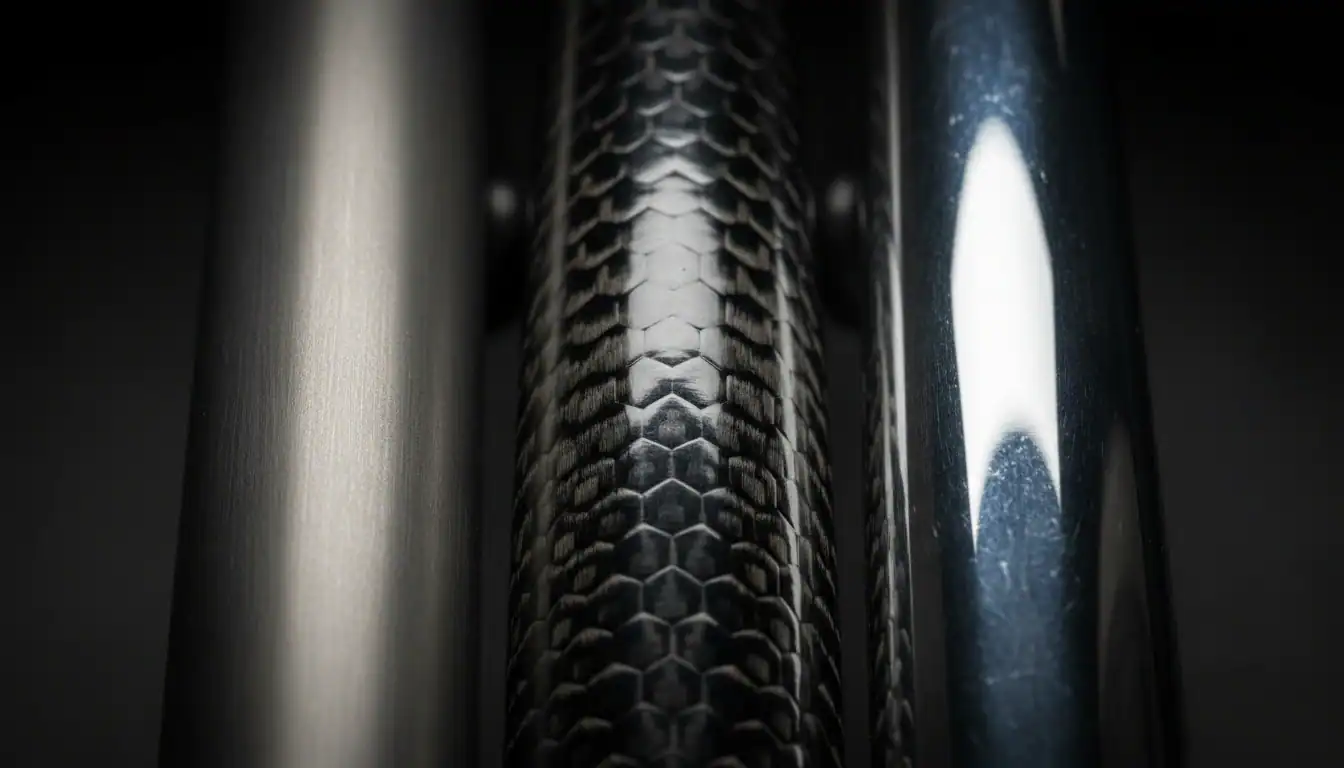
When you are choosing a bike, the frame material affects weight, ride feel, durability, and price more than almost any other single factor. Aluminum, carbon fiber, steel, and titanium each have genuine strengths and real weaknesses. This guide gives you an honest comparison so you can make the right call for your riding style and budget.
Bike Frame Material Comparison: Master Table
| Material | Weight | Ride Feel | Durability | Repairability | Price Range | Best For |
|---|---|---|---|---|---|---|
| Aluminum | Light (1.0-1.5 kg frame) | Stiff, efficient | Good (can fatigue) | Weldable, not field-repairable | $300-$2,000 | Budget to mid-range road, MTB, commuter |
| Carbon fiber | Lightest (0.7-1.1 kg frame) | Tunable – can be stiff or compliant | Very good (brittle under impact) | Specialist repair only | $800-$10,000+ | Performance road, race MTB, gravel |
| Steel (chromoly) | Heavier (1.5-2.5 kg frame) | Compliant, “lively” feel | Excellent (durable, resists fatigue) | Often field-repairable by a competent welder | $400-$3,000 | Touring, bikepacking, casual road, fixie |
| Titanium | Light (0.9-1.4 kg frame) | Smooth, compliant like steel | Exceptional (does not rust or fatigue easily) | Specialist welding required | $2,000-$8,000+ | Lifetime bikes, touring, performance road |
Aluminum Frames
Aluminum is the most common bike frame material today because it offers an excellent weight-to-cost ratio. It is significantly lighter than steel, easily formed into complex tube shapes, and inexpensive to manufacture. Most bikes in the $400-$1,500 range use aluminum frames.
The ride quality tradeoff: aluminum is stiffer than steel, which means it transmits more road vibration to the rider. This is noticeable on long rides or rough roads. Frame makers compensate with tapered tube profiles, butting (varying wall thickness), and geometry adjustments – but aluminum always transmits more vibration than steel or titanium.
Durability: aluminum does not rust and holds up well to normal use. It can experience metal fatigue over many years of riding, but for most cyclists this is not a practical concern within a typical ownership period of 5-10 years. Unlike steel, aluminum cannot be repaired with a basic weld; frame repair requires specialized equipment and skills.
Best choice for: riders on a budget, commuters, recreational cyclists who prioritize value over ride feel, and anyone who wants a light, modern bike without carbon fiber pricing.
Carbon Fiber Frames
Carbon fiber (CFRP – carbon fiber reinforced polymer) is the material of choice for performance cycling. Its primary advantage is that it can be laid up in any shape and the stiffness/compliance profile can be tuned in different directions by changing the fiber orientation. A well-designed carbon frame can be simultaneously stiff laterally (for efficient power transfer) and compliant vertically (to absorb road vibration).
Weight: carbon fiber frames are the lightest option available. A high-end carbon road frame weighs 700-900g. An entry carbon frame runs 900g-1.1kg. Even entry carbon is typically lighter than comparable aluminum.
Durability considerations: carbon is strong under its designed loads but brittle under impact loads from a different direction than intended. A hard crash can delaminate or crack a carbon frame in ways that are invisible externally but structurally significant. Carbon frames should be inspected after any hard crash. Repairs are possible but require specialist equipment and are not cheap.
Best choice for: performance road cyclists, competitive riders, gravel enthusiasts who want the lightest possible build, and anyone willing to pay the premium for the best ride quality and weight.
Steel Frames (Chromoly)
Steel was the dominant bike frame material before aluminum took over in the 1990s. High-quality chromoly steel (4130 chrome-molybdenum alloy, or the premium Reynolds and Columbus branded versions) remains popular for touring, bikepacking, and lifestyle bikes because of properties aluminum and carbon simply cannot match.
Ride feel: steel has a natural compliance that absorbs road vibration without being sloppy. The “steel is real” saying among touring cyclists refers to this ride quality – a chromoly steel frame has a lively, responsive feel that many riders find more enjoyable than aluminum over long distances.
Repairability: steel can be welded by any competent metalworker. On a long-distance tour in a remote area, a cracked steel frame can be repaired locally. This is a meaningful advantage for world-touring cyclists. Aluminum and carbon cannot be field-repaired.
Weight: modern chromoly steel is heavier than aluminum or carbon. A steel road frame typically weighs 1.5-2.0 kg versus 1.0-1.3 kg for aluminum. This matters for racing and climbing; it barely matters for commuting or casual riding.
Best choice for: touring cyclists, bikepacking, fixed-gear builds, riders who prioritize durability and repairability over weight, and anyone who wants a bike that will last 20+ years with basic maintenance.
Titanium Frames
Titanium offers a combination of properties no other material can match: steel-like ride compliance, near-carbon-fiber weight, and essentially lifetime durability. Titanium does not rust, resists fatigue very well, and holds its properties for decades. A quality titanium frame can last a very long time, though no frame is immune to crash damage or a bad weld.
Why titanium is expensive: the material itself is costly to source, and titanium requires inert-atmosphere welding (TIG welding in argon gas). It cannot be painted easily (the natural brushed finish is common). Manufacturing costs are significantly higher than aluminum or steel, and the specialist skill required keeps production volumes low.
Ride feel: titanium has a compliance profile similar to steel – it absorbs road vibration better than aluminum. The ride is described as smooth and “springy” by many riders, particularly over rough roads.
Best choice for: cyclists who want a definitive, buy-once lifetime bike. Common applications include high-end touring, performance road bikes for serious riders, and gravel bikes for those who want the best possible long-distance comfort without constant replacement cycles.
What Should You Choose? Decision Guide by Riding Style
| Riding Style | Best Frame Material | Why |
|---|---|---|
| Commuting (daily use) | Aluminum | Durable, light, affordable, low maintenance |
| Road racing / club rides | Carbon (or aluminum 105+) | Weight and ride quality matter at speed |
| Gravel / mixed terrain | Any material works | Aluminum is the value pick, steel is comfortable, and carbon or titanium are lighter or smoother if you want to spend more |
| Long-distance touring | Steel (chromoly) | Repairability anywhere, comfort over distance |
| Bikepacking / adventure | Steel or titanium | Durability, repairability, compliance |
| Budget road or MTB | Aluminum | Best value at $400-$1,500 |
| Buy-once lifetime bike | Titanium | Does not rust and resists fatigue, so it can last decades |
For specific bike recommendations by type, see our guides to types of bikes, gravel vs road bikes, and best road bikes under $1,000.
Frequently Asked Questions
Is carbon fiber or aluminum better for a road bike?
For performance and ride quality, carbon fiber is better – it is lighter, can be tuned for compliance, and produces a more refined ride. For value and durability in everyday use, a quality aluminum frame is hard to beat. Most recreational riders will not feel a meaningful performance difference between a good aluminum frame and an entry carbon frame.
How long do bike frames last?
A well-made aluminum frame can last many years of regular use, and fatigue is rarely a practical concern for most riders, though there is no official lifespan figure. Carbon frames can last many years if they are never crashed hard and are checked now and then. Steel frames can last 20-30+ years with basic maintenance against rust. Titanium frames can last decades under normal riding loads.
Is a steel bike slower than aluminum?
A steel bike is heavier than aluminum, which matters on climbs and accelerations. On flat roads and sustained efforts, the difference is minimal. For touring, commuting, or casual riding, the weight difference between steel and aluminum (400-600g for a frame) is irrelevant in practice.
Why is titanium so expensive?
Titanium requires specialized welding in an inert argon gas environment to prevent contamination, which means dedicated welding equipment and higher labor costs. The raw material is also more expensive than aluminum or steel. A custom titanium frame takes significantly more time to produce than an aluminum frame made in the same factory.
🚲 Free: The Smart Bike Buyer’s Cheat Sheet
Get our 2-page PDF - budget tiers, the components that actually matter, and a 12-point used-bike inspection. We'll email you the download link. No spam, unsubscribe anytime.
By subscribing you agree to our Privacy Policy.