
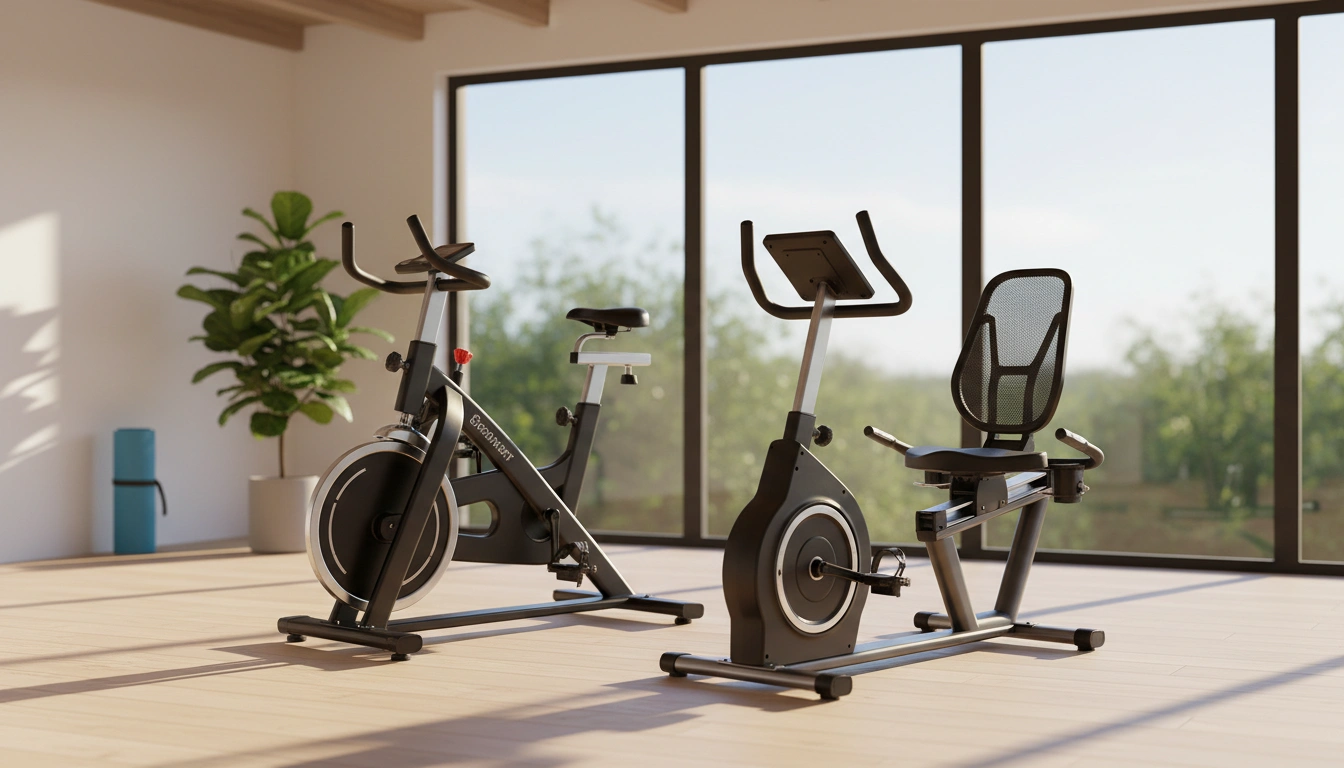
Home gyms have grown a lot in recent years, and exercise bikes are one of the easiest pieces of equipment to live with. They’re low-impact, simple to use, and you don’t have to dodge cars in the rain. Whether you want an easy way into regular cardio, a rainy-day option, or just a way to get a workout in before work, an indoor bike is a solid place to start.
The problem is that the market is crowded. You’ve got upright bikes, recumbent bikes, spin bikes, air bikes, foldable bikes, and smart bikes with classes built in. Prices run from budget to premium, and it’s hard to know what you’re actually paying for. That’s where this guide comes in.
This hub covers the exercise bike and indoor cycling category. Below you’ll find quick picks for different buyers, links to our in-depth roundups, a straightforward buying guide, and answers to the questions people actually search for. Start here, then go deeper on whatever fits your situation.
Types of Indoor Exercise Bikes
Before you spend anything, it helps to know which type fits you. They look similar but ride very differently.
Upright Bikes
The classic gym staple. You sit upright and pedal forward, which is closest to riding a regular bicycle. They’re easy to use and often one of the more affordable types. Some riders find the forward lean uncomfortable on the lower back during long sessions.
Recumbent Bikes
You sit back in a bucket seat with a backrest and your legs out in front of you. That position spreads your weight over a larger area and takes load off your back and hips, so recumbent bikes are a common choice for older riders and for people easing back into exercise. If you have a specific back, joint or heart condition, check with your doctor or physical therapist first.
Spin Bikes / Indoor Cycling Bikes
These are built to mimic road cycling: a heavy flywheel, a forward-leaning riding position and a resistance knob you turn by hand. They suit harder, studio-style rides. If you want that feel on your own terms, a spin bike is what you’re looking for.
Air Resistance Bikes
Air bikes have two handles that push and pull as you pedal, so your whole body is working at once. Resistance rises the harder you go. If you’ve ever done an assault bike interval workout, you know how demanding these can be.
Foldable Exercise Bikes
A foldable bike collapses after your ride so you can tuck it behind a door or in a closet. They often give up a bit of stability and feature range, but for a small apartment where space is tight, they’re genuinely useful. Expect simpler consoles on most of them.
Under-Desk Pedal Exercisers
Technically not a “bike” in the traditional sense, but worth mentioning. These compact pedal units sit under your desk and let you pedal while you work. They’re not a replacement for a proper cardio session, but for people who sit most of the day, they can add a bit of extra movement. Our under desk bicycle pedals roundup covers the options if you want to explore this category.
Quick Picks: Our Top Exercise Bike Recommendations
If you just want a straight answer without reading the whole page, here are quick picks for the most common buyer types. Always check the current price and weight limit on the listing before you buy.
| pooboo Folding Magnetic X-Bike (Upright) |  |
Folding Upright Pick | Resistance: 8-level magnetic | Fits: Riders 4’10” to 6’1″ | Capacity: 300 lbs | VIEW LATEST PRICE | See Full Comparison |
| Sunny Health & Fitness Smart Recumbent Bike with Resistance Bands |  |
App-Connected Recumbent | Resistance: 16-level magnetic | App: Free SunnyFit | Extras: Two 20 lb bands | VIEW LATEST PRICE | See Recumbent Picks |
| Marcy Magnetic Recumbent Exercise Bike NS-40502R | 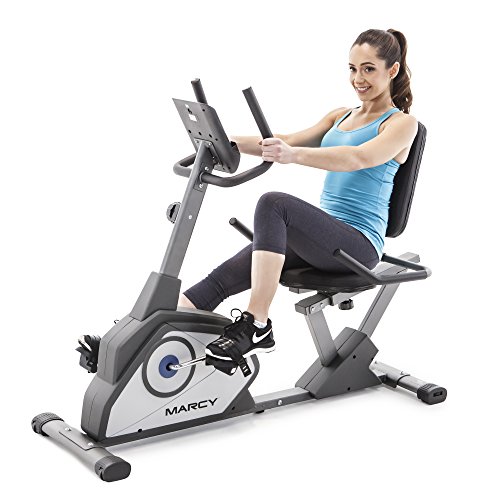 |
Simple, No-Frills Recumbent | Resistance: 8 magnetic levels | Display: LCD, no heart rate | Capacity: 300 lbs (Marcy) | VIEW LATEST PRICE | See Senior Picks |
| MERACH Friction Indoor Cycling Bike |  |
Indoor Cycle with App | Resistance: Friction, infinite adjustment | Capacity: 300 lbs | Extras: App, device holder | VIEW LATEST PRICE | Buying Guide Below |
| BARWING 5-in-1 Foldable Exercise Bike |  |
Foldable Pick | Design: 5-in-1 foldable | Resistance: 16-level magnetic | Capacity: 350 lbs | VIEW LATEST PRICE | See Small Space Picks |
Exercise Bikes by Body Type & Need
Not everyone needs the same bike. Here’s how to find the right roundup based on your situation.
- Small apartment or limited floor space: See our best exercise bikes for small spaces – all compact, foldable, or easy to tuck away.
- Seniors or low-impact cardio: Our best exercise bikes for seniors roundup covers recumbent and foldable bikes with comfortable seats, plus a few under-desk options.
- Recumbent bikes on a budget: The best budget recumbent bikes roundup covers lower-cost options.
- Comfort-first cardio: The best recumbent bike for weight loss roundup covers comfortable recumbents with a range of resistance, from simple to app-connected.
- Already own a bike and want to ride indoors: Our best indoor bike trainer stand guide shows you how to turn a road or mountain bike into an indoor machine.
- Stepper-style hybrid movement: The best stepper bikes for adults covers a crossover category that combines cycling motion with a stair-stepper feel.
- Working out at your desk: Check out the best under desk bicycle pedals – not a full bike, but handy for staying active during long work sessions.
- Deep dive on one model: Read our full Schwinn 270 recumbent bike review.
Upright vs Recumbent vs Spin Bikes: Which Is Right for You?
This is the question that trips up most first-time buyers. Here’s a quick breakdown before we get into the details.
| Bike Type | Best For | Seat Position | Usual Price Tier |
|---|---|---|---|
| Upright | General fitness, casual riders | Upright, slight forward lean | Budget to Mid-range |
| Recumbent | Comfort-first riders, easing back into exercise | Reclined, with backrest | Budget to Mid-range |
| Spin / Indoor Cycling | Harder, studio-style rides | Forward-leaning, road-bike style | Budget to Premium |
| Air Bike | Interval training, full-body conditioning | Upright, with moving handles | Mid-range |
| Foldable Upright | Small spaces, lighter use | Upright or semi-recumbent | Budget |
If back or joint comfort is your main concern, a recumbent is usually the most comfortable place to start, and your doctor or physical therapist can tell you what fits your situation. If you want a ride closer to outdoor cycling, spin bikes are built for that. Uprights are the middle ground for riders who want a versatile everyday machine.
One thing people often overlook: recumbent bikes tend to take up more floor length than uprights, even though they feel less imposing. If your room is tight, measure before you buy.
What to Look for in an Exercise Bike
There’s a lot of marketing noise in this category. Here’s what actually matters when you’re comparing models.
Resistance Type
Magnetic resistance is common on home bikes. It’s generally quiet and smooth, and there’s no pad to wear out. Friction resistance (found on many spin bikes) presses a pad against the flywheel, which can allow very fine adjustment, but the pad wears and may need replacing. Air resistance bikes scale with your effort: the harder you pedal, the harder it gets.
Flywheel Weight
For spin bikes, flywheel weight matters. A heavier flywheel tends to carry momentum between pedal strokes and feels smoother, closer to riding a real bike. Lighter flywheels can feel choppier. For upright and recumbent bikes, the flywheel is less critical since the resistance system does most of the work.
Console Features and Tracking
Entry-level consoles show time, speed, distance, and calories. Mid-range bikes add heart rate monitoring (often via handlebar sensors), preset workout programs, and Bluetooth connectivity to apps like Zwift or Kinomap. At the higher end you get touchscreens and live classes. Think honestly about whether you’ll use the features before paying extra for them, and treat calorie readouts as rough estimates.
Weight Capacity
Listed limits vary a lot, from about 220 lb on some foldables to 400 lb or more on heavy-duty recumbents. Check this number carefully, since a bike used near its limit will wear faster. If you’re close to a bike’s limit, step up to a higher-rated one.
Seat Comfort and Adjustment
The stock seat is often the first thing people want to change on an upright or spin bike, and a padded seat cover can help. For recumbent bikes, the bucket seat is generally comfortable out of the box. More importantly, make sure the seat adjustment range fits your height. Listed rider heights vary: the pooboo X-Bike lists 4’10” to 6’1″ and the BARWING lists 4’11” to 6’6″, while some recumbents list a narrower range.
Noise Level
Magnetic resistance bikes are generally quiet, usually just the sound of you breathing and the belt humming. Friction bikes make more noise, and air bikes are loud by nature. If you live in an apartment with downstairs neighbors, magnetic is usually the safer call. A mat under the bike also helps with vibration and floor protection.
Drivetrain: Belt vs Chain
Many home exercise bikes use a belt drive rather than a chain. Belt drives are quiet and don’t need lubrication. Chain drives feel more like a real bike and some riders prefer that, but they can be noisier and need more upkeep.
Warranty
Warranties vary a lot. Many budget bikes list about a year, while some brands cover the frame for much longer (Schwinn lists 10 years on the frame of its 230 recumbent, for example). Read the terms for frame, parts and electronics separately.
The Peloton Ecosystem (Bikes & Accessories)
Peloton gets a section of its own because it’s not just a bike. It’s a subscription-based fitness platform that happens to come with hardware attached.
The classes that make a Peloton worth buying need a paid membership, so check Peloton’s own site for current pricing on the bike and the subscription. The community side is real, with leaderboards, live instructors and a huge class catalog. But if you just want a quality bike and plan to ride at your own pace, there are plenty of non-subscription options on this page.
If you already own a Peloton or are considering one, shoes matter, because the Peloton Bike pedals use a Look Delta-style cleat system. Our roundup of the best shoes for Peloton bike covers Look Delta compatible options at different budgets.
Exercise Bike FAQ
These are the questions that come up over and over. Quick answers below.
How long should I ride an exercise bike for weight loss?
The CDC recommends at least 150 minutes of moderate-intensity aerobic activity a week for adults, and says you may need more than that to lose weight or keep it off, ideally alongside changes to what you eat. A common way to get there is about 30 minutes on most days. Consistency matters more than any single long session, and if you’re starting from scratch, begin with shorter rides and build up.
Are upright or recumbent bikes better?
Neither is objectively better. They suit different people. Uprights ask a bit more of your core and balance, while recumbents are usually more comfortable on the back, hips and knees. Calories burned depend mostly on how hard you work, not which seat you sit on. If you have back or joint issues, a recumbent is a sensible place to start. See the comparison table above.
Can I use an indoor bike for cardio rehab?
Stationary cycling is a low-impact option that is often used in rehab, but ask your doctor, physical therapist or cardiac rehab team whether it suits you and how hard to ride, especially after surgery or a cardiac event.
How much space do I need for an exercise bike?
It depends on the type, so check the listed dimensions. Many recumbents run 4 to 5 feet long or more (the Schwinn 230 is about 64 inches), uprights are shorter, and foldables can shrink a lot (the Pleny lists about 20 x 20 inches folded, and the BARWING about 1.8 square feet). Leave clear space around the side you get on and off.
Do cheap exercise bikes last?
They can, with realistic expectations. Budget bikes tend to do best with light, careful use. The parts that wear fastest are usually the bearings, pedals and resistance mechanism, and heavy daily use tends to find weak points. Check the weight limit and warranty, assemble it carefully, and keep the moving parts tight and clean.
Is an exercise bike better than a treadmill?
It depends. A bike is seated and low-impact, which suits many people with sore knees or hips. Walking and running are weight-bearing, which has its own benefits, including for bone health. The best choice is the one you’ll actually use, and your doctor can help if you have a condition to work around.
Should I get a Peloton or an alternative?
If you’re motivated by live classes, leaderboards and a structured program, Peloton is built around exactly that, but it needs a paid membership. If you’d rather ride at your own pace, a non-subscription bike plus free workouts gets you the same kind of exercise. Compare the ongoing cost as well as the upfront price before you decide.
How often should I service my exercise bike?
For magnetic resistance bikes, maintenance is minimal: wipe down the frame and seat after rides and check that bolts stay tight every few months. If you have a friction-resistance bike, check the pad for wear from time to time. Squeaking usually means something needs tightening or a light lube. Follow your manual for anything else.
Browse Our Full Exercise Bike Library
Ready to find your specific bike? Here are the best places to start based on what you’re after.
- Best Exercise Bikes for Seniors – Recumbent, foldable and under-desk picks
- Best Exercise Bikes for Small Spaces – Foldable and compact picks
- Best Budget Recumbent Bikes – Comfort-first bikes for tighter budgets
- Best Recumbent Bike for Weight Loss – Comfortable recumbents with a range of resistance
- Schwinn 270 Recumbent Bike Review – A closer look at one Schwinn recumbent
- Best Indoor Bike Trainer Stands – Turn your road or mountain bike into an indoor setup
- Best Stepper Bikes for Adults – The hybrid category worth knowing about
- Best Under Desk Bicycle Pedals – Stay active at your desk
- Best Shoes for Peloton Bike – Look Delta compatible options
- How to Convert a Bicycle to an Exercise Bike – DIY guide using a trainer stand
Not sure which type is right for you? Start with the comparison table in the upright vs recumbent section above, or check out our buying guide on what to look for in an exercise bike.
🚲 Free: The Smart Bike Buyer’s Cheat Sheet
Get our 2-page PDF - budget tiers, the components that actually matter, and a 12-point used-bike inspection. We'll email you the download link. No spam, unsubscribe anytime.
By subscribing you agree to our Privacy Policy.