
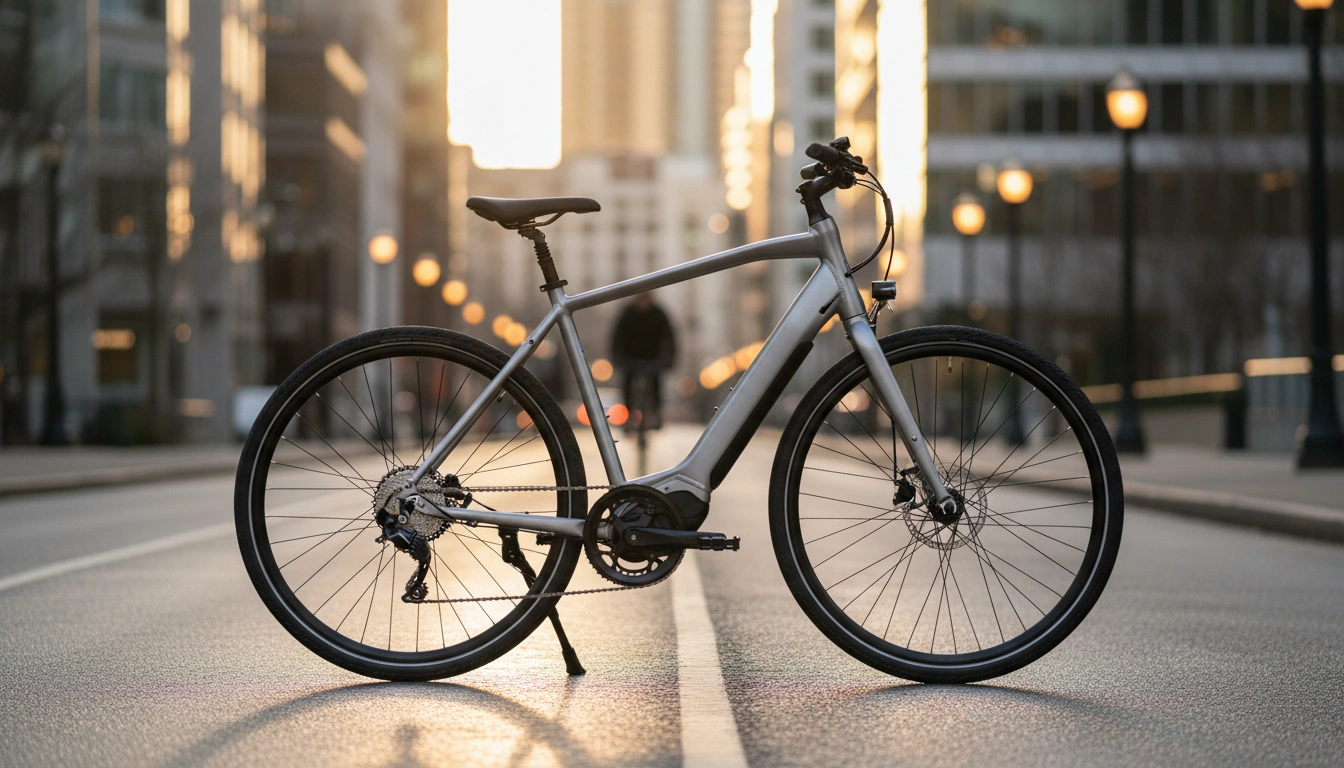
A thousand dollars used to be the weird middle zone of electric bikes – too much to spend on a gamble, not enough to get something people would actually brag about. That’s not true anymore. The $600-1000 range in 2026 is where things genuinely get interesting. You’re past the underpowered $400 stuff that poops out on a slight hill, but you’re not dropping $2,500-3,000 on a mid-drive commuter that requires a loan application. At this price you’re getting real motors, real batteries, and bikes that can handle your actual daily ride – not just flat parking lots.
The jump from the sub-$600 tier is real. Motors step up to 500-750W with higher peak output, batteries move to 48V with more amp-hours, and features like UL 2849 safety certification and hydraulic disc brakes start showing up. You still won’t find a mid-drive motor here – those live north of $1,500 – but for hub-motor performance this price tier has leveled up noticeably. We looked at fat tire folders, step-through commuters, mountain bikes, and folding all-terrain models to cover the full range of what riders in this budget are actually shopping for.
We covered eight bikes across different ride styles: folding fat tire, urban commuter, mountain/trail, and step-through designs. Whether you’re commuting, weekend trail riding, or just want something that’ll keep up on a long bike path without dying halfway, there’s a solid pick here. Let’s get into it.
Key Takeaways
Here’s the short version before you start reading – the stuff that actually matters at this price point.
- Top overall pick is the Heybike Ranger 2.0 for its 600Wh battery, hydraulic disc brakes, and step-through folding design – it covers more ground and stops more reliably than most in this tier.
- Best commuter value is the Heybike Cityscape 2.0 – UL 2849 certified, 468Wh battery, fenders and rack included, and it fits the city commuter use case perfectly without overengineering anything.
- UL 2849 certification (the key battery safety cert) is present on the Heybike Ranger 2.0, Cityscape 2.0, Jasion EB7 2.0, Jasion EB7 ST, ECOTRIC Coolboy, Vivi ACE07, and Vivi M026TGB – this matters for fire safety and peace of mind.
- Real-world range at this price is 35-55 miles on pedal assist depending on load and terrain – treat manufacturer range claims with some skepticism, especially the “up to X miles” numbers measured at low assist on flat ground.
- Every bike here uses a cadence sensor, not a torque sensor – torque sensors start appearing above $1,500. Cadence sensors work fine but give a slightly more on/off feeling versus the smooth torque-based assist you get on pricier bikes.
- Mid-drive motors, carbon frames, and premium drivetrain components (SRAM, higher-end Shimano) are not in this budget – that’s normal, not a flaw. Hub motors at this price are reliable and low-maintenance.
| Heybike Ranger 2.0 Electric Bike |  |
Best Overall | Motor: 750W (1400W peak) | Battery: 48V 600Wh | Range: Up to 60 miles | VIEW LATEST PRICE | Read Our Analysis |
| Heybike Cityscape 2.0 Commuter E-Bike |  |
Best for Commuting | Motor: 500W (1000W peak) | Battery: 48V 468Wh | Range: Up to 50 miles | VIEW LATEST PRICE | Read Our Analysis |
| Vivi ACE07 Fat Tire Electric Bike |  |
Best Fat Tire Pick | Motor: 750W (1500W peak) | Battery: 48V 720Wh | Range: Up to 60 miles | VIEW LATEST PRICE | Read Our Analysis |
| Jasion EB7 2.0 Folding Electric Bike |  |
Best Folding Pick | Motor: 500W (1200W peak) | Battery: 48V 480Wh | Range: Up to 55 miles | VIEW LATEST PRICE | Read Our Analysis |
| Jasion EB7 ST Step-Thru Folding E-Bike |  |
Best Step-Through Folder | Motor: 500W (1200W peak) | Battery: 48V 480Wh | Range: Up to 55 miles | VIEW LATEST PRICE | Read Our Analysis |
| ECOTRIC Coolboy Electric Mountain Bike |  |
Best for Trail Riding | Motor: 750W | Battery: 48V 624Wh | Range: Up to 40 miles | VIEW LATEST PRICE | Read Our Analysis |
| Vivi F26F Fat Tire Electric Mountain Bike |  |
Best Value | Motor: 500W (1000W peak) | Battery: 48V 624Wh | Range: Up to 60 miles | VIEW LATEST PRICE | Read Our Analysis |
| Vivi M026TGB Folding Mountain E-Bike |  |
Best Budget Folder | Motor: 500W (750W peak) | Battery: 48V 374Wh | Range: Up to 50 miles | VIEW LATEST PRICE | Read Our Analysis |
More Details on Our Top Picks
-
Heybike Ranger 2.0 Electric Bike
The Heybike Ranger 2.0 is the bike that makes the strongest case for spending toward the top of this price range. It’s a folding step-through fat tire bike with a 750W rear hub motor (1400W peak), a genuinely large 600Wh removable battery, and hydraulic disc brakes – a combination that’s hard to beat under a grand. The step-through frame plus folding capability means it works for a wider range of riders and living situations than a traditional diamond frame.
The 600Wh battery is the headline. Most bikes in this tier hover around 480-500Wh; the Ranger 2.0 pushes past that and shows it in the claimed 60-mile range. Real-world range under mixed assist with a typical 170-180 lb rider is more like 35-45 miles, but that’s still well ahead of lighter-battery competitors. Paired with 20″ x 4.0″ fat tires and front suspension, it handles gravel, packed dirt, and urban streets with confidence.
The hydraulic disc brakes are a genuine upgrade over the mechanical disc brakes most competitors offer at this price. Hydraulic brakes self-adjust, need less hand force, and outperform mechanical brakes in wet conditions – if you’re riding year-round or in rain, this matters. The bike also carries a UL 2849 certification, which covers both the battery and the electrical system. If you’re concerned about e-bike fire safety – a reasonable concern given some of the budget battery recall history in this space – that’s a meaningful checkmark.
This is the right pick if you want one bike that can commute, handle a mixed surface trail on weekends, and fold down for an apartment or car trunk. It’s not the lightest folder at around 65-70 lbs, so lugging it up flights of stairs gets old fast. But as an everyday e-bike that covers a lot of scenarios, it’s the strongest all-around package in this price tier. If you’re specifically looking at fat tire options, also check out our full best fat tire electric bikes roundup for additional picks.
- Motor:750W brushless hub (1400W peak)
- Battery:48V 600Wh removable lithium
- Range (claimed):Up to 60 miles
- Top Speed:28 MPH (Class 3)
- Weight Capacity:400 lbs
- Brakes:Hydraulic disc, front and rear
- Tires:20″ x 4.0″ fat tire
- Frame:Step-through, folding aluminum
- Gears:Shimano 7-speed
- Certification:UL 2849
-
Heybike Cityscape 2.0 Commuter E-Bike
The Cityscape 2.0 is the commuter in this lineup – it’s built for people who ride to work, the coffee shop, or the grocery store and want something that arrives ready to ride rather than requiring add-ons. It comes with fenders, a rear rack, a headlight, and a UL 2849 certified 468Wh IPX6 waterproof battery all included in the box. The waterproofing rating on the battery is a nice touch for commuters who don’t get to choose when it rains.
The motor is a 500W brushless hub (1000W peak) on a 26″ wheel, which gives it more of a “regular bike feel” than fat tire models. It tops out at 24 MPH and the range is a realistic 30-35 miles on throttle alone, stretching to 40-50 miles with pedal assist. The 26″ wheels roll faster and more efficiently on paved roads than 20″ fat tire wheels, which is exactly what you want for a daily commute.
The front suspension fork locks out if you want a firmer, more efficient ride on pavement – a detail that actually matters for commuting that a lot of bikes in this tier skip. The 7-speed drivetrain and dual disc brakes handle city stop-and-go well. At around 61 lbs it’s lighter than the fat tire options, which helps if you need to bring it inside at the office.
If your riding is primarily urban or suburban – paved paths, bike lanes, sidewalks – the Cityscape 2.0 is the right tool. It doesn’t pretend to be a mountain bike. For heavier riders or those who want a higher payload capacity, take a look at our electric bikes for heavy riders guide. And if you’re using it for deliveries, the rear rack and range make it worth comparing against our best electric bikes for delivery picks too.
- Motor:500W brushless hub (1000W peak)
- Battery:48V 468Wh removable, IPX6 waterproof
- Range (claimed):Up to 50 miles
- Top Speed:24 MPH (Class 2)
- Weight Capacity:264 lbs
- Brakes:Mechanical disc, front and rear
- Tires:26″ x 1.95″ puncture-resistant
- Frame:Step-through aluminum with rear rack
- Gears:Shimano 7-speed
- Certification:UL 2849
-
Vivi ACE07 Fat Tire Electric Bike
The Vivi ACE07 is the fat tire standout in this roundup, primarily because of its 720Wh battery – the largest in this lineup. More watt-hours means more range, and for fat tire bikes which burn more energy moving those wider tires, a big battery is exactly what you want. The 750W motor with 1500W peak output and 90 Nm of torque also means it handles hills and soft surfaces better than lighter-motor competitors.
The 26″ x 4.0″ fat tires are the defining feature – they soak up rough pavement, handle light gravel, and make the bike more stable at speed than narrow tires. The bike carries UL 2849 certification (both UL 2271 for the battery and UL 2849 for the overall system), which puts it in a better safety category than a lot of similarly priced fat tire bikes. At 330 lb weight capacity it suits a wide range of riders.
Top speed is 25 MPH on a 7-speed drivetrain with disc brakes. The aluminum alloy frame and adjustable suspension fork give it a reasonably solid feel for what it is. It’s not a technical trail bike – but for gravel roads, beach paths, crushed limestone, or mixed pavement and dirt, it does the job well and the big battery means you don’t have to cut rides short. Vivi had some battery recall issues with older models (2020-2023), but the ACE07 is a newer generation with updated certification.
Riders who want maximum range and fat tire capability in this budget should look at the ACE07 seriously. It’s also worth pairing with a conversion kit guide if you already own a bike and are just looking to electrify it rather than replace it. But for a complete ready-to-ride package with serious battery capacity, the ACE07 is hard to argue with.
- Motor:750W brushless hub (1500W peak)
- Battery:48V 720Wh (15Ah) removable
- Range (claimed):Up to 60 miles
- Top Speed:25 MPH (Class 2)
- Weight Capacity:330 lbs
- Brakes:Disc brakes, 180mm rotors
- Tires:26″ x 4.0″ fat tire
- Frame:Aluminum alloy with front suspension
- Gears:Shimano 7-speed
- Certification:UL 2849, UL 2271
-
Jasion EB7 2.0 Folding Electric Bike
The Jasion EB7 2.0 is the folding bike for people who need portability without sacrificing capability. It folds to roughly 36″ x 21″ x 29″ and weighs 59 lbs – compact enough to fit in a car trunk or store in a small apartment, while still packing a 48V 480Wh battery and a 500W motor with 1200W peak output. The claimed 55-mile range at 28 MPH puts it solidly in mid-tier performance territory for a folder at this price.
The dual suspension – both front fork and rear shock – is the main differentiator over single-suspension or rigid folders. For a 20″ x 3.0″ semi-fat tire bike, the dual suspension setup makes a real difference on rough pavement and packed gravel. The UL 2849 certification on the battery is a confidence point. The Shimano 7-speed drivetrain and disc brakes handle city riding comfortably.
Peak power of 1200W means it can push up to 28 MPH in pedal assist mode – technically Class 3 territory. The twist throttle gets you to 20 MPH without pedaling. That combination of throttle-only speed and pedal-assist speed covers most real-world riding scenarios. The LCD display shows speed, battery level, pedal assist level, and trip distance – standard but functional.
The EB7 2.0 is a strong pick for people who mix transit and biking – fold it on the train, unfold it for the last mile. It’s also popular for people in apartments without bike storage who need something that fits through a door and lives in the hallway. If you’d prefer a step-through version of the same bike for easier mounting, the Jasion EB7 ST just below covers that use case.
- Motor:500W brushless hub (1200W peak)
- Battery:48V 480Wh (10Ah) removable
- Range (claimed):Up to 55 miles
- Top Speed:28 MPH pedal assist, 20 MPH throttle
- Weight Capacity:275 lbs
- Brakes:Mechanical disc, front and rear
- Tires:20″ x 3.0″ semi-fat tire
- Frame:Folding aluminum, dual suspension
- Gears:Shimano 7-speed
- Certification:UL 2849
-
Jasion EB7 ST Step-Thru Folding E-Bike
The EB7 ST is the step-through version of the Jasion EB7 and it’s worth highlighting separately because the “ST” frame change isn’t cosmetic – it opens the bike up to riders who find a traditional frame awkward to mount, including older riders, shorter riders, and people with hip or knee mobility issues. Same core specs as the EB7 2.0: 500W motor with 1200W peak, 48V 480Wh battery, 55-mile claimed range, and 28 MPH top speed in pedal assist mode.
The step-through low-entry frame makes getting on and off feel like a normal bicycle rather than an athletic maneuver. It still folds down for storage and transport. The 20″ fat tires add some extra stability and cushioning compared to narrow-tire folders, which is appreciated by riders who want a more planted feel. The front suspension fork handles bumps and potholes without sending shock up your arms.
Disc brakes and a Shimano 7-speed keep the stopping and shifting reliable. The UL 2849 certified battery is the same unit as in the standard EB7 2.0, which means you get the same safety assurance. The main trade-off versus the regular EB7 is that step-through frames are slightly less rigid under very heavy loads – but within the 275 lb weight limit you won’t notice any flex at normal riding speeds.
The EB7 ST is the practical choice for anyone who values ease of mounting over the stiffer geometry of a standard folding frame. It’s particularly popular as a versatile commuter that can also handle grocery runs or light trail riding. If you’re specifically looking for a step-through that can carry cargo on longer trips, also check the Cityscape 2.0 above – it has a more commuter-optimized build with rack and fenders included.
- Motor:500W brushless hub (1200W peak)
- Battery:48V 480Wh (10Ah) removable
- Range (claimed):Up to 55 miles
- Top Speed:28 MPH pedal assist, 20 MPH throttle
- Weight Capacity:275 lbs
- Brakes:Mechanical disc, front and rear
- Tires:20″ x 3.0″ semi-fat tire
- Frame:Step-through folding aluminum, front suspension
- Gears:Shimano 7-speed
- Certification:UL 2849
-
ECOTRIC Coolboy Electric Mountain Bike
ECOTRIC has been one of the more reliable fat tire e-bike brands on Amazon and the Coolboy is their core mountain-style offering at this price tier. It runs a 750W brushless hub motor on a 48V 12.5Ah (600Wh) battery, which pushes it into genuine territory for tackling hills and mixed terrain. The full suspension setup – front fork and rear shock absorber – combined with 26″ x 4.0″ fat tires makes it the most trail-capable bike on this list for riders who want off-road fun over commuter efficiency.
The hydraulic disc brakes are a welcome spec for a trail-oriented build. On descents and loose surfaces, hydraulic brakes outperform mechanical ones consistently – the modulation is better and they don’t fade under sustained use the way mechanical pads can. The UL certification and dual shock absorber setup put it ahead of uncertified competitors at a similar price point. It ships 90% pre-assembled, which is a practical detail that matters when you’re setting up a 70+ lb bike.
Top speed is up to 26 MPH with a Shimano 7-speed drivetrain. The 5-level pedal assist plus throttle gives you good control over how hard you work versus how much the motor carries you. Range is more modest than some competitors – realistic trail range with hills and full assist is more like 20-30 miles, versus the 40-mile flat-road claim. Budget accordingly for range if trail riding is the primary use case.
The ECOTRIC Coolboy is the choice for riders who want a legitimate off-road capable bike within this budget rather than a mostly-pavement bike with fat tires for looks. It’s a bit heavier and less commuter-friendly than the folding picks, but for weekend trail riding and gravel paths it’s well-matched. If this style of riding interests you, also take a look at our best fat tire electric bikes roundup for more options including bikes above this price tier.
- Motor:750W brushless hub
- Battery:48V 600Wh (12.5Ah) removable
- Range (claimed):Up to 40 miles
- Top Speed:26 MPH (Class 3 – pedal-assist above 20 MPH places this in the Class 3 category)
- Weight Capacity:300 lbs
- Brakes:Hydraulic disc, front and rear
- Tires:26″ x 4.0″ fat tire
- Frame:Full suspension aluminum
- Gears:Shimano 7-speed
- Certification:UL 2849
-
Vivi F26F Fat Tire Electric Mountain Bike
The Vivi F26F is the best value proposition in this roundup – it packs a 500W motor with 1000W peak and a 48V 13Ah (624Wh) battery with a claimed 60-mile range into one of the lower price points in this tier. For riders who want 26″ fat tire capability and serious battery capacity without spending to the top of the budget, this is where the math works out. The full aluminum frame, front suspension, and 5-level pedal assist system cover the basics well.
The 26″ x 4.0″ fat tires handle varied terrain without the aggressiveness of a full mountain bike build – it’s more of a versatile all-rounder than a dedicated trail machine. Top speed is 25 MPH and the 21-speed drivetrain (versus the more common 7-speed on other bikes in this list) gives you more granular gearing options for hills and varying terrain. The removable 48V lithium battery uses quality 21700 cells – a better cell format than the older 18650 cells used in cheaper batteries.
Where the F26F sits slightly behind some competitors: it doesn’t carry a UL 2849 certification (check current listing as this may have been updated). The brakes are mechanical disc rather than hydraulic. These are real differences worth acknowledging – the Vivi ACE07 is the step-up version that addresses both of those points if they matter for your use case.
The F26F is genuinely good for riders who want a capable fat tire bike at the lower end of this price range and don’t need the premium extras. The big battery and 21-speed gearing give it flexibility that compensates for the simpler brakes and certification status. For heavier riders specifically, check the electric bikes for heavy riders guide to make sure the weight capacity fits your needs before committing.
- Motor:500W brushless hub (1000W peak)
- Battery:48V 624Wh (13Ah) removable
- Range (claimed):Up to 60 miles
- Top Speed:25 MPH (Class 2)
- Weight Capacity:330 lbs
- Brakes:Mechanical disc, front and rear
- Tires:26″ x 4.0″ fat tire
- Frame:Aluminum with front suspension
- Gears:21-speed
- Certification:SGS tested (verify current listing)
-
Vivi M026TGB Folding Mountain E-Bike
The Vivi M026TGB is the budget folding pick for riders who want a full-suspension mountain-style folder without the price tag of the higher-spec options. It runs a 500W motor (750W peak) on a 48V system with a 374Wh battery – that’s the smallest battery in this roundup, which means shorter range but also lower weight and a more aggressive sale price. The UL 2849 (SGS certified) stamp on a folding full-suspension bike at this price is something worth noting.
The full dual suspension – front fork and rear shock – is the standout feature on a folder at this price. Most folding bikes in this tier skip the rear suspension to keep costs down. The M026TGB keeps it in, which means a noticeably more comfortable ride over rough pavement and unpaved paths compared to rigid folders. The 26″ wheels give it a more traditional bike feel than the smaller 20″ wheels on the Jasion EB7 models.
Top speed is a more conservative 22 MPH and range is estimated at 30-40 miles in real-world use on pedal assist, with throttle-only cutting that down to around 20-25 miles. The 21-speed drivetrain helps compensate for the lighter motor on hills by letting you find the right gear. At just under 50 lbs it’s lighter than most fat tire bikes, which is a genuine advantage for carrying and storage.
The M026TGB makes sense for riders who want portability and some trail capability but don’t need maximum range or top-end power. It’s a legitimate budget folding option in a space where a lot of bikes sacrifice too much to hit a low price. Worth comparing directly to the Jasion EB7 2.0 above if you’re deciding between the two – the EB7 2.0 has a larger battery and slightly simpler design, while the M026TGB offers dual suspension and lighter weight at a lower price point.
- Motor:500W brushless hub (750W peak)
- Battery:48V 374Wh (7.8Ah) removable
- Range (claimed):Up to 50 miles
- Top Speed:22 MPH (Class 2)
- Weight Capacity:265 lbs
- Brakes:Mechanical disc, front and rear
- Tires:26″ x 2.0″ all-terrain
- Frame:Folding aluminum, full dual suspension
- Gears:21-speed
- Certification:UL 2849 (SGS certified)
How to Choose an Electric Bike Under $1000
Not all bikes at this price are created equal – the spec gaps between the best and worst options in this range are significant, and knowing what to look at makes the difference between a bike you ride every week and one that collects dust.
What $1000 Actually Buys in 2026
The jump from the under-$600 tier is real and worth understanding. At $600-1000 you’re generally getting a 48V electrical system (versus 36V on cheaper bikes), which means more consistent power delivery as the battery drains. Motors step up from 350-500W to 500-750W with higher peak outputs. Battery capacity climbs from 300-400Wh to 450-720Wh. Features like UL 2849 certification, hydraulic disc brakes, and dual suspension start appearing. What you’re still not getting: mid-drive motors (those start around $1,500+), torque sensors (same), carbon or premium alloy frames, or name-brand component groups. That’s not a flaw at this price – it’s accurate expectations. If you’re looking at the lower end of this range, also check our best electric bikes under $600 roundup to understand what you’d be giving up by going down a tier.
Motor: 500W vs 750W (and Why Wattage Isn’t Everything)
A 750W motor climbs hills better and accelerates faster than a 500W motor – that part is simple. But peak wattage numbers can be misleading. The Jasion EB7 2.0 is rated 500W continuous but peaks at 1200W, while some “750W” bikes peak at only 900W. The number that matters more is peak torque (measured in Nm) and the quality of the motor controller. A well-tuned 500W motor on a light bike can outperform a poorly tuned 750W motor on a heavier one. For flat urban riding, 500W is plenty. For hills, cargo loads, or heavier riders, 750W (like the Ranger 2.0 or ECOTRIC Coolboy) is the safer choice.
Battery: Range Claims vs Real-World
Manufacturer range numbers are almost always measured under ideal conditions – flat road, minimal wind, 150 lb rider, low pedal assist level. In practice, expect 50-60% of the claimed range under normal mixed riding conditions. A bike claiming 60 miles will typically deliver 30-40 miles for a 180 lb rider on varied terrain with frequent throttle use. The Vivi ACE07’s 720Wh battery is the largest here; the Vivi M026TGB’s 374Wh is the smallest. More watt-hours equals more real-world range, full stop. If range is your priority, don’t let the headline number sell you – look at the Wh figure instead.
Brakes: Mechanical, Hydraulic, and Why It Matters at This Price
Most bikes in this roundup use mechanical disc brakes – they work fine and are easy to adjust yourself. The Heybike Ranger 2.0 and ECOTRIC Coolboy are the exceptions with hydraulic disc brakes, which require less hand force, self-adjust over time, and perform better in wet conditions. If you’re riding in rain, on trails, or you’re a heavier rider who puts more load on the brakes, hydraulic is worth seeking out. For dry urban commuting on flat roads, mechanical disc brakes are completely adequate. Don’t confuse disc brakes (mechanical or hydraulic) with rim brakes – disc brakes are significantly better in all conditions and all eight bikes here use disc brakes.
Class 1 vs Class 2 vs Class 3 (Legal Stuff)
Class 1 is pedal-assist only up to 20 MPH – allowed on almost all bike paths. Class 2 adds throttle-only operation up to 20 MPH – allowed most places but some trails restrict it. Class 3 is pedal assist up to 28 MPH with no throttle (or throttle limited to 20 MPH) – not allowed on many shared bike paths and some states require helmets. Most bikes here are effectively Class 2 with throttle capped at 20 MPH and pedal assist pushing higher. The Jasion EB7 2.0 and EB7 ST reach 28 MPH in pedal assist mode, putting them technically in Class 3 territory. Check your local regulations before assuming any bike can go anywhere – rules vary significantly by state and city.
What to Avoid at This Price Point
Skip any bike in this range that doesn’t list actual battery Wh (or V x Ah so you can calculate it) – vague battery specs are a red flag. Be cautious of any bike that only shows a peak motor wattage without mentioning continuous rated power. Avoid listings with .gif product images (placeholder images from discontinued or out-of-stock products). Check for UL 2849 certification if battery safety matters to you – uncertified batteries have a documented history of thermal runaway incidents. Finally, weight capacity matters more than most buyers think – if you’re 200+ lbs and add a backpack, a 264 lb capacity bike is borderline, and you’ll notice it in motor strain and brake performance. Bikes rated 330-400 lbs give proper headroom.
Electric Bike Under $1000 Comparison
Here’s a side-by-side look at the specs that matter most for comparison shopping.
| Bike | Motor | Battery | Range | Top Speed | Brakes | UL Cert | Best For |
|---|---|---|---|---|---|---|---|
| Heybike Ranger 2.0 | 750W (1400W peak) | 48V 600Wh | Up to 60 mi | 28 MPH | Hydraulic disc | Yes | All-around |
| Heybike Cityscape 2.0 | 500W (1000W peak) | 48V 468Wh | Up to 50 mi | 24 MPH | Mechanical disc | Yes | Commuting |
| Vivi ACE07 | 750W (1500W peak) | 48V 720Wh | Up to 60 mi | 25 MPH | Disc | Yes | Fat tire/range |
| Jasion EB7 2.0 | 500W (1200W peak) | 48V 480Wh | Up to 55 mi | 28 MPH | Mechanical disc | Yes | Folding |
| Jasion EB7 ST | 500W (1200W peak) | 48V 480Wh | Up to 55 mi | 28 MPH | Mechanical disc | Yes | Step-thru folder |
| ECOTRIC Coolboy | 750W | 48V 600Wh | Up to 40 mi | 26 MPH (Class 3) | Hydraulic disc | Yes | Trail riding |
| Vivi F26F | 500W (1000W peak) | 48V 624Wh | Up to 60 mi | 25 MPH | Mechanical disc | SGS tested | Value fat tire |
| Vivi M026TGB | 500W (750W peak) | 48V 374Wh | Up to 50 mi | 22 MPH | Mechanical disc | Yes | Budget folder |
Frequently Asked Questions
These are the questions that actually come up when people are deciding whether to buy in this tier or wait and save more.
Are $1000 e-bikes actually worth it, or should I save for a $2000 model?
It depends entirely on what you’re using the bike for. For flat urban commuting up to 15-20 miles a day, a $1000 e-bike like the Cityscape 2.0 or Jasion EB7 2.0 does the job well and the extra $1,000 buys diminishing returns in that use case. Where the $2,000+ bikes pull ahead: mid-drive motors (much better torque on steep hills), torque sensors (smoother assist feel), better component quality (Shimano Deore vs Shimano Tourney), longer warranty support, and frame warranty coverage. If you’re a heavier rider, do a lot of hilly riding, or want a bike you’ll ride hard for 5+ years, saving for a mid-drive is worth it. For most recreational riders and moderate commuters, a well-chosen $1,000 bike is genuinely sufficient.
Is it safe to buy an e-bike on Amazon vs direct from the brand?
Buying directly from Amazon as the seller is generally safe – Amazon’s return policy and A-to-Z guarantee are meaningful protections. The risk with third-party sellers is more variable. For the bikes in this roundup, most are sold either by the brand directly through Amazon or by established Amazon sellers with significant sales history. The bigger safety question is the bike’s certification status: a UL 2849 certified bike sold on Amazon is safer than an uncertified bike sold direct from a brand website. Certification is more important than the sales channel.
How long does a $1000 e-bike battery last before replacement?
Most lithium-ion batteries at this price tier are rated for 500-800 charge cycles before dropping to around 80% capacity. If you charge once per day, that’s 1.5-2 years before noticeable degradation. At 3-4 charges per week, you’re looking at 3-4 years of good performance. Replacement batteries for these brands typically run $150-300 when you need one. The Jasion EB7 and Heybike Ranger use removable batteries, making replacement straightforward. Avoid fully draining the battery regularly – keeping it between 20-80% charge significantly extends lifespan.
Do I need UL certification?
You don’t technically need it, but it’s a meaningful safety signal worth paying attention to. UL 2849 covers the complete electrical system including the battery management system and charger. Uncertified e-bike batteries have been responsible for apartment fires and injuries – not in huge numbers, but enough that New York City and other municipalities have passed regulations requiring certification for certain uses. All eight bikes in this roundup have some form of safety certification. If you’re storing the bike in your home or charging it indoors overnight, UL 2849 certification gives you meaningful additional protection against thermal runaway events.
What’s the difference between 500W and 750W motors?
A 750W motor produces roughly 50% more continuous power than a 500W motor, which translates to better hill climbing, faster acceleration, and more consistent performance under heavy loads or with heavier riders. In practical terms: on a 10% grade hill, a 750W motor (like the Heybike Ranger 2.0 or Vivi ACE07) will get you up without much struggle. A 500W motor will manage but may drop to a low speed on steeper inclines. On flat ground at moderate speeds, the difference is minimal – both feel plenty powerful. If you weigh over 200 lbs or plan to ride any significant hills regularly, 750W is worth prioritizing. For flat commuting under 180 lbs, 500W is completely adequate.
Can I ride a Class 2 e-bike on bike paths?
Generally yes for most shared-use paths, but the rules vary by state, city, and the specific trail or path. Class 2 bikes (throttle up to 20 MPH) are more broadly permitted than Class 3. Most rail-trail networks, greenways, and multi-use paths allow Class 2 e-bikes. Some national parks and wilderness trail systems prohibit e-bikes entirely. A few cities require Class 2 bikes to use the same lanes as Class 1 but restrict throttle use on some paths. The safest approach: check the posted rules for your specific route before your first ride. Also note that several bikes in this roundup reach Class 3 speeds (28 MPH) in pedal assist mode – operating above 20 MPH on a shared path is legally and practically different from the 20 MPH throttle operation, so know your local rules.
🚲 Free: The Smart Bike Buyer’s Cheat Sheet
Get our 2-page PDF - budget tiers, the components that actually matter, and a 12-point used-bike inspection. We'll email you the download link. No spam, unsubscribe anytime.
By subscribing you agree to our Privacy Policy.