
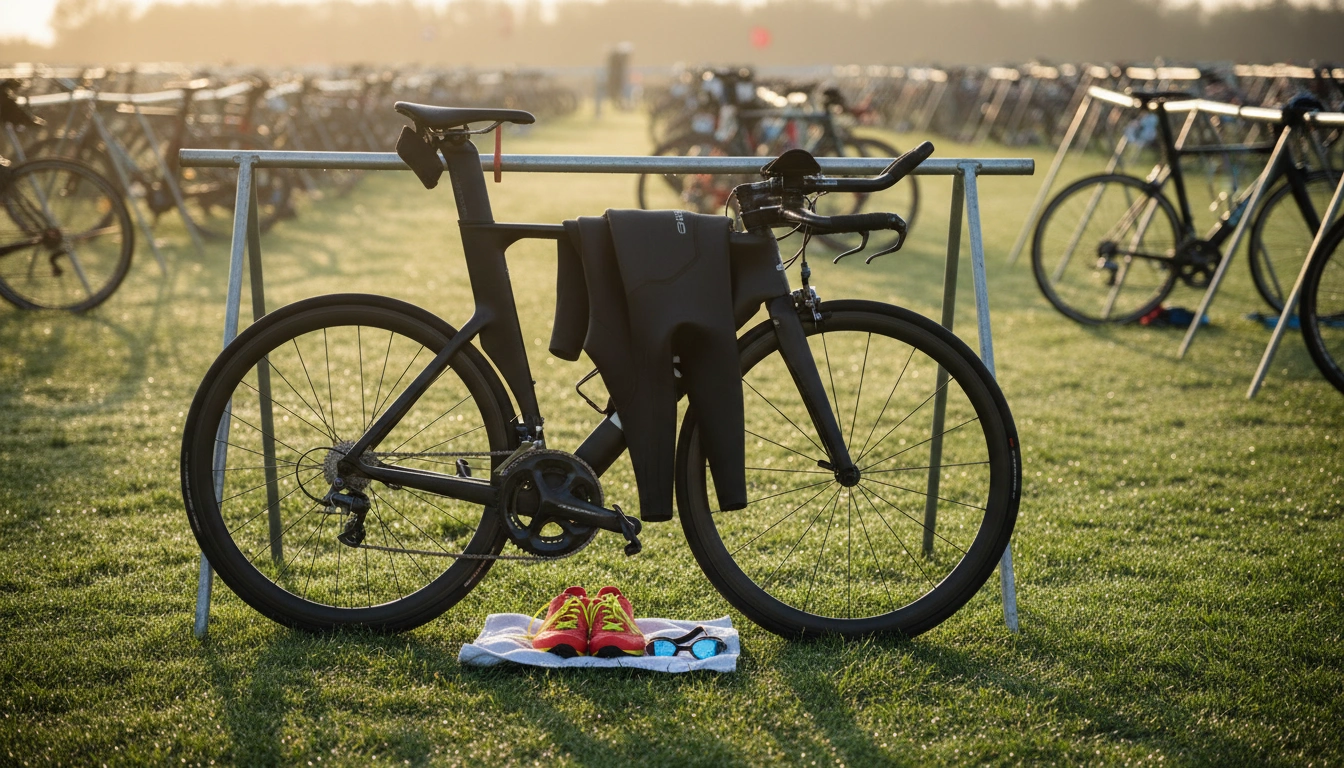
Triathlon is three sports crammed into one race day, and your gear has to keep up with all of them. You swim, you bike, you run – and each discipline wants something different from your equipment. The wetsuit that gets you through the swim has nothing in common with the saddle you’ll sit on for 40+ kilometers, which has nothing in common with the shoes you’ll lace up for the run. It’s a gear puzzle unlike anything else in endurance sport.
The good news is you don’t need to solve it all at once. Most people start with what they already own – a road bike, a pair of goggles, some decent shorts – and layer in purpose-built triathlon gear as they learn what actually matters to their performance. The bad news is there’s a lot of noise out there about what you “need,” and most of it is aimed at people who’ve already done a dozen Ironmans.
This guide is for everyone else. Whether you’re prepping for your first sprint tri or trying to upgrade from borrowed gear to something that actually fits your race, you’ll find straightforward answers here. No jargon, no $10,000 bike recommendations unless you ask for them.
What Is Triathlon Gear?
Three sports, three gear lists – here’s how it breaks down and why each piece matters.
Triathlon combines open-water swimming, cycling, and running into a single continuous race. You move between disciplines in “transition zones” – T1 is swim-to-bike, T2 is bike-to-run – and the clock never stops. That context shapes everything about how triathlon gear is designed.
Swim gear is about getting through the water fast and comfortably. Open-water swimming is very different from a pool – you’re dealing with waves, currents, cold temperatures, and no lane markers. The core items are a wetsuit (in colder water) and a good pair of goggles. Wetsuits add buoyancy and warmth; goggles keep you sighting clearly in choppy conditions.
Bike gear covers everything from the bike itself to your helmet, shoes, and any accessories. The cycling leg is typically the longest portion of a triathlon by time, so small efficiency gains here compound more than anywhere else. Triathlon-specific bikes (also called TT bikes) are built for sustained aerodynamic output on flat courses. Regular road bikes work fine too, especially with clip-on aero bars added.
Run gear is the simplest to think about – you need shoes that can handle the run after 40+ minutes on the bike. Triathlon-specific running shoes often feature quick-lace systems and a minimal sock-free fit since you’re transitioning fast. Beyond shoes, your clothing choice matters here too: a good tri suit or tri shorts worn the whole race saves you from changing clothes at each transition.
Quick Picks: Essential Triathlon Gear
If you want a shortlist before reading everything else, these are the four pieces of kit worth spending real money on first.
Best Budget Entry Triathlon Bike
If you’re doing your first triathlon and don’t want to sink four figures into a dedicated TT bike, a solid aluminum tri-geometry bike under $1,000 gives you the aero position without the full investment. Look for an aluminum frame with a steeper seat tube angle (78+ degrees) so you can run efficiently off the bike.
Best Triathlon Wetsuit (Full Suit)
A full-sleeve wetsuit built for open water adds buoyancy that literally makes you faster without extra fitness. The key specs to look for: 5mm panels across the chest and torso for warmth, 1.5-3mm arms for stroke flexibility, and a USAT-legal thickness (no panel over 5mm). A proper tri wetsuit has a different cut than a surf suit – the shoulders are cut to allow full freestyle rotation without restriction.
Best Triathlon Goggles
Open-water goggles need a wider field of vision than pool goggles so you can spot buoys and sight off landmarks. Anti-fog coating and UV protection matter a lot in outdoor conditions. A good gasket seal is non-negotiable – you do not want to stop mid-swim to fix a leaking goggle.
Best Triathlon Shorts
Tri shorts are the piece of clothing that carries you through all three disciplines. They need a chamois that’s comfortable on the bike but thin enough to run in without chafing. Quick-dry fabric is essential because you’ll be in them wet from the swim. A good pair of tri shorts eliminates one full change in transition, which saves time and mental energy.
Triathlon Gear by Category
Ready to go deeper on any piece of kit? Here’s where each spoke guide lives.
Swim
- Best Triathlon Wetsuits – full reviews, wetsuit sizing, USAT-legal options across budget tiers
- Best Triathlon Goggles – open-water vs pool goggles, anti-fog picks, tinted lenses for sunny races
Bike
- Best Triathlon Bikes Under $1,000 – best entry-level options, what to look for on a tight budget
- Best Triathlon Bikes for the Money – best value picks across all price points
- Best Clip-On Aero Bars – turn your road bike into a time trial machine for under $100
Clothing
- Best Triathlon Shorts – chamois thickness, fit, and quick-dry fabrics
- Best Women’s Triathlon Suit – one-piece tri suits with swim-to-run versatility
Do You Need a Triathlon-Specific Bike?
This is the question that keeps most new triathletes up at night, usually right after they’ve looked up the price of a proper TT bike.
The short answer is no – not for your first race, and probably not for your first several races. A road bike with decent components will get you to the finish line. Plenty of people post strong bike splits on standard road geometry, especially on hilly courses where the aero position is harder to hold anyway.
That said, there are real differences between a triathlon-specific bike and a road bike, and they matter more as you get serious about the sport.
A triathlon bike (also called a TT bike or time trial bike) has a steeper seat tube angle – typically 76-80 degrees compared to a road bike’s 72-74. That steeper angle shifts your hips forward, which accomplishes two things: it puts you in a lower, more aerodynamic position, and it preserves your hip flexors and glutes for the run by using slightly different muscle recruitment on the bike. After 40 or 90 kilometers in the saddle, that matters.
A road bike with clip-on aero bars is a solid middle ground. You get most of the aerodynamic benefit at a fraction of the cost, and you keep the handling versatility of a road bike on courses with corners and climbs. For most sprint and Olympic distance triathletes, this is the practical sweet spot.
If you’re targeting a 70.3 or full Ironman and you’ve been racing for a couple of years, a dedicated tri bike starts to make more financial sense. The aerodynamic savings over 90-180 kilometers are not trivial.
What to Look for in Triathlon Gear
Each discipline has its own buying logic, and knowing what actually moves the needle saves you from spending money on features that don’t matter for your race distance.
Wetsuit
Thickness is the main variable. USAT rules allow a maximum of 5mm thickness on any panel. Most full-sleeve wetsuits use 5mm on the core for warmth and buoyancy, tapering to 2-3mm on the arms so you can rotate your shoulders freely. If the shoulder panels are too thick, your freestyle stroke suffers and you fatigue faster.
Fit matters more than brand. A wetsuit that’s too loose lets cold water flush through constantly; too tight and you’ll be gasping by the first buoy. When trying on a wetsuit, raise your arms overhead and rotate – you should have full range of motion without the neck pulling down hard.
Sleeve vs sleeveless is another choice. Full-sleeve suits offer more warmth and buoyancy across your whole body. Sleeveless suits are faster to get off in T1 and work better in warmer water. If your race is in water cooler than 65°F (18°C), full sleeves are worth the extra few seconds in transition.
Also check your race rules. Water temperature cutoffs for wetsuit legality vary by race organization. Above 78°F (25.6°C), USAT and most Ironman events prohibit wetsuits in the competitive wave. Always read the athlete guide before race day.
Goggles
Open-water goggle design prioritizes sighting and coverage over pool-style streamlining. Larger lenses give you more peripheral vision to spot buoys and other swimmers. Mirrored or tinted lenses reduce glare in morning sunlight, which is exactly when most triathlons start. Anti-fog coating is important – failing that, a smear of baby shampoo on the inside lens the night before works fine.
Gasket seal is where budget goggles cut corners. Press the goggles gently to your face without the strap – they should hold suction for a few seconds. If they fall off immediately, the seal won’t hold under swim conditions.
Bike
Beyond the road bike vs tri bike question covered above, pay attention to fit before any other spec. A poorly fitted bike will cost you more time and cause more injury than an “inferior” frame that fits perfectly. Aerobars only help if you can actually hold the position.
For budget bikes, prioritize the drivetrain and wheelset over frame material. Aluminum frames are totally fine for training and racing. Cheap wheels and a sketchy 7-speed drivetrain are what will frustrate you on race day.
Shorts and Tri Suits
The main thing to understand is that triathlon chamois padding is intentionally thinner than road cycling chamois. A thick cycling chamois is great for 5-hour rides but miserable to run in – it’s bulky, holds water, and feels like a diaper after the swim. Tri-specific padding is lighter and dries faster, which is the right trade-off when you have to run off the bike.
Quick-dry fabric is not optional – you’ll wear these through the swim, and starting the bike soaking wet adds unnecessary discomfort. Look for polyester blends with mesh panels, not compression tights designed for dry conditions.
Race Categories Explained
Triathlon is not one race – it’s five or six different races with the same name, and your gear needs change substantially depending on which distance you’re targeting.
Sprint Triathlon – Typically 750m swim / 20km bike / 5km run. The most accessible format. You can race a sprint on a road bike, borrowed goggles, and regular running shorts. Fast transitions matter more at this distance than having elite equipment.
Olympic Triathlon – 1.5km swim / 40km bike / 10km run. The classic format and the one used at the actual Olympics. At this distance, bike efficiency starts to matter more. A pair of tri shorts or a tri suit pays off because you’re out there long enough for chamois comfort to become a factor.
Half Ironman (70.3) – 1.9km swim / 90km bike / 21.1km run. At this point, gear choices meaningfully affect your finish time and your comfort during the race. A tri bike or aero road bike setup is worth considering. Nutrition management starts here too, and your kit needs pockets or you need a tri bag on the frame.
Full Ironman (140.6) – 3.8km swim / 180km bike / 42.2km run. This is where triathlon-specific bikes, high-end wetsuits, and a fully optimized kit start to pay for themselves in time and recovery. The bike leg alone takes most people 5-7 hours. Equipment quality here is an investment in how you feel on the run.
One thing a lot of first-timers overlook: T1 and T2 (your transition times) are counted as part of your overall race clock. A smooth, practiced transition can save you 2-4 minutes compared to fumbling with unfamiliar gear under pressure. However good or basic your equipment is, practicing your transitions at home before race day is free speed.
The smart approach is to race your first event in whatever gear you can put together, then decide what to upgrade based on what actually slowed you down or caused problems.
Triathlon Gear FAQ
These are the questions that come up constantly from new triathletes, so here are straight answers without the usual hedging.
Do you need a special bike for triathlon?
No. A road bike works perfectly well for sprint, Olympic, and even half-Ironman distances, especially for beginners. A triathlon-specific (TT) bike becomes more worthwhile if you’re racing longer distances regularly and you’ve already dialed in your swim and run.
Can you use a road bike for your first triathlon?
Yes, absolutely. Most first-time triathletes finish on road bikes. Some use mountain bikes or hybrids. The race doesn’t check your bike at the start line. Focus on fitness first, equipment second.
Are tri suits required?
No. You can wear a swimsuit for the swim and change into bike gear and run gear at each transition. A tri suit or tri shorts just eliminate the costume changes and save transition time. For shorter races, a swimsuit with shorts thrown on in T1 is a totally valid strategy.
How much should you spend on your first triathlon setup?
A realistic starting budget for a complete sprint triathlon setup using a used bike is around $300-600 total. That covers an entry-level wetsuit (~$100-150), a pair of tri goggles (~$20-40), tri shorts (~$40-80), and assumes you already have a bike or can find a used road bike. Adding a new entry-level tri bike pushes the total to $1,000-1,500. The gear doesn’t have to be expensive to get you across the finish line.
Do you need a wetsuit for a tri?
It depends on the water temperature and race rules. Most races allow wetsuits when water is under 78°F (25.6°C). Above that threshold, wetsuits are often banned in competitive waves. Some races are wetsuit-optional across all temperatures. Check the specific race’s athlete guide – this varies by organization and venue.
What’s the difference between tri shorts and cycling shorts?
The main difference is chamois thickness and quick-dry capability. Cycling shorts have thick, padded chamois designed for long rides but aren’t intended to be run in. Tri shorts have a much thinner chamois that’s comfortable on the bike but designed to dry fast and not feel bulky on the run. Tri shorts can also be worn through the swim, while cycling shorts absorb water and take forever to dry.
Are aerobars worth it?
For most triathletes, yes – especially if you’re riding a road bike and want an aero advantage without buying a new frame. Clip-on aero bars typically cost $50-150 and can shave several minutes off your bike split at Olympic distance. The trade-off is handling – you can’t steer or brake from the aero position, so you need to practice transitioning between your regular bars and the extensions before race day. On flat, low-traffic courses, they’re well worth it.
Browse Our Full Triathlon Library
Whether you’re just starting out or fine-tuning a setup that’s already working, there’s more detail in each category below. Each guide covers multiple products at different price points, so you can pick the right fit for your budget and race distance – not just the most expensive option on the shelf.
- Best Triathlon Bikes Under $1,000
- Best Triathlon Bikes for the Money
- Best Triathlon Wetsuits
- Best Triathlon Goggles
- Best Triathlon Shorts
- Best Women’s Triathlon Suit
- Best Clip-On Aero Bars
🚲 Free: The Smart Bike Buyer’s Cheat Sheet
Get our 2-page PDF - budget tiers, the components that actually matter, and a 12-point used-bike inspection. We'll email you the download link. No spam, unsubscribe anytime.
By subscribing you agree to our Privacy Policy.