
It’s pouring rain outside, the roads are covered in ice, or it’s 95 degrees and you’d rather not become a puddle on the pavement. Whatever the reason, a bike trainer lets you keep riding without leaving your house. And if you’ve been eyeing Zwift or TrainerRoad, a trainer is your ticket to virtual racing from your garage.
The thing is, the bike trainer market ranges from simple magnetic stands to premium smart trainers that simulate real hills and talk to your phone. That’s a huge gap, and picking the wrong one wastes money. I’ve compared everything from budget-friendly magnetic stands to premium direct-drive smart trainers to find a good option at every budget level. If you’ve been thinking about converting your bicycle into an exercise bike, a trainer stand is the fastest way to do it.
Whether you want a cheap way to spin through winter or a full Zwift racing setup, there’s something here for you. Let’s get into it.
Key Takeaways
- The Sportneer Magnetic Bike Trainer Stand is our budget pick – 6 levels of magnetic resistance from a handlebar remote, a budget-friendly price tier, and a frame that folds for storage.
- Budget trainers use magnetic resistance with manual adjustment, while fluid trainers (a step up in price) offer smoother, progressive resistance that feels more like outdoor riding.
- Smart trainers like the Wahoo KICKR Core 2 (premium) and KICKR V6 (top of the range) connect directly to Zwift, TrainerRoad, and Rouvy – they automatically adjust resistance to match virtual terrain.
- Listed weight limits on the stands run from 265 lbs (Yaheetech) to 330 lbs (BalanceFrom), and Wahoo lists a 250 lb max rider weight for the KICKRs, so check specs before buying if you’re a heavier rider.
- Wheel-on trainers work with your existing rear wheel but cause tire wear, while direct-drive smart trainers replace your rear wheel entirely for zero tire damage and better accuracy.
| Sportneer Magnetic Bike Trainer Stand |  |
Best Budget Pick | Resistance: Magnetic, 6 levels | Compatibility: 26-28″/700C | Capacity: 300 lbs | VIEW LATEST PRICE | Read Our Analysis |
| BalanceFrom Bike Trainer Stand |  |
Lowest-Cost Pick | Resistance: Magnetic, 8 levels | Compatibility: 26-28″/700C | Capacity: 330 lbs | VIEW LATEST PRICE | Read Our Analysis |
| Alpcour Magnetic Bike Trainer Stand |  |
Best Mid-Range Magnetic | Resistance: Magnetic, 6 levels | Frame: Stainless steel | Extras: Carrying bag included | VIEW LATEST PRICE | Read Our Analysis |
| Alpcour Fluid Bike Trainer Stand |  |
Best Fluid Trainer | Resistance: Progressive fluid | Noise: Quiet fluid unit | Compatibility: 26-29″/700C | VIEW LATEST PRICE | Read Our Analysis |
| Saris Fluid2 Indoor Bike Trainer | 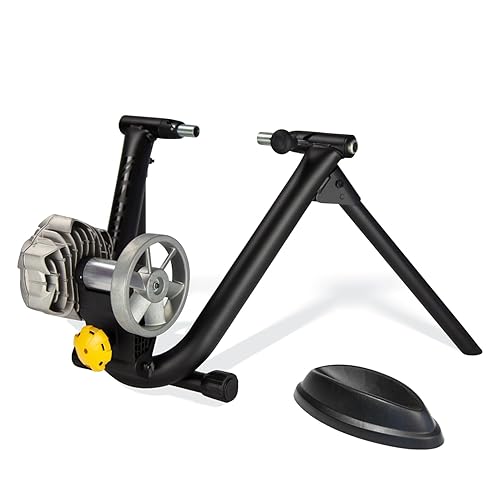 |
Best App-Ready Fluid | Resistance: Progressive fluid | Apps: Zwift/Rouvy with sensor | Made: USA | VIEW LATEST PRICE | Read Our Analysis |
| Saris Magnetic Indoor Bike Trainer |  |
Best Saris Budget Option | Resistance: Magnetic, 5 levels | Apps: Zwift with sensor | Capacity: 300 lbs | VIEW LATEST PRICE | Read Our Analysis |
| Yaheetech Bike Trainer Stand |  |
Best Value for Money | Resistance: Magnetic, adjustable | Frame: Steel | Capacity: 265 lbs | VIEW LATEST PRICE | Read Our Analysis |
| Wahoo KICKR Core 2 |  |
Best Smart Trainer | Power: 1,800W max | Accuracy: +/-2% | Gradient: Up to 16% | VIEW LATEST PRICE | Read Our Analysis |
| Wahoo KICKR V6 |  |
Best Premium Trainer | Power: 2,200W max | Gradient: -10% to +20% | Max rider: 250 lbs | VIEW LATEST PRICE | Read Our Analysis |
| ROCKBROS Bike Rollers |  |
Best Rollers Alternative | Type: Parabolic rollers | Material: Aluminum alloy | Weight: 6.5 kg / 14.3 lbs | VIEW LATEST PRICE | Read Our Analysis |
More Details on Our Top Picks
-
Sportneer Magnetic Bike Trainer Stand
Sportneer is a popular name in budget magnetic trainers, and it’s easy to see why. You get a functional indoor training setup without a big spend, and it won’t make you feel like you wasted your money.
The 6 levels of magnetic resistance are controlled by a handlebar-mounted remote, so you can bump the difficulty up mid-ride without stopping. Level 1 is the easy end and level 6 the hardest – nothing that’ll simulate a mountain pass, but enough to build a solid sweat. Noise depends a lot on your tire, and Sportneer itself recommends slick or road tires for quieter riding.
Setup is simple. The quick-release skewer locks your rear wheel in place, and the trainer fits 26-28 inch and 700C wheels. The listing gives a 300 lb max capacity, and the wide base and adjustable anti-slip feet are there for stability. It’s built for quick-release rear axles, so a thru-axle bike needs Sportneer’s separate thru-axle version. The frame folds for storage, which is great if your “home gym” is also your living room.
If you’re new to indoor cycling and don’t want to drop serious money before you know whether you’ll stick with it, start here. It does exactly what it promises – nothing fancy, just a reliable way to ride your bike indoors. You can always upgrade later if the indoor bug bites.
- Resistance Type:Magnetic
- Resistance Levels:6 (handlebar remote)
- Wheel Compatibility:26-28″, 700C
- Weight Capacity:300 lbs
- Foldable:Yes
- Noise Level:Moderate (depends on tire)
- Smart Compatibility:No
- Price Tier:Budget
-
BalanceFrom Bike Trainer Stand
The BalanceFrom is one of the most popular bike trainer stands on Amazon, and it’s one of the cheapest ways to turn your road bike into an indoor exercise machine.
You actually get 8 levels of magnetic resistance here, which is more than the Sportneer’s 6. The extra levels give you finer control over intensity, especially useful if you’re doing structured interval workouts where you want specific effort zones. The resistance shifter mounts to your handlebars for easy mid-ride adjustments.
The 330 lb weight capacity is the highest among the stands on this list. The steel frame folds down for storage, and the listing points to a wide base and low stance for stability.
The trade-off? Noise. The listing itself warns that it’s loud with rough tires and quieter with road bike tires, so a smooth tire matters here. And like any wheel-on trainer, the roller will wear your rear tire. If you want the lowest entry point into indoor training, the BalanceFrom gets it done. Consider grabbing a compact exercise bike if space is extremely tight, but this trainer folds small enough for most rooms.
- Resistance Type:Magnetic
- Resistance Levels:8 (handlebar remote)
- Wheel Compatibility:26-28″, 700C
- Weight Capacity:330 lbs
- Foldable:Yes
- Noise Level:Moderate (louder on rough tires)
- Smart Compatibility:No
- Price Tier:Budget
-
Alpcour Magnetic Bike Trainer Stand
If you want a magnetic trainer with a sturdier frame than the budget stands, the Alpcour is worth a look. It sits a step above the budget magnetics in price, and the stainless steel build is the main reason.
The frame is built from heavy-duty stainless steel, which resists rust better than painted steel – handy when you sweat all over it (and you will). The listing also points to an extra-wide base and low stance for balance.
Like most magnetic trainers, you get 6 resistance levels, here with a handlebar-mounted cable controller. It’s still not progressive like a fluid trainer – you set a level and that’s what you get.
The included carrying bag is a nice touch if you travel to races and want to warm up before events, and the frame folds for storage. For riders who want something more durable than a budget stand but aren’t ready to move up to a fluid trainer, this is the one I’d point you toward.
- Resistance Type:Magnetic
- Resistance Levels:6 (handlebar remote)
- Frame Material:Heavy-duty stainless steel
- Wheel Compatibility:26-28″, 700C
- Foldable:Yes
- Extras:Carrying bag included
- Noise Level:Moderate (depends on tire)
- Smart Compatibility:No
- Price Tier:Mid-range
-
Alpcour Fluid Bike Trainer Stand
Here’s where indoor riding starts to actually feel like outdoor riding. Fluid trainers use a sealed fluid unit to create resistance – the harder you pedal, the more resistance you feel. No clicking through levels, no sudden jumps. Just smooth, progressive resistance that responds to your effort in real time. That’s what makes the Alpcour Fluid stand out from every magnetic trainer on this list.
Fluid resistance builds with your speed, so accelerations feel natural and closer to a road-like effort when you push the pace. Alpcour describes the operation as near silent, and fluid units are generally quieter than magnetic ones, which helps if you ride in an apartment late at night. The tire on the roller still makes some noise, so don’t expect total silence.
The listing says it fits most 26 to 29 inch and 700C wheels, so road bikes, mountain bikes, and hybrids can all work. The frame is stainless steel with a dual tension knob and lock ring, and the kit includes a front wheel riser block, anti-slip rubber pads and a carrying bag.
It costs more than the magnetic stands, but the smoother ride feel is worth it if you plan to use it regularly. If you’re training several times a week and noise is a concern, fluid is the way to go. The only downside? You can’t manually lower the resistance for easy recovery spins the way you can with magnetic levels – you just pedal slower.
- Resistance Type:Progressive fluid
- Resistance Control:Automatic (speed-based)
- Wheel Compatibility:26″, 27″, 28″, 29″, 700C
- Noise Level:Quiet fluid unit
- Frame Material:Stainless steel
- Foldable:Yes
- Smart Compatibility:No
- Price Tier:Mid-range
-
Saris Fluid2 Indoor Bike Trainer
The Saris Fluid2 is a USA-made wheel-on fluid trainer from one of the best-known names in indoor cycling. If you want progressive fluid resistance and the option to connect to apps like Zwift and Rouvy, it bridges the gap between basic trainers and more expensive smart trainers.
The progressive fluid curve means easy spinning at low speeds and much heavier resistance as you pedal faster – no buttons, no levels, just physics doing its thing. Saris lists a 300 lb weight limit for rider and bike combined.
The app connection is the other draw, with one catch. The Fluid2 itself isn’t a smart trainer: to use it with Zwift or Rouvy you add a speed or cadence sensor, and both Saris and the Amazon listing say that sensor is sold separately. (Saris also sells a Fluid2 Smart Equipped bundle with a sensor included, but that’s a different listing from the one linked here.) With a sensor it can pair over Bluetooth or ANT+, but you won’t get automatic resistance changes like a direct-drive trainer, and the power shown in the app is an estimate rather than a measurement.
The frame folds for storage, and the roller is a 2-inch machined alloy design. Saris lists 700c, 650b, 27.5 inch and 29 inch wheels (up to 1.5 inches wide, no tread) but not 26 inch, so check your wheel size first. If you want to dip your toes into Zwift without buying a smart trainer, this is one way to do it.
- Resistance Type:Progressive fluid
- Weight Limit:300 lbs (rider and bike)
- App Use:Zwift/Rouvy with a speed or cadence sensor
- Sensor:Sold separately
- Made In:USA
- Noise Level:69 dB at 20 mph (Saris)
- Foldable:Yes
- Price Tier:Mid-range
-
Saris Magnetic Indoor Bike Trainer
Not everyone wants to spend Fluid2 money, and Saris knows that. This magnetic Saris trainer gives you the Saris name and app compatibility (with a sensor) in a simpler magnetic package.
You get 5 levels of magnetic resistance. That’s one less than the Sportneer, and the resistance curve is linear rather than the progressive curve you get from a fluid trainer.
The selling point is app compatibility. Pair it with a separate speed sensor (sold separately) and you can ride virtual worlds without buying a direct-drive smart trainer. It won’t auto-adjust resistance like the Wahoo KICKR, but it’ll track your rides and give you a virtual cycling experience on a budget. The listing mentions 120, 130 and 135 mm dropout spacings, and Saris lists a 300 lb weight limit for rider and bike combined.
If you like the idea of a Saris trainer with app connectivity but don’t want a fluid trainer, this hits a middle ground. It’s made in the USA, per the listing, by a company that specializes in indoor cycling.
- Resistance Type:Magnetic
- Resistance Levels:5
- Weight Capacity:300 lbs
- App Use:Zwift compatible with a speed sensor (sold separately)
- Made In:USA
- Noise Level:Moderate (depends on tire)
- Foldable:Yes
- Price Tier:Mid-range
-
Yaheetech Bike Trainer Stand
The Yaheetech sits right next to the Sportneer in price tier and features, which makes it close to a coin-flip decision.
The listing calls it a steel stand with adjustable magnetic resistance, and the foot caps can be rotated to level the trainer on uneven floors. On noise, Yaheetech says the sound comes from friction between the tire and the roller, and it recommends slick tires and a carpet to cut the hum.
It comes with a quick-release skewer and fits 26 to 28 inch and 700C wheels. It’s built for quick-release rear axles, so thru-axle bikes need an adapter (not included). The 265 lb weight capacity is the lowest among the stands on this list that state a limit. If you’re a larger rider, the BalanceFrom (330 lbs) or Sportneer (300 lbs) are safer bets.
For average-weight riders who want a simple magnetic trainer without overthinking it, the Yaheetech does the job.
- Resistance Type:Magnetic
- Resistance Levels:Adjustable
- Frame Material:Steel
- Wheel Compatibility:26-28″, 700C
- Weight Capacity:265 lbs
- Foldable:Yes
- Noise Level:Moderate (depends on tire)
- Smart Compatibility:No
- Price Tier:Budget
-
Wahoo KICKR Core 2
This is where indoor training gets serious. The Wahoo KICKR Core 2 is a direct-drive smart trainer, which means your rear wheel comes off and the bike bolts directly onto the trainer’s cassette. No tire wear, no wheel slipping, no noise from rubber on a roller. Wahoo claims power accuracy within +/-2%, and the resistance adjusts automatically so you feel every virtual hill in Zwift.
The numbers speak for themselves: 1,800 watts of max resistance and up to 16% gradient simulation. Unless you’re a professional sprinter, you’ll never max this out. When you’re riding uphill in Zwift, the KICKR Core 2 automatically cranks up resistance to match the virtual grade. Descents ease off. It’s the closest thing to outdoor riding without actually going outside.
Connectivity is everything you’d expect from Wahoo – Bluetooth, ANT+, and WiFi all built in. It works with Zwift, TrainerRoad, Rouvy, Wahoo SYSTM and most other major cycling apps. ERG mode locks in a specific wattage during structured workouts so you can focus on form instead of shifting. It ships with an 11-speed (11-28) cassette already installed and Wahoo lists compatibility with 8 to 13 speed drivetrains (the stock cassette doesn’t suit Shimano CUES or LinkGlide, so check your drivetrain). Adapters and spacers for 130/135 mm quick-release, 12×142 and 12×148 thru-axle bikes are included, and it also works with the Zwift Cog and Click setup.
It’s a big jump in price from a magnetic stand. But if you’re serious about training with power, racing on Zwift, or following structured plans, the KICKR Core 2 is the sweet spot between price and performance. You get most of what the KICKR V6 offers for noticeably less.
- Trainer Type:Direct-drive smart trainer
- Max Power:1,800W
- Power Accuracy:+/-2%
- Max Gradient:16%
- Connectivity:Bluetooth, ANT+, WiFi
- ERG Mode:Yes
- Zwift Cog:Compatible
- Cassette:11-speed (11-28) pre-installed; 8-13 speed compatible
- Max Rider Weight:250 lbs
- Price Tier:Premium
-
Wahoo KICKR V6
If money isn’t the deciding factor and you want the best indoor riding experience on this list, the KICKR V6 is the trainer for competitive Zwift racers and serious cyclists. It’s not cheap. But it’s also not just a trainer – it’s a precision training tool that happens to replace your rear wheel.
The headline spec is 2,200 watts of maximum resistance with +/-1% power accuracy. It simulates gradients from -10% (downhill) to +20%, which means you feel both the burn of a steep climb and the relief of a descent. The KICKR Core 2 tops out at 16% uphill, so the V6’s extra headroom is for steep climbs and very hard efforts.
The AXIS feet are a headline V6 feature. Instead of sitting rigidly on the ground, the trainer can move side to side slightly, mimicking the natural lean of outdoor cycling. Wahoo includes hard, medium and easy feet so you can set how much give you get. As a direct-drive trainer there’s no tire rubbing a roller, so it runs quieter than wheel-on units.
Same Bluetooth/ANT+/WiFi connectivity as the KICKR Core 2, same app compatibility, same ERG mode. What you’re paying extra for is more power, a wider gradient range, AXIS feet, and a premium feel that makes 2-hour indoor rides almost enjoyable. Wahoo lists a 250 lb max rider weight. If you’re putting in 10+ hours a week on the trainer and want every watt to count, this is the one. For everyone else, the KICKR Core 2 is the better value.
- Trainer Type:Direct-drive smart trainer
- Max Power:2,200W
- Power Accuracy:+/-1%
- Gradient Simulation:-10% to +20%
- Connectivity:Bluetooth, ANT+, WiFi
- AXIS Feet:Yes (side-to-side movement)
- Max Rider Weight:250 lbs
- ERG Mode:Yes
- Price Tier:Premium (top of the range)
-
ROCKBROS Bike Rollers
Rollers are a completely different animal from trainer stands. Your bike isn’t locked in – both wheels spin freely on aluminum drums, and you balance the entire time. That means you’re training your balance, core stability, and pedaling technique all at once. The ROCKBROS rollers are the roller pick on this list, for riders who want something different from a clamp-in trainer.
The parabolic drum shape is the key feature here. The drums dip in the middle and rise toward the edges, which naturally guides your wheels back to center if you drift. Traditional straight rollers don’t do this, and the first few rides on them can feel like trying to ride a tightrope. The parabolic shape makes the learning curve more forgiving.
At just 6.5 kg (14.3 lbs), these are extremely portable. They fold flat and fit in a closet or behind a door. The adjustable frame fits 16-inch through 29-inch wheels, making them suitable for road bikes, mountain bikes, and folding bikes. The listing title says “with resistance”, but it doesn’t explain how the resistance works or how much you get, so treat these as a technique and warm-up tool first.
Fair warning: rollers have a learning curve. Your first few sessions should be next to a wall or doorframe so you can catch yourself. But once you get comfortable, many riders prefer rollers over stationary trainers because the ride feel is more natural and they genuinely improve your bike handling skills. If you already have solid balance and want something different from a traditional trainer, give these a try. Looking for an even lower-impact indoor option? Check out under-desk bicycle pedals for a no-bike-needed alternative.
- Trainer Type:Bike rollers
- Drum Shape:Parabolic (self-centering)
- Material:Aluminum alloy
- Wheel Compatibility:16-29″
- Weight:6.5 kg / 14.3 lbs
- Resistance:Listed “with resistance” (details not given)
- Foldable:Yes
- Balance Required:Yes (free-standing)
- Price Tier:Mid-range
Types of Bike Trainers Explained
Not all bike trainers work the same way, and picking the wrong type is the fastest way to waste money. Here’s what each type actually does and who it’s best for.
Magnetic Trainers
Magnetic trainers are the most common and most affordable option. A magnetic unit presses against your rear tire and creates resistance through – you guessed it – magnets. You adjust the difficulty by clicking through preset levels, usually with a handlebar-mounted shifter. Products like the Sportneer, BalanceFrom, Yaheetech, and Alpcour Magnetic all fall into this category, from budget to mid-range.
The main advantage is simplicity and cost. The downside? The resistance feels “stepped” rather than smooth – when you shift from level 3 to level 4, there’s a noticeable jump. They’re also louder than fluid trainers, especially at higher speeds. But for casual indoor riding and basic fitness, magnetic trainers get the job done without breaking the bank.
Fluid Trainers
Fluid trainers use silicone oil inside a sealed chamber to create resistance. The faster you pedal, the more resistance you feel – there are no levels to click through. This creates a smooth, progressive power curve that mimics the feel of riding on actual roads. The Alpcour Fluid and Saris Fluid2 are both fluid trainers on this list.
The ride quality jump from magnetic to fluid is significant. You’ll notice it immediately in how natural accelerations feel and how quiet the unit runs. Fluid trainers are the best choice for apartment dwellers and anyone who rides early mornings or late nights. The only real downside is that you can’t manually dial down resistance for easy recovery – you just have to pedal slowly.
Direct-Drive Smart Trainers
Direct-drive trainers are the top tier. Your rear wheel comes off, and the bike attaches directly to the trainer’s built-in cassette. This eliminates tire noise, tire wear, and wheel slippage entirely. The Wahoo KICKR Core 2 and KICKR V6 are both direct-drive smart trainers.
“Smart” means the trainer communicates with apps like Zwift, TrainerRoad, and Rouvy. When you hit a virtual hill, the trainer automatically increases resistance. When you descend, it backs off. ERG mode locks you into a specific wattage for structured workouts. Wahoo claims power accuracy of +/-1% to +/-2% on these two, which is close enough to trust the numbers for serious training. These trainers cost the most, but if you’re training with power or racing online, they’re worth it.
Rollers
Rollers are the oddball of indoor training. Your bike isn’t clamped in – it sits freely on three spinning drums, and you have to balance the entire time. This forces you to develop a smooth pedal stroke, steady core, and instinctive balance that transfers directly to outdoor riding. The ROCKBROS Bike Rollers are the roller option on this list.
Rollers are popular with road racers for warming up before events and for winter training when they want to maintain handling skills. They’re not great for high-intensity interval training (you can’t sprint hard without risking a fall), and there’s a real learning curve for beginners. But for technique work and moderate cardio, nothing else quite compares. If you’re a senior rider or new to cycling, a stationary trainer stand is probably a safer starting point.
How to Choose the Right Bike Trainer
With four different trainer types and budgets from basic to premium, narrowing down your options takes a little thought. These are the factors that actually matter.
Budget: What You Get at Each Price Point
Your budget sets the ceiling on what’s possible. Here’s a quick breakdown by tier:
Budget: Magnetic trainers like the BalanceFrom, Sportneer, and Yaheetech. Basic resistance, manual adjustment, no app connectivity. Good enough for casual fitness and staying active through winter.
Mid-range: Better magnetic trainers like the Alpcour Magnetic and Saris Mag, plus fluid trainers like the Alpcour Fluid and Saris Fluid2. Smoother resistance, a sturdier build, and the Saris stands also work with apps once you add a speed sensor.
Entry smart: The Wahoo KICKR Core 2. This is where app integration, power measurement, and automatic resistance control become built in.
Premium smart: The Wahoo KICKR V6. Top-tier power accuracy, wide gradient simulation, and extras like AXIS feet. For serious athletes and competitive virtual racers.
Noise Level: Will Your Neighbors Hate You?
This is the factor most people don’t think about until it’s too late. If you live in an apartment or ride while others are sleeping, noise matters a lot.
Loudest: Wheel-on magnetic trainers (BalanceFrom, Sportneer, Yaheetech, Alpcour Magnetic, Saris Mag). The roller-on-tire contact creates a hum that rises as you pedal faster. Tire choice matters a lot: the BalanceFrom, Sportneer and Yaheetech listings all say road or slick tires run quieter than knobby ones.
Quieter: Wheel-on fluid trainers (Alpcour Fluid, Saris Fluid2). Fluid resistance is generally smoother and quieter than magnetic, but the tire still touches a roller, and Saris rates its Mag and Fluid2 at the same 69 dB at 20 mph.
Quietest: Direct-drive smart trainers (Wahoo KICKR Core 2, KICKR V6). With no tire on a roller, the noise from that contact point is gone, which is a big plus if you ride early or late.
Smart Features and App Compatibility
If you want to ride Zwift, TrainerRoad, Rouvy, or any other cycling app, not all trainers are created equal.
No smart features: The BalanceFrom, Sportneer, Yaheetech, Alpcour Magnetic, and Alpcour Fluid have no built-in connectivity. You can still use apps with a separate speed/cadence sensor, but power data won’t be as accurate and resistance won’t auto-adjust.
App-compatible with a sensor: The Saris Mag and Saris Fluid2 work with apps like Zwift and Rouvy once you add a speed or cadence sensor (sold separately). Resistance doesn’t auto-adjust, and the power shown is estimated from your speed. It’s a budget-friendly way to see your rides on screen.
Fully smart: The Wahoo KICKR Core 2 and KICKR V6 do everything – auto-resistance, ERG mode, accurate power, gradient simulation. If you want the full virtual cycling experience, these are the only options on this list that deliver it without compromise.
Wheel Compatibility and Tire Wear
Most wheel-on trainers here work with 26-inch through 700C wheels, covering road bikes, mountain bikes, and hybrids, but Saris says the Fluid2 and Mag don’t fit 26 inch wheels, so check its compatibility list. The ROCKBROS rollers have the widest range at 16-29 inches. Most of the stands here are built for quick-release rear axles, so a thru-axle bike needs an adapter or a thru-axle version. Always check your wheel size and axle type before buying.
Tire wear is a real issue with wheel-on trainers. The resistance roller presses against your rear tire and slowly grinds it down. You have two options: accept faster tire replacement, or buy a dedicated trainer tire (they’re designed for roller contact). A trainer-specific tire is built for the heat and friction of the roller and will save your good road tire from premature death. Wearing proper cycling shoes will also help you get more power to the pedals during indoor sessions.
Direct-drive trainers (Wahoo KICKR Core 2, KICKR V6) eliminate tire wear entirely because your rear wheel comes off. That’s one of their biggest practical advantages beyond ride quality.
Weight Capacity and Stability
Weight capacity varies more than you’d think across budget trainers:
The BalanceFrom leads at 330 lbs, followed by the Sportneer, Saris Mag and Saris Fluid2 at 300 lbs (Saris counts rider and bike together), and the Yaheetech at 265 lbs. Wahoo lists a 250 lb max rider weight for the KICKR Core 2 and V6, and the Alpcour listings don’t state a limit. If you’re a heavier rider, check the listed limit before buying. Remember, standing sprints put significantly more force on the frame than seated spinning.
Stability comes from frame width and build quality. The Alpcour Magnetic lists an extra-wide base and low stance, and the BalanceFrom lists a wide base, low stance and rubber feet. A trainer mat and a level floor help with any of them. Consider pairing your trainer setup with a recumbent exercise bike as a lower-impact alternative for recovery days.
Bike Trainer Comparison
| Trainer | Type | Resistance | Noise | Smart Features | Weight Limit | Price Tier |
|---|---|---|---|---|---|---|
| Sportneer Magnetic | Wheel-on magnetic | 6 levels | Tire-dependent | None | 300 lbs | Budget |
| BalanceFrom | Wheel-on magnetic | 8 levels | Louder on rough tires | None | 330 lbs | Budget |
| Alpcour Magnetic | Wheel-on magnetic | 6 levels | Tire-dependent | None | Not listed | Mid-range |
| Alpcour Fluid | Wheel-on fluid | Progressive | Quiet fluid unit | None | Not listed | Mid-range |
| Saris Fluid2 | Wheel-on fluid | Progressive | 69 dB at 20 mph (Saris) | Zwift/Rouvy with sensor (sold separately) | 300 lbs | Mid-range |
| Saris Mag | Wheel-on magnetic | 5 levels | 69 dB at 20 mph (Saris Mag) | Zwift compatible with sensor | 300 lbs | Mid-range |
| Yaheetech | Wheel-on magnetic | Adjustable | Tire-dependent | None | 265 lbs | Budget |
| Wahoo KICKR Core 2 | Direct-drive smart | Auto (1,800W) | Low (no tire contact) | Full (BT/ANT+/WiFi) | 250 lbs (rider) | Premium |
| Wahoo KICKR V6 | Direct-drive smart | Auto (2,200W) | Low (no tire contact) | Full (BT/ANT+/WiFi) | 250 lbs (rider) | Premium |
| ROCKBROS Rollers | Rollers | Not specified | Not specified | None | Not listed | Mid-range |
Frequently Asked Questions
Do bike trainers damage your bike?
Wheel-on trainers (magnetic and fluid types) put extra stress on your rear skewer and can wear down your rear tire faster than road riding. Most frames handle trainer use fine, though carbon frames and thru-axle bikes are worth checking against the frame maker’s guidance. To minimize wear, use a dedicated trainer tire and don’t over-tighten the resistance roller against your tire. Direct-drive trainers like the Wahoo KICKR Core 2 and KICKR V6 remove the rear wheel entirely, so there’s zero tire wear and minimal stress on the bike frame.
What’s the difference between a smart trainer and a regular trainer?
A regular (or “dumb”) trainer like the Sportneer or BalanceFrom provides resistance, and that’s it. You manually adjust the level, and the trainer has no idea what power you’re producing. A smart trainer like the Wahoo KICKR Core 2 measures your power output, connects to apps via Bluetooth/ANT+/WiFi, and automatically adjusts resistance based on virtual terrain or structured workout targets. Smart trainers make apps like Zwift, TrainerRoad, and Rouvy fully interactive instead of just a screen to stare at.
Do I need a special tire for a bike trainer?
You don’t need one, but it’s a smart investment if you use a wheel-on trainer regularly. Trainer-specific tires use a compound built to resist the heat and friction of the roller, so they’re made to last longer on a trainer than your regular road tire. A good trainer tire can save your road tires from getting burned through. If you use a direct-drive trainer (like the Wahoo KICKR models), this isn’t an issue since your rear wheel isn’t involved at all.
🚲 Free: The Smart Bike Buyer’s Cheat Sheet
Get our 2-page PDF - budget tiers, the components that actually matter, and a 12-point used-bike inspection. We'll email you the download link. No spam, unsubscribe anytime.
By subscribing you agree to our Privacy Policy.
