
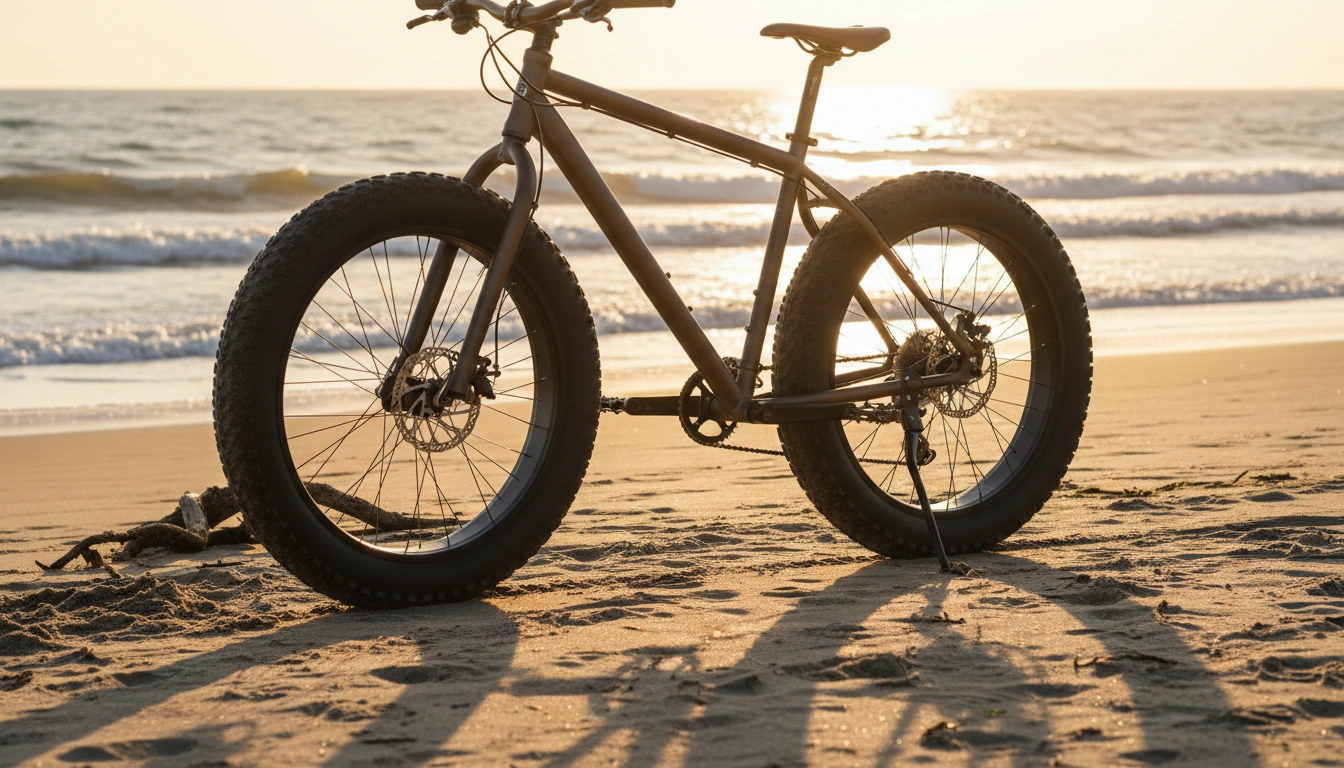
Fat tire bikes exist because regular bikes give up. Snow? Sinks. Sand? Slides. Deep mud? Forget it. But slap on a 4-inch tire and suddenly all of those surfaces become rideable – not just barely rideable, but actually fun. That’s the whole appeal of these bikes in a sentence.
They’re not for everybody. If you’re mostly riding paved paths or hardpack dirt trails, a fat tire bike is going to feel sluggish compared to a regular mountain bike, and you’ll notice that extra weight every time you climb. But if your local trails turn into a swamp in October, you live near a beach, you want to ride in winter without calling it quits, or you’re just drawn to something a little different – fat bikes might be exactly what you’ve been looking for.
This hub covers everything you need to know about fat tire bikes. From basic definitions and buying advice to specific bike recommendations across different budgets and use cases. If you know what you’re looking for, jump straight to the section that fits. If you’re still figuring it out, read through – by the end you’ll know whether a fat bike is actually right for you, and which one to look at first.
What Is a Fat Tire Bike?
The name says most of it, but here’s what actually makes these bikes different from a mechanical standpoint – and why that matters for how they ride.
A fat tire bike is defined by its tire width. Standard mountain bikes run tires between 2.0″ and 2.6″ wide. Fat bikes start at 3.8″ and go up to 5.0″ or even wider. Those tires mount on wide rims – often 65-100mm wide – and run at very low air pressure, typically 5-15 PSI compared to 30-50 PSI on a regular mountain bike.
That combination of width and low pressure is what gives fat bikes their signature floating feel. Instead of punching down through soft surfaces, the tire spreads your weight over a much larger footprint. On sand, that means you stay on top instead of digging in. On snow, the tire compresses and grips rather than spinning out. On mud, the wide tread clears itself and keeps moving forward.
The tradeoff is rolling resistance. More tire touching the ground means more friction, and on hard surfaces that translates to extra effort for every pedal stroke. Fat bikes are noticeably slower on pavement and hardpack compared to a standard mountain bike of similar gearing. That’s not a flaw – it’s just physics, and it’s worth understanding before you buy.
Frame clearance is another defining feature. Fat bike frames are built with wide chainstays and fork legs to accommodate those big tires, which also makes the overall bike wider and heavier. Most fat bikes weigh between 35 and 60 pounds, with budget steel models sitting on the heavier end. Some riders find the weight reassuring on loose terrain. Others find it exhausting on long climbs. Both reactions are valid.
Quick Picks: Top Fat Tire Bikes
Not ready to read the full breakdown yet? These five picks cover the most common fat bike situations – budget beginner, mid-range all-terrain, electric assist, and more.
| Incbruce 26″ Fat Tire Mountain Bike 21 Speed |  |
Best Budget Fat Bike | Tires: 26″ x 4.0″ | Drivetrain: 21-speed Shimano | Brakes: Mechanical disc | VIEW LATEST PRICE | See Full Roundup |
| Mongoose Dolomite Fat Tire Mountain Bike | 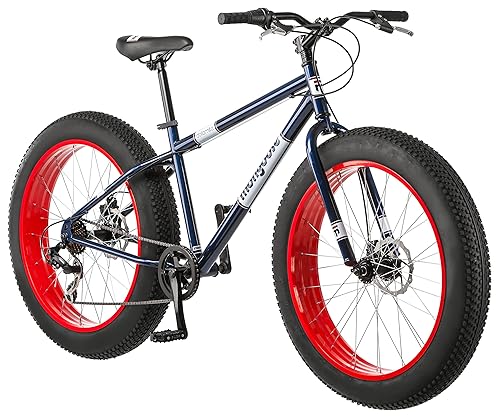 |
Best Known Fat Bike | Tires: 26″ x 4.0″ | Frame: Steel, 7-speed | Brakes: Mechanical disc | VIEW LATEST PRICE | See Dolomite vs Malus |
| 26″ Fat Tire Mountain Bike 21-Speed Dual Disc Brake |  |
Best Mid-Range Value | Tires: 26″ x 4.0″ | Drivetrain: 21-speed | Brakes: Dual disc | VIEW LATEST PRICE | See Full Roundup |
| TST Fat Tire Electric Bike 750W (2000W Peak) |  |
Best Electric Fat Bike | Motor: 750W rated (2000W peak) | Tires: 20″ x 4.0″ fat | Top speed: 28 MPH (Class 3 speed) | VIEW LATEST PRICE | See Full Roundup |
| Mongoose Juneau Fat Tire Mountain Bike 26″ |  |
Best for Winter Riding | Tires: 26″ x 4.0″ | Frame: Aluminum | Drivetrain: 16-speed | VIEW LATEST PRICE | See Full Roundup |
Fat Tire Bikes by Budget and Power
Whether you’re shopping on a strict budget or ready to spend more for electric assist, there’s a dedicated article for your situation. These are all verified roundups with detailed research behind them.
- Best Fat Tire Bikes Under $500 – Entry-level options that won’t break the bank. Good starting point if you want to test whether fat biking is actually for you before committing to a bigger spend.
- Best Fat Tire Bikes Under $1000 – The sweet spot for most recreational riders. At this budget you get better components, lighter frames, and bikes that will last more than a season.
- Best Fat Tire Electric Bikes – Electric assist changes the equation completely. Climbs that would destroy you on a heavy fat bike become manageable, and the range opens up trail options that pure leg power wouldn’t reach.
Fat Tire vs Regular Mountain Bike: When Fat Is Worth It
This is the question most people are really asking when they start looking at fat bikes – and the honest answer is “it depends on your terrain and your priorities.”
A regular mountain bike with 2.3″ or 2.6″ tires is faster, lighter, and more efficient on hardpack dirt, gravel, and most trail riding. If the majority of your riding happens on groomed singletrack or packed dirt paths, a fat bike is going to feel like riding through sand all the time – because compared to a regular MTB, you kind of are.
But flip the scenario. Loose beach sand: the fat bike floats, the regular mountain bike bogs down immediately. Wet, sloppy trail conditions after rain: the fat bike’s huge contact patch keeps traction where a narrower tire would slip. Fresh snow: the fat bike rolls over it, the regular mountain bike becomes a frustrating shovel. If those are the conditions you actually ride in, fat is worth it.
There’s also a stability argument. The wider stance of fat tires makes bikes naturally more planted at low speeds, which some newer riders find more confidence-inspiring. You’re less likely to feel wobbly picking a careful line through rocks. That said, the extra weight makes quick maneuvering and sharp turns noticeably harder than on a lighter bike.
The honest summary: fat bikes are specialized tools that excel in specific conditions. They’re not better than mountain bikes overall – they’re better than mountain bikes in sand, snow, mud, and other loose terrain. Know your conditions, and the right answer becomes obvious. For more on both sides of this, check out our full Pros and Cons of Fat Tire Bikes breakdown and our Fat Bike Disadvantages article for the unfiltered version.
What to Look for in a Fat Tire Bike
There’s more variation in fat bikes than you might expect. Here’s what actually matters when you’re comparing models, and why each spec affects your riding.
Tire Width
Fat bike tires come in a few common widths, and they don’t all feel the same on the trail.
- 3.8″ – The narrow end of the fat bike spectrum. Still significantly wider than a plus-size MTB tire, but lighter and a bit faster rolling. Good for mixed terrain where you want some fat bike capability without maximum weight penalty.
- 4.0″ – The most common width you’ll see on affordable and mid-range fat bikes. Good all-around balance of float, traction, and rolling efficiency. Most of the bikes in our roundups run 4.0″ tires.
- 4.8″ – Steps up the float noticeably. Better in deep sand and snow, more stable at low speeds. You’ll feel the added rolling resistance on harder surfaces.
- 5.0″ and up – Maximum float. Common on dedicated winter fat bikes and premium models. Heavy, slow on hardpack, but genuinely impressive on soft terrain. Usually paired with high-end components to offset weight elsewhere.
Frame Clearance
Not all fat bike frames accommodate all fat tire sizes. A frame built for 4.0″ tires won’t always fit a 4.8″ tire. If you’re buying a cheaper fat bike with plans to upgrade tires later, verify the maximum clearance before assuming it’ll work. Most budget fat bikes are spec’d tight – the tire width listed is usually the maximum the frame accepts.
Gearing
Fat bikes are heavy, and heavy bikes are harder to push uphill. If your riding involves any real climbing, pay close attention to the gear range. A 7-speed bike with a mid-range cassette might be fine on flat terrain and gentle grades, but will feel brutally hard on steep hills. More gears give you more options, and a wider range cassette (think 11-46t or bigger) makes steep climbs survivable. Electric assist solves this problem almost entirely, which is one big reason e-fat bikes have gotten so popular.
Weight
Fat bikes are heavier than regular mountain bikes – there’s no getting around it. Budget steel-frame models typically weigh 40-55 pounds. Mid-range aluminum models come in at 35-45 pounds. High-end models with better components can get into the 28-35 pound range, but those cost significantly more. Weight matters most for carrying the bike (stairs, car racks, storage), climbing, and acceleration. If you’re mostly riding flat terrain and loading the bike off a truck, 45 pounds may not bother you at all.
Electric Assist
Adding a motor to a fat bike neutralizes most of the downsides. The extra weight becomes irrelevant when a motor is doing part of the work, climbing becomes accessible, and range increases dramatically. The tradeoff is cost – electric fat bikes start around $600 for entry-level and can run well past $3,000 for quality mid-drive setups. Our electric fat tire bike roundup covers the best options across different budgets.
Legal heads-up: Under US federal law (15 U.S.C. 2085), a low-speed electric bicycle has a motor under 750W and tops out at 20 mph on motor power alone. Most states use a three-class system: Class 1 and 2 assist up to 20 mph, Class 3 up to 28 mph. Look at the rated (nominal) watts, not the peak number in the listing title. Fat bikes sold as “1000W”, “1500W” or “30+ mph” can be classed as mopeds or motor vehicles, and may be banned from bike lanes and trails, so check your local rules.
Tire Pressure
This is the variable most people underestimate. Fat bike tire pressure isn’t set-and-forget – it changes based on terrain, and getting it right makes a massive difference in how the bike rides.
- Sand: 5-8 PSI. Extremely low. The tire needs to spread out maximally to float on loose sand. If you’re sinking, drop more air.
- Snow: 5-10 PSI. Low pressure helps the tire grip and compress snow rather than roll over it. Fresh powder needs the lowest pressure; packed snow can tolerate a bit more.
- Mud: 8-12 PSI. A little more pressure helps the tire dig into and clear mud rather than clogging up. Too low and the tire squirms.
- Hardpack dirt / trail: 12-20 PSI. Higher pressure rolls faster and reduces that “plowing” feel on firm surfaces. Most casual fat bikers under-pressure here and wonder why the bike feels slow.
- Pavement: 15-25 PSI. Not where fat bikes shine, but if you have to ride pavement, more air helps a lot.
Top Fat Tire Bike Brands
Not all fat bike brands are created equal, and knowing which names to trust saves you from a bad purchase. Here’s a quick rundown on the brands you’ll actually encounter.
Mongoose – The most recognized name in budget fat bikes. The Dolomite has been one of the best-selling fat bikes for years, and for good reason – it’s affordable, widely available, and holds up reasonably well for casual riding. The Malus and Juneau fill out the range. Not a premium brand, but dependable at the price point. See our Dolomite vs Malus comparison if you’re deciding between those two.
Cyrusher – Focused almost entirely on electric fat bikes. Their lineup starts around the 750W mark, though some models list 1000W or 1500W, which is above the e-bike limit (see the legal note above). They come with good component specs for the price, and have developed a solid reputation in the e-fat bike space. Good option if electric assist is your priority.
Heybike – Another electric-first brand with several fat tire models. Known for decent battery life and folding options that make storage easier. Mid-range quality that punches slightly above its price tag on most models.
Surly – The original fat bike brand. Surly basically invented the modern fat bike category with the Pugsley back in 2005. Steel frames, practical geometry, designed to be ridden hard and fixed in the field. Higher price than budget brands, but a different level of build quality and real-world durability. The Ice Cream Truck and Krampus are worth knowing.
Salsa – Premium end of the fat bike market. The Mukluk and Beargrease are respected winter and adventure fat bikes. Lighter alloy and carbon frame options, high-end component packages, and geometry dialed for serious terrain. Priced accordingly – expect to spend $2,000 and up.
Framed – A Minnesota-based brand with a strong winter riding heritage. Their bikes are built with cold-weather riding in mind and tend to have thoughtful details like internal cable routing and compatibility with wider tires. Less known nationally but highly regarded among dedicated fat bikers in snow-heavy regions.
Fat Tire Bike FAQ
These are the questions people ask most often before buying a fat bike. Short, direct answers – no fluff.
Are fat tire bikes good for everyday use?
They can be, depending on your commute. If your daily route involves packed dirt, gravel paths, or mixed surfaces, a fat bike handles it fine. If you’re mostly on pavement – streets, bike lanes, sidewalks – you’ll notice the extra effort required compared to a hybrid or regular mountain bike. Fat bikes aren’t bad on pavement, just slower and harder to pedal efficiently. For most people riding paved roads as their primary surface, a fat bike makes more sense as a secondary or seasonal bike than a daily driver.
How slow are fat tire bikes on pavement?
The difference is real but not extreme. A reasonably fit rider on a fat bike will typically average 2-4 mph slower on pavement compared to the same effort on a regular mountain bike. You’ll also work harder to hit the same speeds. The rolling resistance from those wide, low-pressure tires is the main culprit. Pumping the tires up to the higher end of their range (18-22 PSI) when you know you’re riding pavement helps narrow the gap.
Can you ride fat tire bikes in sand?
Yes, and this is one of the things fat bikes genuinely do well. Drop your tire pressure to 5-8 PSI and a fat bike will roll through loose beach sand where any other bike would either sink or become almost impossible to push. It’s still not effortless – soft sand is hard work – but it’s rideable in a way that regular bikes simply aren’t. Wet packed sand is even better, and coastal trails that mix hard and soft sections are basically ideal fat bike terrain.
What tire pressure should you run for snow?
Lower than you think. Most fat bike riders in snow drop to 5-10 PSI, sometimes lower for very fresh, deep powder. The idea is to let the tire spread out and compress the snow rather than push through it. Start at 8 PSI and experiment – if you’re sinking or spinning, drop more air. Packed or icy snow can handle slightly more pressure, around 10-12 PSI. Cold temperatures also reduce tire pressure naturally, so check your PSI before you head out – a tire that felt right in a warm garage may be noticeably lower once you’re outside.
Are fat bikes good for heavy riders?
Often yes, better than regular bikes in many cases. The wider tires distribute weight over a larger contact area, which reduces the chance of pinch flats and improves stability on loose terrain. Fat bike frames are generally built sturdier than lightweight mountain bikes. Many models are rated for riders up to 275-300 lbs, and some are engineered specifically for heavier use. Electric fat bikes are especially practical here, since the motor compensates for the extra effort that comes with more body weight on climbs. Our fat tire bike pros and cons article covers this in more detail.
Is an electric fat bike worth it?
For most people, yes – if the budget allows. Electric assist solves the two biggest complaints about fat bikes: they’re heavy and they’re slow. A 750W motor with decent battery makes a fat bike genuinely fun to ride rather than just functional. You can take on terrain that would be exhausting or impossible on a pedal-only fat bike, and you don’t have to dread the return trip uphill. The trade-off is cost, weight, and battery maintenance. If you’re primarily riding flat terrain and staying under $600, a pedal fat bike makes more sense. For anything with real climbing or longer distances, the electric version pays for itself in enjoyment pretty quickly. See our full electric fat tire bike guide for top picks.
Can you convert a fat bike to regular tires?
Technically yes on some bikes, practically no on most. Fat bike frames use wide-spaced fork dropouts and chainstays designed to fit fat tires. Even if you swap to narrower tires, the frame geometry and hub spacing often don’t match standard wheel sizes. Some fat bikes use 135mm rear spacing (vs 135mm or 142mm on most MTBs) and can accept narrower tires if you find compatible wheels. But it’s rarely a simple swap, and usually not worth the hassle. If you want to ride different terrain regularly, a second bike makes more sense than trying to convert a fat bike into something it isn’t designed to be.
Do fat tire bikes need special maintenance?
Not drastically different from regular mountain bikes, but a few things are worth knowing. The wide rims and low-pressure tires make tubeless setups particularly worth considering – a pinch flat at 8 PSI barely exists in the traditional sense, but sealant can handle small punctures and save you from a flat on a remote beach or trail. Winter riders should clean and dry their bikes regularly, as salt and grit from roads and trails accelerates rust and wear, especially on cheaper steel-framed models. Beyond that, standard drivetrain maintenance applies.
Browse Our Full Fat Tire Bike Library
Ready to go deeper? These are all the fat tire bike articles on the site, organized by topic. Every link goes to a full roundup or comparison with specific product picks, specs, and buying advice.
- Best Fat Tire Bikes Under $500 – The best entry-level picks for budget buyers who want to try fat biking without a big commitment.
- Best Fat Tire Bikes Under $1000 – Mid-range options with better components, lighter builds, and more terrain versatility.
- Best Fat Tire Electric Bikes – Motor-assisted fat bikes for riders who want capability without the suffering. Covers budget through premium.
- Pros and Cons of Fat Tire Bikes – A balanced look at where fat bikes shine and where they fall short. Good read before you commit to buying one.
- Mongoose Dolomite vs Malus – Head-to-head between two of the most popular budget fat bikes. Worth reading if you’re choosing between them.
- Fat Bike Disadvantages – The honest side of fat biking – what nobody talks about in the marketing materials.
- Best Fat Tire Bike Fenders – If you ride in wet conditions or mud, fenders are not optional. These are the best options sized for fat tires.
🚲 Free: The Smart Bike Buyer’s Cheat Sheet
Get our 2-page PDF - budget tiers, the components that actually matter, and a 12-point used-bike inspection. We'll email you the download link. No spam, unsubscribe anytime.
By subscribing you agree to our Privacy Policy.