
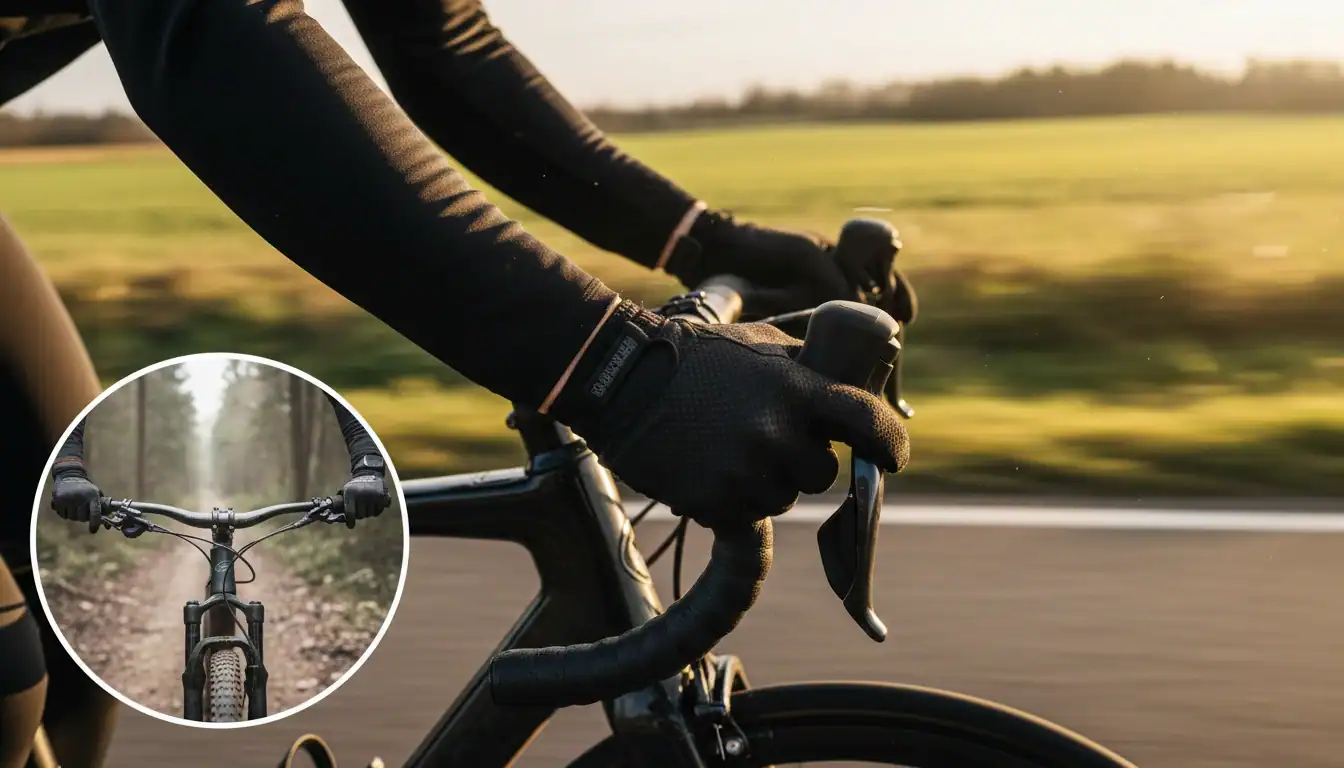
The handlebar is one of the most impactful components on a bicycle for comfort and control. It determines your riding position, hand placement options, and how the bike handles. Choosing the right type for your riding style makes a noticeable difference every time you ride.
Types of Bike Handlebars: Quick Reference Table
| Handlebar Type | Bike Type | Hand Positions | Width | Best For |
|---|---|---|---|---|
| Drop bars | Road, gravel, cyclocross | 3 (hoods, tops, drops) | 36-46cm | Speed, endurance, aerodynamics |
| Flat bars | MTB, hybrid, commuter | 1 (flat) | 580-800mm | Control, upright position, urban riding |
| Riser bars | MTB, trail, enduro | 1 (slightly raised) | 720-800mm | Trail riding, technical terrain control |
| Swept-back / cruiser bars | Cruiser, city, hybrid | 1-2 (swept back) | 580-700mm | Comfort, casual riding, upright posture |
| Bullhorn bars | Track, fixed gear, urban | 2 (tops, horns) | 38-42cm | Aggressive urban riding, time trialing |
| Aero / TT bars | Triathlon, time trial | 2 (base bar + aero extensions) | Varies | Maximum aerodynamics, solo riding |
Drop Bars
Drop bars are the defining feature of road and gravel bikes. They curve forward and down, ending in the “drops” below the brake hoods. This design provides three distinct hand positions: the tops (flat section near the stem), the hoods (where the brake/shift levers sit), and the drops (the lowest curved section).
Anatomy of a drop bar:
- Reach – horizontal distance from clamp to the end of the drops. Longer reach = more stretched position
- Drop – vertical distance from the tops to the drops. More drop = more aerodynamic but harder on the back
- Width – measured center-to-center at the ends. Road bars: 36-44cm matched to shoulder width. Gravel bars: often 42-46cm for stability
- Flare – gravel drop bars often flare outward in the drops for extra stability on rough terrain
Drop bars work well for both road and gravel bikes. The key difference is the flare angle and width – road bars stay parallel, gravel bars flare 10-20 degrees outward in the drops. If you are on a gravel bike, a wider, flared bar is worth the upgrade.
Flat Bars
Flat bars are a straight horizontal tube with minimal rise or sweep. They are standard on mountain bikes, hybrids, and commuters. Flat bars put you in a more upright position than drop bars, which is comfortable for shorter rides and urban environments but less efficient for long-distance or high-speed riding.
MTB flat bars are wide (typically 720-780mm) to provide leverage and control on technical terrain. Commuter and hybrid flat bars are narrower (560-640mm) to fit through traffic. Width can be cut down with a hacksaw if you want a narrower bar – many riders trim 10-20mm per side.
Riser Bars
Riser bars have a rise of 15-50mm from the clamp to the grips, putting your hands higher and your posture more upright. They are standard on trail and enduro mountain bikes where a more upright position improves handling confidence on steep technical terrain.
The combination of width (730-800mm) and rise (20-40mm) common on modern trail bikes gives very good leverage for controlling the front wheel over roots and rocks. Cross-country (XC) racers typically prefer flat or minimal-rise bars for a more aggressive, weight-forward position.
Swept-Back / Cruiser Handlebars
Swept-back bars angle backward toward the rider at 10-45 degrees. The extreme version – the classic cruiser bar – creates a very upright, arms-relaxed riding position. Less aggressive versions (butterfly bars, North Road bars) are popular on touring bikes and city commuters.
The swept-back position is comfortable for casual riding but limits power output and aerodynamics. If you commute short distances or ride for relaxation rather than performance, swept-back bars are worth considering. They reduce wrist strain compared to flat bars because your hands sit in a more natural pronated position.
Bullhorn Bars
Bullhorn bars point forward, similar to inverted drop bars without the curved drops. They are associated with track and fixed-gear bikes in urban environments. The two hand positions are the flat base and the tips of the horns, which allow a more aerodynamic, lower position.
Bullhorns do not work with standard road brake levers in the drops position. They are typically used with inline brake levers mounted on the base bar or without brakes entirely (on track bikes). For urban riders who want an aggressive position without drop bars, bullhorns are a good compromise. See our comparison of bike types to understand where fixed-gear and track bikes fit.
Aero / TT Bars
Aero bars (time trial bars, triathlon bars) add forward-pointing extensions to a base bar, allowing the rider to rest forearms on pads and extend arms forward. This creates the most aerodynamic position possible on a bicycle and is standard equipment for triathletes and time trialists.
Aero bars are only legal in individual time trials and triathlons – not in mass-start road races or group rides (too dangerous for braking response in groups). They require a dedicated setup and bike fit. Adding clip-on aero extensions to a standard road bar is a popular upgrade for triathletes on road bikes.
Drop Bar vs Flat Bar: Which Should You Choose?
This is the most common handlebar decision new cyclists face. Here is the honest breakdown:
| Factor | Drop Bar | Flat Bar |
|---|---|---|
| Hand positions | 3 (hoods, tops, drops) | 1 (can add bar ends for a second) |
| Aerodynamics | Better (lower position possible) | More upright, less aero |
| Comfort on long rides | Better (hand position variety reduces fatigue) | Can cause wrist/back fatigue |
| Control on rough terrain | Lower (narrower, less leverage) | Better (wider, more leverage) |
| Learning curve | Higher (brake levers take getting used to) | Minimal – intuitive |
| Typical bike types | Road, gravel, cyclocross, touring | MTB, hybrid, commuter, kids |
Choose drop bars if: you want to ride fast on roads, cover long distances, or ride a road/gravel bike. The multiple hand positions are essential for comfort on rides over an hour.
Choose flat bars if: you ride off-road, commute in traffic, prioritize control over speed, or are new to cycling and want a familiar, intuitive setup.
For more context on how handlebars relate to bike choice, see our guide on gravel bike vs road bike and the full breakdown of types of bikes.
Frequently Asked Questions
What is the most comfortable handlebar for long rides?
Drop bars with ergonomic hoods are the most comfortable for road or gravel rides over 2 hours because of the multiple hand positions. For trail riding, wider riser bars distribute weight better. Swept-back bars are comfortable for short casual rides but limit efficiency on longer distances.
Can I put drop bars on a mountain bike?
Technically yes, but it requires replacing the stem (reach and angle), shifters (MTB shifters are incompatible with drop bar STI levers), and brake levers. It is rarely worth doing on a dedicated MTB. A gravel bike is purpose-built for drop bars on mixed terrain.
What width handlebar should I use?
For drop bars: match bar width to your shoulder width (AC to AC measurement). Most riders fall in the 38-44cm range. For flat bars: wider is better for control off-road (720-780mm MTB), narrower for urban use (560-640mm). Bar ends can be cut to fit.
🚲 Free: The Smart Bike Buyer’s Cheat Sheet
Get our 2-page PDF - budget tiers, the components that actually matter, and a 12-point used-bike inspection. We'll email you the download link. No spam, unsubscribe anytime.
By subscribing you agree to our Privacy Policy.