
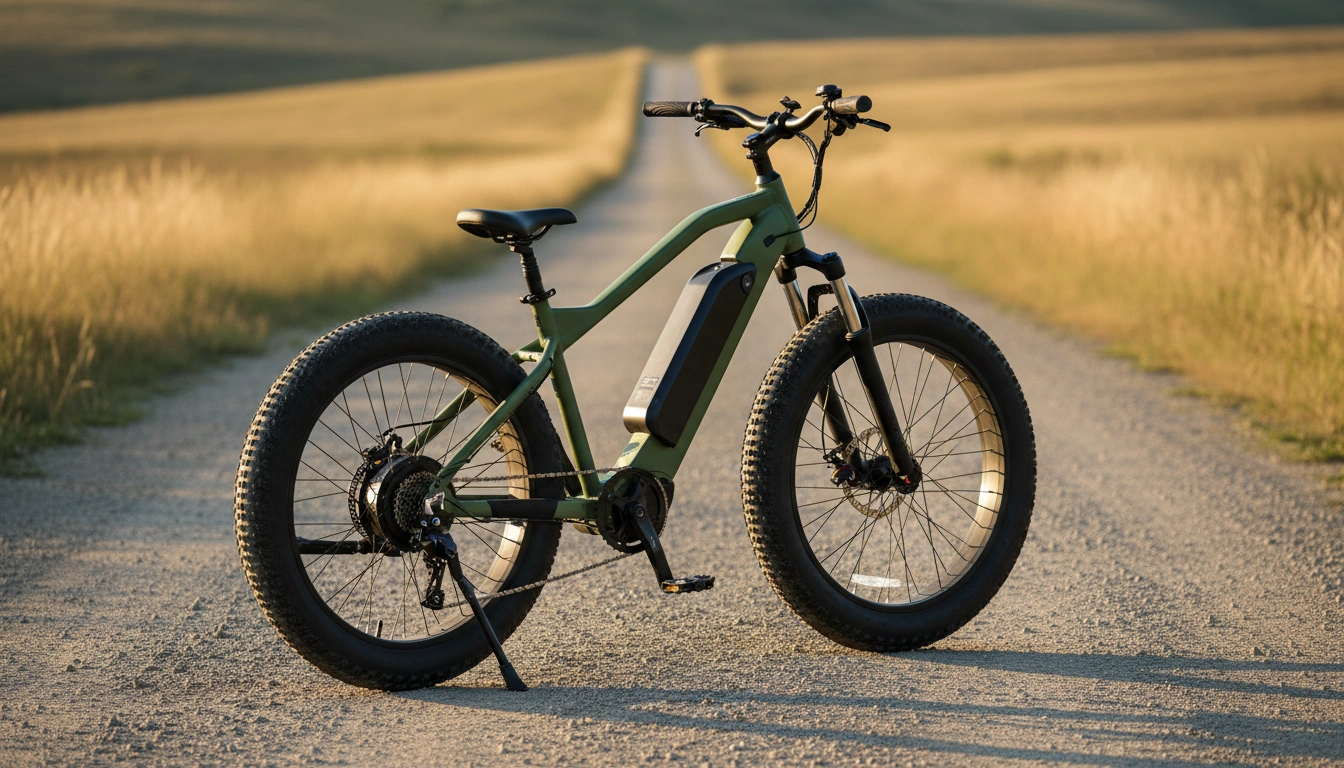
If you’ve ever watched a 300-pound rider on a regular bike struggle up a moderate hill, you already understand the problem. The motor works against double the resistance – a heavy rider on a standard frame – and it’s a losing battle. An electric bike rated for heavy riders isn’t just about whether you’ll fit on the seat. It’s about whether the motor has enough torque, the frame won’t fatigue over time, and the battery won’t drain in the first 15 minutes.
I went through the current Amazon lineup to find electric bikes that are actually built for riders in the 250-400 lb range – not just bikes where the listing buries a 265-lb weight limit in the fine print. The 8 bikes below all have reinforced frames, motors with real torque output, and weight ratings that give you a genuine safety margin. Some go up to 440 lb capacity. A few fold for storage. One has a torque sensor (a feature most bikes in this price range skip).
If you’re coming from a regular bike and just want something non-electric for comparison, check out our guide to the best bikes for heavy people. And if you’re in the 400+ lb range specifically, we have a separate roundup covering bikes rated for 400 lb riders. But if you want motor assist – which, honestly, makes a lot more sense for heavier riders – read on.
Key Takeaways
- The Heybike Mars 3.0 leads the pack with a 440-lb capacity, 95Nm of torque, and full suspension – the most capable option for heavier riders on this list.
- Weight capacity on most “fat tire” e-bikes tops out at 260-265 lb, so look for bikes that explicitly state 300+ lb capacity; every bike on this list meets that standard.
- Hub motors (rear wheel) dominate this price range; mid-drive motors offer better hill-climbing efficiency but typically cost $2,000+. For most heavy riders on flat-to-moderate terrain, a 750W-rated hub motor with 80+ Nm torque handles the job. Bigger peak-watt numbers in the listing don’t add capacity or safety.
- Battery range drops 20-30% under heavy-rider load compared to manufacturer claims – a bike rated for 60 miles will realistically deliver 40-45 miles if you weigh 300 lbs.
- Fat tires (4.0 inches wide) are more than just a style choice – the wider contact patch lowers the center of gravity and distributes rider weight more evenly, reducing stress on the rim and frame.
Legal heads-up: Under US federal law (15 U.S.C. 2085), a low-speed electric bicycle has a motor under 750W and tops out at 20 mph on motor power alone. Most states use a three-class system: Class 1 and 2 assist up to 20 mph, Class 3 up to 28 mph. Most bikes here have a 750W-rated motor with a bigger peak figure in the title, which is fine because the rules go by rated power. Higher-power or faster models (like the 1800W-peak Ranger S, sold as a 1000W-rated bike) can be classed as mopeds and may be banned from bike lanes and trails, so check your local rules.
| Heybike Mars 3.0 Foldable Electric Bike |  |
Best Overall | Weight Capacity: 440 lb | Motor: 750W rated (1400W peak) / 95Nm | Battery: 48V 13Ah (624Wh) | VIEW LATEST PRICE | Read Our Analysis |
| Heybike Ranger S Foldable Step-Thru Electric Bike | 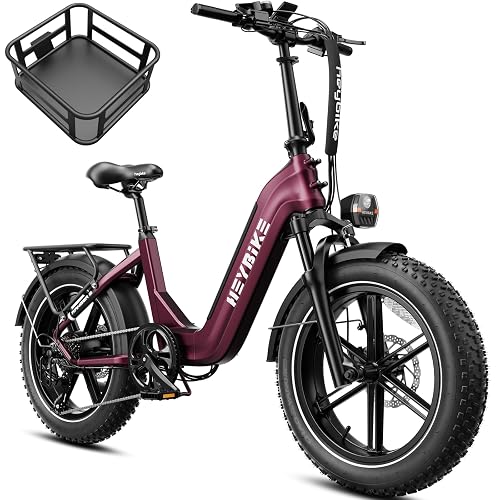 |
Best for 400 lb Riders | Weight Capacity: 400 lb | Motor: 1800W peak (1000W rated, above the 750W limit) / 93Nm | Battery: 48V 14.4Ah (692Wh) | VIEW LATEST PRICE | Read Our Analysis |
| Cyrusher Kommoda 3.0 Electric Bike |  |
Best Full Suspension | Weight Capacity: 330 lb | Motor: 750W rated (1500W peak) | Battery: 48V 20Ah (960Wh) | VIEW LATEST PRICE | Read Our Analysis |
| Vivi ACE01 Fat Tire Electric Bike |  |
Best with Torque Sensor | Weight Capacity: 330 lb | Motor: 750W rated (1500W peak) / 90Nm | Battery: 48V 15Ah (720Wh) | VIEW LATEST PRICE | Read Our Analysis |
| Vivi ACE07 Fat Tire Electric Bike |  |
Best Value | Weight Capacity: 330 lb | Motor: 750W rated (1475W peak) / 90Nm | Battery: 48V 15Ah (720Wh) | VIEW LATEST PRICE | Read Our Analysis |
| Vivi Folding Electric Mountain Bike 26″ |  |
Best Folding Pick | Weight Capacity: 330 lb | Motor: 500W rated (1000W peak) | Battery: 48V 374Wh | VIEW LATEST PRICE | Read Our Analysis |
| Heybike Ranger 2.0 Step-Thru Electric Bike |  |
Best Step-Thru | Weight Capacity: 300 lb | Motor: 750W rated (1400W peak) | Battery: 48V 12.5Ah (600Wh) | VIEW LATEST PRICE | Read Our Analysis |
| ANCHEER RoverH Fat Tire Electric Bike |  |
Best Budget Pick | Weight Capacity: 300 lb | Motor: 1000W peak / 750W rated | Battery: 48V 15Ah (720Wh) | VIEW LATEST PRICE | Read Our Analysis |
More Details on Our Top Picks
-
Heybike Mars 3.0 Foldable Electric Bike
The Mars 3.0 earns the top spot for one straightforward reason: a 440-lb weight capacity paired with 95Nm of torque is a combination you rarely see at this price point. Most folding fat-tire e-bikes max out at 330 lb and offer 60-80Nm of torque. The Mars 3.0 goes significantly beyond both benchmarks, which matters a lot when you’re a heavier rider asking the motor to work harder on every hill. One flag: Heybike lists the 440 lb capacity, but the Amazon listing text also mentions a 330 lb frame rating, so confirm the load rating on the live listing before you buy.
The motor is a 750W-rated hub motor (1400W peak) that gets the bike from 0 to 20 mph in about 6 seconds. The Horst-Link rear suspension combined with a hydraulic front fork means you’re not just sitting on top of the bumps – the frame actually absorbs them. That combination of frame engineering and suspension is uncommon on folding bikes, which typically sacrifice one for the other.
On the battery side, the 48V 13Ah (624Wh) pack is rated for up to 65 miles (manufacturer-claimed). Under heavy-rider load at moderate assist, expect real-world range closer to 40-50 miles – still excellent for a folding bike. The UL2849 certification, NFC keyless start, and built-in turn signals push this beyond basic-ebike territory. The folded dimensions (38.2 x 19.7 x 33.1 in, 70 lb) fit in most car trunks. If you’re looking for a single bike that does everything and actually supports your weight, the Mars 3.0 is it.
One honest caveat: 70 lb is heavy for a “portable” bike. If you have to lift it in and out of a trunk frequently, factor that in. But for raw capability at this weight capacity, nothing else on Amazon comes close.
- Weight Capacity: 440 lb (200 kg, per Heybike; confirm on the listing)
- Motor: 750W rated, 1400W peak hub motor
- Torque: 95 Nm
- Battery: 48V 13Ah (624Wh), removable
- Range: Up to 65 miles (PAS mode, manufacturer-claimed)
- Top Speed: 32 mph (unlocked; ships as Class 2 at 20 MPH / Class 3 at 28 MPH – 32 MPH exceeds the street-legal e-bike limit)
- Tires: 20″ x 4″ fat tires
- Suspension: Hydraulic front fork + Horst-Link rear
- Brakes: 180mm dual hydraulic disc
- Frame: Aluminum alloy, foldable
- Certification: UL2849
-
Heybike Ranger S Foldable Step-Thru Electric Bike
The Ranger S is built for riders who need more than a token weight capacity bump. At 400 lb load capacity with a step-through frame, it’s designed for easier mounting and dismounting – something heavier riders often find uncomfortable on traditional top-tube frames. This is the version to consider if you’re closer to 350-400 lb and you want a frame design that makes getting on and off feel less like a circus act.
The listing quotes an 1800W peak motor with 93Nm of torque – just under the Mars 3.0 on torque and higher than everything else on this list. Heybike sells the 1800W-peak Ranger S as a 1000W-rated bike, which is above the 750W e-bike limit, so check your local rules (the maker also offers a 750W-rated version). The 692Wh battery (48V 14.4Ah) charges via a 4A fast charger in 3-4 hours and provides up to 55 miles per charge. The 20″ x 4″ fat tires handle sand, snow, and gravel well, and the front suspension smooths out the rough stuff without making the ride feel floaty.
Compared to the Mars 3.0, the Ranger S gives up the Horst-Link rear suspension (this one has front-only suspension) but gains the step-through geometry. For riders who prioritize ease of access and still want serious weight capacity, that’s a fair trade. The hydraulic disc brakes at 180mm rotors give you reliable stopping power – important when there’s more momentum to shed.
The bike also supports app connectivity so you can lock it remotely, track ride data, and adjust motor settings. For a heavy-duty folding step-through at this capacity, the Ranger S is hard to beat as the go-to for riders over 350 lb.
- Weight Capacity: 400 lb
- Motor: 1800W peak hub motor (1000W rated, above the 750W e-bike limit)
- Torque: 93 Nm
- Battery: 48V 14.4Ah (692Wh), removable
- Range: Up to 55 miles (PAS mode)
- Top Speed: 32 mph (unlocked; 28 MPH is the Class 3 street-legal ceiling – check local regulations)
- Tires: 20″ x 4″ fat tires
- Frame: Step-thru aluminum alloy, foldable
- Brakes: Dual hydraulic disc
- Gears: 7-speed
- Certification: UL2849
-
Cyrusher Kommoda 3.0 Electric Bike
If you ride on anything rougher than a paved path, the Kommoda 3.0 deserves a serious look. The 4-linkage full suspension frame – aircraft-grade 6061 aluminum alloy with a rear air shock – is what separates this bike from most of the competition. When you weigh 280-330 lb and you’re riding on gravel, dirt trails, or bumpy urban roads, suspension quality directly affects how comfortable and safe the ride feels. The Kommoda 3.0 takes that seriously.
The 750W-rated motor (1500W peak) paired with a Shimano 7-speed drivetrain handles steep climbs well (the seller quotes 35-degree slopes, which would be a 70% grade, so treat that as a marketing number). The real standout here is the 960Wh battery (48V 20Ah), which is one of the largest battery capacities available in this category. Under heavy-rider load, real-world range will still be well over 50 miles in pedal-assist mode. The IPX5 waterproofing on the battery is an underrated feature too.
Compared to the Heybike options, the Kommoda 3.0 wins on battery capacity and off-road capability. It’s a bigger, heavier bike (around 74 lb), and it doesn’t fold – which means storage requires a bit more space. The step-through geometry fits riders from 5’1″ to 6’3″, which covers most of the heavy-rider population well.
Hydraulic disc brakes front and rear handle the stopping load well. For a rider who’s primarily off-road or on mixed terrain and needs reliable suspension under a heavier load, the Kommoda 3.0 is the best pure-riding option on this list.
- Weight Capacity: 330 lb
- Motor: 750W rated (1500W peak) hub motor
- Battery: 48V 20Ah (960Wh), removable, IPX5
- Range: Up to 75 miles (PAS mode)
- Top Speed: 28 mph
- Tires: 20″ x 4″ fat tires
- Suspension: Air front fork + rear air shock (4-linkage)
- Frame: 6061 aluminum alloy, non-folding
- Brakes: Hydraulic disc front and rear
- Gears: Shimano 7-speed
- Warranty: 2 years frame, 1 year parts/battery
-
Vivi ACE01 Fat Tire Electric Bike
The ACE01 stands out in this lineup because of something most bikes at this price skip entirely: a torque sensor. Most affordable e-bikes use a cadence sensor, which just detects whether the pedals are spinning and applies a fixed assist level. A torque sensor actually measures how hard you’re pushing and scales the motor assist proportionally. For a heavy rider, that translates to a much smoother, more natural ride – the motor doesn’t lurch when you start pedaling or feel flat when you’re working hard.
The motor outputs 1500W peak with 90Nm of torque through a 750W rated hub. The 48V 15Ah (720Wh) battery is a solid mid-range capacity – expect real-world range of 35-50 miles under heavier loads. The dual hydraulic brakes are a meaningful upgrade over the mechanical disc brakes found on budget options; you get better modulation and stopping power, which matters when there’s more weight to slow down.
The frame supports 330 lb, the 26″ x 4.0″ fat tires handle mixed terrain, and the adjustable seat accommodates riders from 5’3″ to 6’5″. This is a traditional frame (not step-through, not folding), which gives it better overall rigidity for heavier riders compared to folding designs. If you’re between 250-330 lb and you want a bike that actually responds to how you ride rather than just spinning a motor on a timer, the ACE01 is the pick.
The five riding modes (pure electric, pedal-assist, normal bike, cruise control, walk assist) give you flexibility for different situations. Cruise control is genuinely useful for heavier riders on long flat stretches where holding throttle gets tiring. UL2849 and UL2271 certified.
- Weight Capacity: 330 lb
- Motor: 1500W peak / 750W rated
- Torque: 90 Nm
- Assist Type: Torque sensor (not cadence)
- Battery: 48V 15Ah (720Wh), 21700 cells
- Range: 40-60 miles (PAS mode)
- Top Speed: 20 mph (listing title)
- Tires: 26″ x 4.0″ fat tires
- Brakes: Hydraulic disc front and rear
- Gears: 7-speed
- Certification: SGS to UL2849 and UL2271
-
Vivi ACE07 Fat Tire Electric Bike
The ACE07 is the value pick – and “value” here doesn’t mean stripped-down. You get a 1475W peak motor, 90Nm torque, 48V 15Ah battery, and a 330 lb weight capacity in a clean, traditional frame. The main difference from the ACE01 is the assist system: the ACE07 runs a cadence sensor instead of a torque sensor. That means the motor applies power at a fixed level based on pedal rotation, not proportional to your effort. It’s a less refined ride, but for a heavier rider who mostly uses throttle or fixed pedal assist levels, it’s a real-world non-issue.
The 21700 battery cells are worth mentioning – these are higher energy density than the 18650 cells most budget bikes use. Real-world range under heavy-rider conditions should land in the 35-50 mile range, similar to the ACE01. The mechanical disc brakes (180mm rotors) are a step down from hydraulic, but they’re adequate for most riding conditions and significantly easier to self-service when pads need replacing.
The ACE07 fits riders 5’3″ to 6’5″ with the adjustable seat. The aluminum alloy frame handles the 330 lb max load comfortably, and the 26″ x 4.0″ tires manage the weight distribution well on varied terrain. The UL2849 and UL2271 certifications mean it’s been through legitimate safety testing – worth checking on budget bikes where it’s often skipped.
If you’re a heavier rider on a tighter budget who wants a capable, honest fat-tire e-bike without paying for a torque sensor you might not notice in daily riding, the ACE07 is the most practical option on this list.
- Weight Capacity: 330 lb
- Motor: 1475W peak / 750W rated
- Torque: 90 Nm
- Assist Type: Cadence sensor
- Battery: 48V 15Ah (720Wh), 21700 cells
- Range: 40-60 miles (PAS mode)
- Top Speed: about 20 mph (the listing also quotes 25 mph)
- Tires: 26″ x 4.0″ fat tires
- Brakes: Mechanical disc, 180mm rotors
- Gears: Shimano 7-speed
- Certification: SGS to UL2849 and UL2271
-
Vivi Folding Electric Mountain Bike 26″
The Vivi Folding is the choice for heavier riders who need portability without dropping their weight capacity to 265 lb like most folding bikes do. The 330 lb frame rating on a folding 26″ bike is genuinely useful – most compact folders are designed with 180-220 lb riders in mind, and the frame stress over time at higher weights shows. The double-walled aluminum rims and collapsible aluminum frame here are noticeably more substantial than typical budget folders.
The motor is a 500W rated (1000W peak) brushless hub motor paired with a 48V 374Wh battery. That’s a smaller battery than most on this list, giving you roughly 35-44 miles in pedal-assist mode at light loads, or closer to 25-35 miles if you’re heavier and using more assist. The 21-speed transmission system (versus 7-speed on most of these bikes) gives you more flexibility to manage effort on hills, which heavier riders appreciate when battery levels drop.
Compared to the non-folding ACE01 and ACE07, you give up torque output and battery capacity. But you gain the ability to fold the bike into a car trunk, store it in a small apartment, or bring it on a trip without needing a bike rack. The dual shock absorber system handles bumps reasonably well, and the front and rear disc brakes provide dependable stopping.
This is specifically for the rider who needs to store the bike inside or transport it in a compact vehicle regularly. If storage isn’t a factor, the ACE07 gives you more capability for a similar price. But as a heavy-duty folding option that doesn’t compromise weight capacity, the Vivi Folding 26″ is a strong choice.
- Weight Capacity: 330 lb
- Motor: 1000W peak / 500W rated
- Battery: 48V 374Wh lithium-ion, removable
- Range: 44-50 miles (PAS), 22-25 miles (full power)
- Top Speed: about 20 mph
- Tires: 26″ standard tires
- Frame: Aluminum alloy, foldable
- Brakes: Front and rear disc
- Gears: 21-speed
- Suspension: Dual shock absorber
- Certification: SGS to UL2849
-
Heybike Ranger 2.0 Step-Thru Electric Bike
The Ranger 2.0 is aimed at riders who want the motor assist but find standard top-tube frames uncomfortable or awkward to mount. The step-through low frame means you swing your leg over the back of the bike rather than lifting it over a high crossbar – a small detail that matters a lot when you’re heavier and dealing with hip or knee issues. It’s also a folding bike, so it stows compactly when you don’t need it.
The 750W-rated motor (1400W peak) with a 600Wh battery (48V 12.5Ah) delivers up to 28 mph and a manufacturer-rated range of 60 miles. At a 280-300 lb rider weight with moderate assist, real-world range will settle around 38-48 miles. The 20″ x 4″ fat tires give good grip and absorb light trail chatter. The front suspension fork adds a layer of comfort that pure rigid forks can’t provide on rough roads.
The 300 lb weight capacity is the lowest on this list, which means it’s best suited to riders in the 230-275 lb range who want a reasonable safety margin. I’ve seen heavier riders try to push the 300 lb limit on folding bikes and the frame stress shows up in looseness and creaking over time. If you’re consistently above 275 lb, step up to the Ranger S (400 lb capacity) instead.
For riders in that 230-275 lb range who want a step-through folding design with solid motor output, the Ranger 2.0 delivers everything you need – it’s a practical, well-rounded commuter with fat tires for mixed surfaces. The rear rack integration makes it genuinely useful for grocery runs and light cargo.
- Weight Capacity: 300 lb
- Motor: 750W rated (1400W peak) hub motor
- Battery: 48V 12.5Ah (600Wh), removable
- Range: Up to 60 miles (PAS mode)
- Top Speed: 28 mph
- Tires: 20″ x 4″ fat tires
- Frame: Step-thru, foldable
- Suspension: Front suspension fork
- Brakes: Disc front and rear
- Gears: 3-speed assist + 7-speed drivetrain
- Rear Rack: Integrated, included
-
ANCHEER RoverH Fat Tire Electric Bike
ANCHEER has been in the Amazon e-bike market for over 10 years, which matters more than it sounds – parts availability, customer service, and warranty follow-through are all better established than with fly-by-night brands. The RoverH is their current fat-tire offering for heavier riders, with a 300 lb weight capacity and a 26″ x 4.0″ build that handles real terrain.
The 750W rated (1000W peak) motor hits a default 20 mph with the ability to unlock up to 28 mph in pedal-assist mode. The built-in 48V 15Ah (720Wh) battery provides 40-50 miles pure electric range or 50-60 miles with pedal assist on flat roads – better-than-average battery size for the price. The 180mm brake rotors are specifically called out in the listing (versus the more common 160mm), providing meaningfully shorter stopping distances above 20 mph.
The ISO 13849 certified controller and vector frequency conversion technology update every 0.3 seconds, which means smoother power delivery and better efficiency versus older motor controllers. Not a feature most people ask about, but heavier riders pushing the motor harder will notice the difference in smoothness and heat management over a long ride.
The main trade-off versus the Vivi ACE07 at a similar capacity: the ANCHEER is a non-folding traditional frame, comes with a built-in (not removable) battery on some variants, and has slightly lower confirmed weight capacity. But the combination of brand maturity, UL2849 compliance, and 180mm rotors makes it a dependable choice if you’re at 260-290 lb and keeping the budget lean. Check the listing for the removable vs. built-in battery variant – the removable version is worth the small price difference.
- Weight Capacity: 300 lb
- Motor: 1000W peak / 750W rated
- Battery: 48V 15Ah (720Wh)
- Range: 40-50 miles pure electric, 50-60 miles PAS
- Top Speed: 20 mph default, 28 mph unlocked (PAS)
- Tires: 26″ x 4.0″ fat tires
- Brakes: 180mm disc rotors (front and rear)
- Gears: 7-speed
- Frame: Aluminum alloy, non-folding
- Certification: UL2849 compliant
- Warranty: 1 year on motor, battery, controller
How to Choose an Electric Bike for Heavy Riders
The spec sheet on any e-bike can look impressive, but for heavier riders there are a few things that actually determine whether the bike will hold up and perform well under load. Here’s what to look at before you buy.
Hub Motor vs. Mid-Drive: Which One Actually Matters for Heavy Riders?
Every bike on this list uses a rear hub motor, which means the motor sits inside the rear wheel hub and drives the wheel directly. Mid-drive motors (like Bafang motors found on higher-end bikes) sit at the crank and drive through the chain and gears. For heavier riders, mid-drive offers one real advantage: it multiplies torque through the gears, so climbing steep hills under load is significantly more efficient. The trade-off is cost – mid-drive bikes typically start at $2,000+.
For most heavy riders doing mixed terrain and moderate hills, a hub motor with 80Nm or more torque handles the job. The Heybike Mars 3.0 at 95Nm and Ranger S at 93Nm are near the top of what hub motors deliver without the mid-drive price jump. If you’re regularly tackling 15%+ grades with 300+ lb of combined bike-plus-rider weight, a mid-drive might be worth the investment – but for typical commuting and recreational riding, the hub motors here are more than sufficient.
Weight Capacity and Frame Construction: The Numbers That Actually Matter
Pay attention to the difference between “rider weight limit” and “total weight capacity.” Some listings quote the rider limit without including the bike’s own weight, which can create false impressions. The numbers in this article are total weight capacity (rider + bike + cargo).
A good rule of thumb: your body weight should be no more than 75-80% of the stated weight capacity. That leaves margin for gear, safety, and frame fatigue over time. So a 330 lb capacity bike is realistically comfortable for a 250-270 lb rider. If you’re 300 lb, look for 400 lb+ capacity – the Heybike Mars 3.0 and Ranger S are your best options on this list. For extreme weight ranges (350-400 lb+), our 400 lb bike guide covers bikes purpose-built for that range.
Frame material matters too. Aircraft-grade 6061 aluminum (like the Cyrusher Kommoda 3.0) is the benchmark for durability under load. Carbon steel frames are heavier and more prone to corrosion but tend to absorb road vibration better. Both work – just avoid listings that don’t specify the alloy grade. Brakes matter just as much as the motor: a heavier rider carries more momentum, so look for hydraulic discs with 180mm rotors and check the wheel and frame load rating, not the peak watts.
Battery and Range Under Load: Expect 20-30% Less Than Advertised
Manufacturer range figures are tested at 165-175 lb rider weight on flat terrain with minimal assist. If you weigh 280 lb, that range figure drops. A rough real-world adjustment: subtract 20-30% from the rated range for a 250-280 lb rider, and 30-40% for a 300+ lb rider. Apply this to the bikes above and you get realistic expectations – the Cyrusher Kommoda 3.0’s 75-mile rating becomes a realistic 45-55 miles for a 280 lb rider.
Battery capacity in watt-hours (Wh) is the most useful comparison metric. More Wh = longer range under any conditions. The Kommoda 3.0 at 960Wh leads this list. The 720Wh batteries on the Vivi ACE01, ACE07, and ANCHEER RoverH are solid mid-tier capacity. The Vivi Folding’s 374Wh is the smallest here – fine for short trips, limiting for longer rides under heavy-rider load.
Fat Tires and Suspension: More Important Than You Think
The 4.0″ fat tires found on most bikes here aren’t just for looks. The wider contact patch distributes rider weight across more surface area, reducing point pressure on the rim and reducing the risk of pinch flats. For heavy riders, this matters – standard 2.0-2.5″ tires on a 300 lb rider are asking for trouble on anything but smooth pavement.
For suspension, prioritize full suspension (front + rear) if you’re riding anything rougher than paved paths. The Cyrusher Kommoda 3.0 is the only full-suspension option here. The Heybike Mars 3.0 and Ranger S have front + rear suspension in different configurations. Front-only suspension bikes (like the ANCHEER RoverH and Vivi ACE07) are fine for paved commuting but noticeably rougher on gravel or trails when you’re heavier.
Comfort and Ergonomics: The Things Nobody Talks About Until They’re Sore
Heavier riders put more pressure on saddles, handlebars, and bottom brackets. Look for bikes with wider saddles, adjustable handlebar height, and a frame geometry that keeps you upright rather than hunched forward. The step-through designs (Heybike Ranger S, Ranger 2.0) reduce the awkward dismount problem that heavier riders deal with on traditional frames. Check the rider height range in the spec list – most of these bikes fit 5’3″ to 6’5″, but some are narrower. Pedal width is another detail worth checking – narrower pedals concentrate more force on a smaller foot area and can cause foot discomfort on longer rides at heavier weights. All-mountain style platform pedals tend to work best.
Electric Bike for Heavy Riders Comparison
| Bike | Weight Capacity | Motor (Rated / Peak) | Torque | Battery | Suspension | Best For |
|---|---|---|---|---|---|---|
| Heybike Mars 3.0 | 440 lb | 750W / 1400W | 95 Nm | 624Wh | Front + Horst-Link rear | Overall best, heaviest riders |
| Heybike Ranger S | 400 lb | 1000W / 1800W (above limit) | 93 Nm | 692Wh | Front only | Step-thru, 350-400 lb riders |
| Cyrusher Kommoda 3.0 | 330 lb | 750W / 1500W | N/A | 960Wh | Full (air front + rear) | Off-road, longest range |
| Vivi ACE01 | 330 lb | 750W / 1500W | 90 Nm | 720Wh | Front only | Torque sensor, natural feel |
| Vivi ACE07 | 330 lb | 750W / 1475W | 90 Nm | 720Wh | Front only | Best value at 330 lb |
| Vivi Folding 26″ | 330 lb | 500W / 1000W | N/A | 374Wh | Dual shock | Storage/portability |
| Heybike Ranger 2.0 | 300 lb | 750W / 1400W | N/A | 600Wh | Front only | Step-thru commuter |
| ANCHEER RoverH | 300 lb | 750W / 1000W | N/A | 720Wh | Front only | Budget, established brand |
Frequently Asked Questions
What’s the minimum motor wattage I need as a heavy rider?
For a rider in the 250-300 lb range on mixed terrain, look for a 750W-rated motor with 80+ Nm of torque. That’s also the top of the legal US e-bike range, so you don’t need more. Don’t get distracted by peak wattage numbers – a 500W-rated motor claiming “1000W peak” is still a 500W motor at sustained output, and a big peak figure doesn’t make a bike safer or stronger for a heavier rider. Check the rated (continuous) wattage and torque, then put your attention on the frame and wheel load rating and the brakes. Most bikes on this list use 750W-rated motors; the Vivi Folding is 500W rated, which suits flatter routes better than long climbs.
How much does rider weight affect battery range on an e-bike?
Significantly. For every 50 lb above the baseline test weight (typically ~165 lb), expect roughly 8-12% reduction in range. A 300 lb rider on a bike rated for 60 miles at test weight will realistically get 40-48 miles. The Cyrusher Kommoda 3.0 (960Wh battery) gives you the most buffer on this list – even at heavy-rider range reduction, you’re looking at 50+ mile real-world range. For shorter rides under 20 miles, any bike here handles it without issue.
Is a folding electric bike safe for a 300 lb rider?
Yes – if the stated capacity is at least 300 lb and the folding mechanism is reinforced. The Heybike Mars 3.0 (440 lb capacity, folding) and Ranger S (400 lb capacity, folding) are specifically engineered for this. The concern with generic folding bikes is that the hinge point is a stress concentration zone – low-quality hinges fatigue faster under repeated heavy-rider load cycles. Stick to bikes that explicitly rate the folding frame for 300+ lb, not just the overall bike capacity. The Vivi Folding 26″ at 330 lb is another good option. Avoid any folding e-bike that doesn’t explicitly state a folded-frame weight limit.
What’s the difference between a torque sensor and a cadence sensor, and does it matter for heavier riders?
A cadence sensor detects that the pedals are turning and applies a fixed assist level. A torque sensor measures how hard you’re actually pushing and scales the assist proportionally. For heavier riders, torque sensors provide a smoother, more natural ride – the motor doesn’t lurch or cut out abruptly, and it matches your effort instead of just spinning at a preset level. The Vivi ACE01 is the only bike on this list with a torque sensor at an accessible price point. If you primarily use throttle mode anyway, the sensor type matters less. But if you plan to pedal regularly and want the bike to feel like a real bike rather than a moped, the torque sensor is worth the upgrade.
Should a heavy rider choose hub drive or mid-drive for an electric bike?
For most heavier riders doing commuting and mixed terrain at moderate grades, hub drive is the practical choice – lower cost, lower maintenance, and the 750W-rated hub motors on bikes like the Heybike Mars 3.0 and Cyrusher Kommoda 3.0 deliver plenty of torque. Mid-drive becomes worth the extra cost ($500-$1,000 more) if you’re regularly climbing steep hills (10%+ grades) at 280+ lb, because mid-drive multiplies torque through the gears and distributes heat better under sustained load. For flat-to-moderate terrain, the best hub motors on this list outperform most budget mid-drive bikes. If you want to explore non-electric options for comparison, see our heavy rider bike guide which covers both types.
🚲 Free: The Smart Bike Buyer’s Cheat Sheet
Get our 2-page PDF - budget tiers, the components that actually matter, and a 12-point used-bike inspection. We'll email you the download link. No spam, unsubscribe anytime.
By subscribing you agree to our Privacy Policy.
