
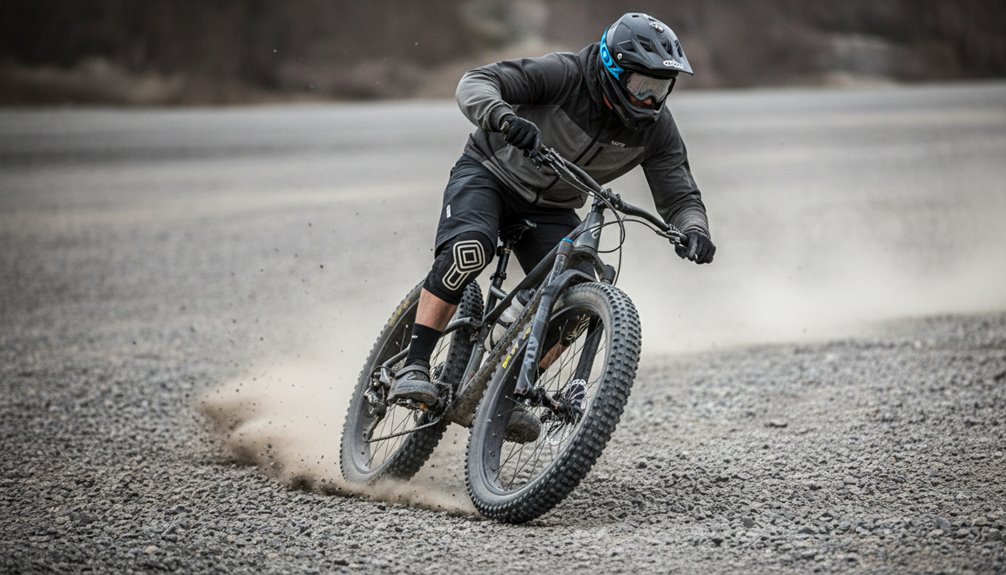
You can ride year-round through snow, sand, and mud without draining your savings, and 2026 brings surprisingly capable fat tire bikes under $1000 that handle terrain most people assume requires expensive gear. The Incbruce 26″ Fat Tire Mountain Bike offers 21 speeds and dual mechanical disc brakes on a bump-absorbing steel frame, while its twin competitor delivers similar specs plus front suspension and color choices. The Mongoose Dolomite keeps things simple with a 1×7 drivetrain and supersized 26×4 inch tires for trail versatility. If you want electric assist, the 1000W model hits 25 mph with 30–60 mile range and IPX5 waterproofing. For lighter builds, the Mongoose Juneau pairs an aluminum hydro-formed frame with 16-speed Shimano shifters. Most options arrive 85% assembled, though you’ll want 20–40 minutes and some patience for final tweaks. Watch clearance if you’re under 5’4″ or over 6’2″, factor in total weight including gear, and prioritize rotor size and brake feel for your local hills; the details ahead will help you pick the right ride for your adventures.
| Incbruce 26″ Fat Tire Mountain Bike 21 Speed |  | Best Budget All-Rounder | Wheel Size: 26 inches | Tire Width: 4 inches | Frame Material: High-carbon steel | VIEW LATEST PRICE | Read Our Analysis |
| 26″ Fat Tire Mountain Bike 21-Speed Dual Disc Brake |  | High Capacity Choice | Wheel Size: 26 inches | Tire Width: 4 inches | Frame Material: High carbon steel | VIEW LATEST PRICE | Read Our Analysis |
| Mongoose Mongoose Dolomite Fat Tire Mens Mountain Bike | 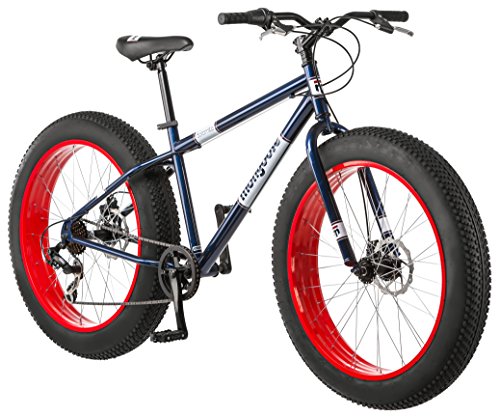 | Simple & Rugged | Wheel Size: 26 inches | Tire Width: Supersized/knobby | Frame Material: Steel | VIEW LATEST PRICE | Read Our Analysis |
| 1000W 25MPH Electric Mountain Bike with Fat Tires |  | Best Electric Upgrade | Wheel Size: 26 inches | Tire Width: 4.0 inches | Frame Material: High carbon steel | VIEW LATEST PRICE | Read Our Analysis |
| Mongoose Juneau Fat Tire Mountain Bike 26-Inch Blue |  | Premium Build Pick | Wheel Size: 26 inches | Tire Width: 4 inches | Frame Material: Aluminum | VIEW LATEST PRICE | Read Our Analysis |
More Details on Our Top Picks
Incbruce 26″ Fat Tire Mountain Bike 21 Speed
If you’re hunting for a fat tire bike that won’t empty your wallet but still tackles pretty much anything you throw at it, the Incbruce 26” is calling your name.
You’ll conquer snow, sand, mud, and city streets with those chunky 4-inch tires gripping like they mean business. The 21-speed system lets you shift smoothly whether you’re grinding uphill or flying down, and honestly, your legs will thank you. When conditions get sketchy, those dual mechanical disc brakes stop you fast—no heart-stopping moments. The steel frame absorbs bumps while you ride in comfort, and assembly’s a breeze. Grab your tools, follow the guide, and you’re rolling in minutes.
- Wheel Size:26 inches
- Tire Width:4 inches
- Frame Material:High-carbon steel
- Brake Type:Dual mechanical disc
- Speed/Gears:21-speed
- Pre-Assembly Level:Tools included; easy setup
- Additional Feature:Ergonomic adjustable seat
- Additional Feature:Height-adjustable handlebar
- Additional Feature:Urban street capability
26″ Fat Tire Mountain Bike 21-Speed Dual Disc Brake
Who says you can’t tackle sand, gravel, or muddy trails without dropping serious cash? This 26″ fat tire mountain bike proves you wrong, and then some.
You’ll love how the 4-inch knobby tires grip everything loose or slippery. Trust me, that first ride through deep sand without sinking feels like magic. The 21-speed drivetrain shifts smoothly when you’re grinding uphill, and dual disc brakes stop you cold even when you’re coated in mud.
The high carbon steel frame handles up to 440 pounds, so don’t worry about gear or groceries. Front suspension soaks up bumps that’ll rattle your fillings otherwise.
Assembly’s a breeze at 85% pre-built. You’ll go from box to trail in about half an hour, tools included. Pick black, white, blue, or purple—whatever matches your vibe.
- Wheel Size:26 inches
- Tire Width:4 inches
- Frame Material:High carbon steel
- Brake Type:Dual disc
- Speed/Gears:21-speed
- Pre-Assembly Level:85% pre-installed
- Additional Feature:440 lb weight capacity
- Additional Feature:Front suspension fork
- Additional Feature:20–40 min assembly
Mongoose Mongoose Dolomite Fat Tire Mens Mountain Bike
What draws riders to the Mongoose Dolomite isn’t flash or fancy branding—it’s the honest, no-nonsense value packed into a steel-framed package that actually fits real people. You’ll appreciate how this bike accommodates riders from 5’4″ to 6’0″, no awkward stretching required.
Those supersized knobby tires devour trails you’d hesitate to walk, while alloy rims keep things from getting unnecessarily porky. The 1×7 drivetrain shifts smoothly without overwhelming you with choices you’ll never use. Up front, that threadless headset actually makes you feel faster—and isn’t that half the battle?
You’ll stop confidently with mechanical disc brakes gripping front and rear. Assembly’s straightforward: grab your Allen wrenches, screwdriver, and about thirty minutes of patience. At eighty percent built, you’re practically riding already.
- Wheel Size:26 inches
- Tire Width:Supersized/knobby
- Frame Material:Steel
- Brake Type:Mechanical disc (front and rear)
- Speed/Gears:7-speed (1×7)
- Pre-Assembly Level:80% assembled
- Additional Feature:Threadless speed headset
- Additional Feature:Supersized knobby tires
- Additional Feature:Alloy lightweight rims
1000W 25MPH Electric Mountain Bike with Fat Tires
You aren’t getting just another budget ebike, you’re getting a 1000W beast that pushes the limits of what “under $1000” used to mean. This thing hauls you up to 25 mph with 66.6 N·m of torque, and honestly, you’ll feel it when climbing hills that used to wreck your lungs. The 48V 13Ah battery delivers 30–35 miles of pure electric freedom, or stretch it to 60 miles if you’re willing to pedal a little. IPX5 waterproofing means you won’t panic when that surprise storm hits.
You’ve got five riding modes to play with, including a cruise option that basically lets you kick back like you’re on a lazy river. The 26 x 4.0 fat tires swallow bumps, sand, and snow without complaint, while the front suspension keeps your wrists from rebelling. At 70 pounds, she’s hefty, but that rear rack hauls 60 pounds of groceries or gear no problem.
Dual 180mm disc brakes stop you fast when some squirrel darts across the trail. UL certification through SGS isn’t just fancy paperwork, it’s peace of mind you didn’t burn your house down charging overnight. With 85% pre-assembly and lifetime tech support, you’re not left deciphering cryptic diagrams alone.
- Wheel Size:26 inches
- Tire Width:4.0 inches
- Frame Material:High carbon steel
- Brake Type:Dual 180mm disc
- Speed/Gears:7-speed
- Pre-Assembly Level:85% pre-assembled
- Additional Feature:1000W peak motor
- Additional Feature:60-mile PAS range
- Additional Feature:5 riding modes
Mongoose Juneau Fat Tire Mountain Bike 26-Inch Blue
Looking for a fat tire bike that won’t sink your budget or leave you stranded in the sand?
The Mongoose Juneau’s got your back. You get 26×4 inch tires wrapped around 3-inch drilled alloy rims, ready to float over sand, snow, and whatever else you throw at them. The aluminum frame with hydro-formed tubing keeps things light when you’re hauling this 19.5-kilogram rig around, and those 16-speed Shimano trigger shifters let you snap through gears fast when the trail gets tricky.
You’ll stop confidently too, thanks to front and rear disc brakes that actually work in wet, muddy, or freezing conditions. No suspension here—just pure, rigid simplicity—but that’s part of the charm. Built for riders 54 to 62 inches tall, this unisex setup fits most adults comfortably. Assembly’s minimal, the blue paint pops, and that limited warranty adds peace of mind. At under a grand, you’re getting legitimate fat tire freedom without eating ramen for six months.
- Wheel Size:26 inches
- Tire Width:4 inches
- Frame Material:Aluminum
- Brake Type:Disc (front and rear)
- Speed/Gears:16-speed
- Pre-Assembly Level:Limited assembly required
- Additional Feature:Hydro-formed aluminum frame
- Additional Feature:16-speed Shimano drivetrain
- Additional Feature:3-inch drilled rims
Factors to Consider When Choosing Fat Tire Bikes Under $1000
Before you drop your hard-earned cash on a fat tire bike, you’ll want to weigh a few key details that can make or break your ride—things like how wide you actually need those tires, whether aluminum or steel fits your style, and if you really need 21 gears or if 7 will do just fine. You’ll also want to check that the brakes won’t leave you skidding into a snowbank, and honestly, don’t skip measuring yourself against the manufacturer’s height range unless you enjoy looking like a giant on a clown bike. Getting these basics right means you’re not just buying a bike, you’re buying the right bike for you.
Tire Width Options
How do you want your fat bike to feel when you’re tearing through snow drifts or bouncing over sandy trails? Tire width shapes that experience more than you’d think.
Most fat tires run 4 inches or wider, giving you that signature flotation over soft stuff. You’ll appreciate the stability when you’re crawling through powder or loose gravel, though you’ll notice the extra heft when you’re hauling the bike around.
If you’re chasing speed on firmer ground, consider dropping to around 3.8 inches. You sacrifice a bit of that cushy footprint, but you’ll roll faster without completely ditching off-road grip.
Wider isn’t always better, either. Bulky tires demand wider rims and frames, and they can feel sluggish when you’re maneuvering tight spots. Match your width to where you’ll actually ride, not where you dream of riding.
Frame Material Types
Once you’ve figured out your tire width, it’s time to think about what holds everything together. You’re looking at three main players here: steel, aluminum, and Chromoly, each bringing something different to the party.
Steel’s your budget-friendly buddy, tough as nails but heavier. You’ll feel it on hills, sure, but your wallet won’t complain. Aluminum’s the middle child—lighter, rust-resistant, and stiff enough to make climbing less miserable. At this price point, you’re mostly seeing aluminum, and that’s fine.
Chromoly steel? That’s the sweet spot if you spot it, strong like regular steel but way lighter. My first fat bike was plain steel, and I swear my legs still remember those winter commutes.
Pick what matches your terrain and tolerance for sweat.
Gear System Count
Where exactly are you planning to ride? If you’re tackling steep hills and fast descents, you’ll want a 21-speed system. It gives you that wide range to conquer varied terrain without killing your legs or spinning out. More gears mean smoother shifts, too—your cadence stays steady even when the surface gets weird.
But here’s the thing: fewer gears, like 16, keep things simple and lighter. That’s nice until you hit an extreme climb and can’t find the right gear. Most fat bikes under $1000 fall between 7 and 21 speeds, striking a balance between cost and versatility. Pair that 21-speed setup with front suspension, and you’ve got comfort plus options. Choose based on your real riding, not just specs.
Brake Performance Levels
You’ve sorted out your gears, but none of that matters if you can’t stop when you need to. Brake performance separates a fun ride from a scary one, especially on steep, muddy trails where fat tires carry extra momentum.
At this price point, you’ll mostly find mechanical disc brakes, which work fine for casual riding. They require more hand strength and regular cable adjustments, but they’re simple to fix on the trail. Hydraulic disc brakes offer smoother, more powerful stopping with less finger fatigue, though they’re rare under $1000.
Check rotor size too—larger rotors dissipate heat better during long descents. Test the brake levers in person if you can. Your hands will thank you after a bumpy downhill, trust me.
Rider Height Range
How tall are you, really? You’d be surprised how many riders grab a bike that doesn’t fit, then wonder why their back aches after twenty minutes.
Most fat tire bikes under $1000 come in limited sizes, usually medium or large frames. You’ll want to check the standover height first—that’s the space between you and the top tube when you’re standing flat-footed. Aim for at least two inches of clearance, or you’ll regret it on sudden stops.
Seat posts help, but they can’t fix everything. If you’re under 5’4“, you might struggle to find options in this price range without going custom. Taller riders over 6’2” face similar headaches, with knees bumping handlebars.
Measure your inseam before you buy. Your future self will thank you on every ride.
Weight Capacity Limits
A bike that can’t hold you properly isn’t just uncomfortable, it’s a safety risk waiting to happen. You need to check the weight capacity before you buy, because those limits exist for real reasons.
Most budget fat tire bikes handle between 250 and 300 pounds, including you and your gear. If you’re carrying groceries, camping equipment, or just a heavy backpack, you’re adding more than you think. I once ignored this, and my rear wheel started wobbling on a downhill—scary stuff.
Look at the frame material too. Steel holds more weight but weighs more itself. Aluminum keeps things lighter but sometimes caps out lower. Double-check the manufacturer’s specs, and don’t assume you’re fine because you’re “close enough.” Your safety’s worth those extra minutes of research.
Assembly Difficulty
Most fat tire bikes under $1000 show up 60–85% assembled, so you’re not building from scratch, thank goodness. You’ll bolt on the front wheel, slap on the handlebars, screw in the pedals, and tweak the brakes and derailleurs. Budget 20–40 minutes, depending on how friendly the instructions are. Many brands toss in basic tools and link to video tutorials, which beats squinting at blurry diagrams. Do yourself a favor: actually read the manual for torque specs and alignment. Skipping that step turns your first ride into a wobbly disaster nobody wants.
Terrain Versatility
Where exactly do you plan to ride this beast? Fat tires, usually four inches wide, grip snow, sand, mud, and loose gravel, so you’re not stuck on pavement. You’ll want front or dual disc brakes for confident stops when trails get wet, snowy, or steep. Suspension, front or full, smooths out rough patches so your hands don’t go numb. A 21-speed or 16–7-speed drivetrain lets you spin up climbs and cruise flats without grinding your knees. Sturdy aluminum or high-carbon steel frames, plus reinforced rims, keep everything stable when you’re bouncing between terrain types. Basically, you’re buying one bike that handles everything from beach dunes to snowy trails, no garage full of specialty rides needed.
Frequently Asked Questions
Can Fat Tire Bikes Ride on Regular Pavement?
You can ride fat tire bikes on regular pavement, though you’ll feel more rolling resistance and slower speeds. They’re built for sand and snow, but nothing stops you from cruising streets when you want.
Do Fat Tires Require Special Maintenance?
Your wide tires grip the earth like monster truck wheels crushing snow, but they demand attention: you’ll scrub salt-caked rims weekly, check sealant quarterly, and lower pressures seasonally—no special rituals, just beefier versions of your normal bike care routine.
Are Fat Tire Bikes Harder to Pedal Uphill?
Yes, you’ll find fat tire bikes harder to pedal uphill. The wide tires create more rolling resistance and weight, so you’re working harder against gravity. You’ll shift to lower gears more often on climbs.
How Much Do Replacement Fat Tires Cost?
You’ll spend $50 to $150 per tire, depending on brand and quality. Budget options run cheaper, while premium studded or tubeless-ready tires cost more. You’ll also need to factor in installation if you’re not doing it yourself.
Can I Convert My Regular Bike to Fat Tires?
You can’t easily convert your regular bike to fat tires. Your frame and fork lack clearance for wide tires, and your rims won’t fit them. You’ll need a new frame, fork, wheels, and tires—essentially a whole new bike.
🚲 Free: The Smart Bike Buyer’s Cheat Sheet
Get our 2-page PDF - budget tiers, the components that actually matter, and a 12-point used-bike inspection. We'll email you the download link. No spam, unsubscribe anytime.
By subscribing you agree to our Privacy Policy.
