
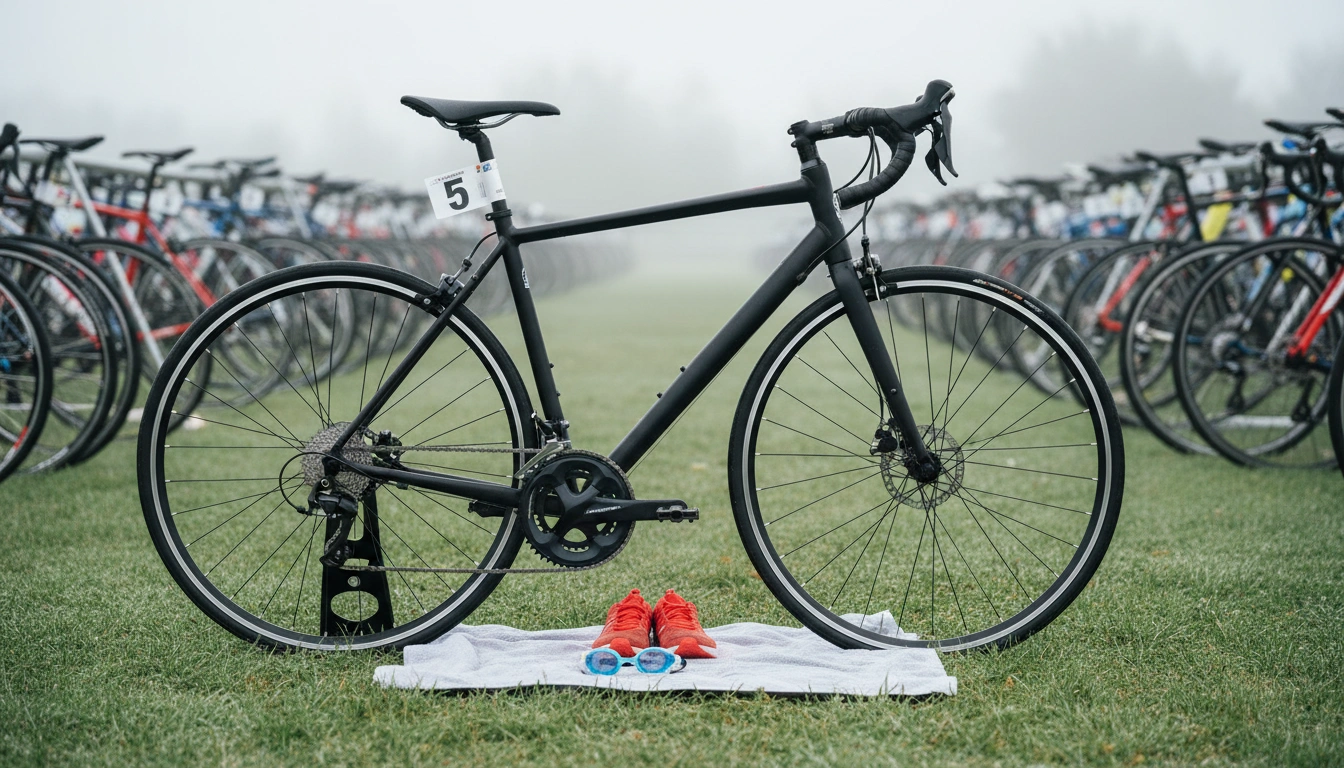
You’ve signed up for your first triathlon – or maybe your third – and the bike leg is the part making your stomach turn. Not because you can’t ride. Because you’re staring at $3,000 carbon machines and wondering if you’re supposed to sell a kidney before the starting gun goes off.
Good news: you don’t need to. There’s a whole range of solid bikes that can carry you through a sprint or Olympic triathlon without breaking your budget. I looked at everything from dedicated road bikes with aero potential to entry-level racers built for exactly this kind of thing. The 8 picks below cover different speeds, brake styles, and brand pedigrees – so whether you want Shimano Tiagra or just something that won’t embarrass you at transition, there’s a match here.
Let’s get into it.
Key Takeaways
Here’s the short version if you just need a quick sanity check before scrolling.
- The Tommaso Monza is the top overall pick – carbon fork, Shimano Tiagra groupset, and a geometry that works well for triathlon pace.
- Road bikes are a perfectly smart choice for first-time triathletes – many pros even race road bikes on hilly courses.
- Shimano Claris (8-speed) and Tiagra (10-speed) are the two groupsets you’ll see most in this price range – Tiagra is the upgrade worth paying for if you can swing it.
- Disc brakes (Hiland, Schwinn Phocus) give you better stopping control in wet conditions – useful for early morning race starts.
- All 8 bikes here use 700c wheels and aluminum frames, keeping weight reasonable without a carbon price tag.



More Details on Our Top Picks
-
Tommaso Monza Sport Road Bike – Aluminum Frame, Carbon Fork, Shimano Tiagra 24 Speeds
If you’re going to spend close to $1,000 on a triathlon bike, the Tommaso Monza is where that money makes the most sense. You’re getting a Shimano Tiagra 24-speed groupset – that’s a full step up from the Claris and Sora you’ll find on cheaper builds – along with a carbon fork that cuts road buzz on those longer bike segments.
The aluminum frame keeps the weight sensible without asking you to take out a second mortgage. That carbon fork is the real story here though. It absorbs vibration on rough pavement, which means your hands and arms arrive at T2 in much better shape for the run. I’ve seen a lot of beginner triathletes underestimate how fatigued arms get on a stiff alloy fork over 40km.
Tommaso builds bikes specifically aimed at triathletes and road cyclists who want real components at a real-world price. The Tiagra shifters feel crisp and precise – way better than the spongy feel you sometimes get on lower-tier groupsets. If you’re doing Olympic-distance or longer, this is the groupset range you want under you.
The Monza is the pick for anyone treating this as a serious sport, not just a one-time bucket list event. Pair it with a good pair of triathlon shorts and you’re building a solid race kit around a bike that can grow with your ambitions.
- Frame:Aluminum with compact road geometry
- Fork:Carbon, vibration-damping
- Groupset:Shimano Tiagra
- Speeds:24
- Shifters:Shimano Tiagra STI
- Wheels:700c double-wall alloy rims
- Tires:700x25C
- Brakes:Caliper, alloy
- Best For:Olympic-distance and repeat triathletes
- Warranty:Lifetime frame and fork
-
Tommaso Imola Sport Bike Performance Aluminum Road Bike, Shimano Claris 24 Speeds
The Tommaso Imola is the sweet spot for first-time triathletes who want a real road bike without the Monza’s price tag. You get a 24-speed Shimano Claris drivetrain, a lightweight aluminum frame, and the same brand reliability that makes Tommaso a go-to name in the entry-level tri scene.
Claris is 8-speed – which is enough for most sprint and Olympic courses. The gear range gives you the climbing ability you need without overcomplicating the shifting. The aluminum frame is properly light and the geometry leans forward just enough to put you in an aerodynamic position without making your back scream on longer rides.
Compared to the Monza above, the main trade-off is the alloy fork instead of carbon. You’ll feel a bit more road vibration over rough pavement – not a dealbreaker for sprint distances, but something to be aware of if you’re racing on chip-seal roads. The Imola is still a genuinely capable machine that will carry you to a solid finish.
If you’re on a tighter budget but still want Tommaso quality, the Imola is hard to beat. It comes with free pedals and enough gears to handle varied race courses. Perfect for someone doing their first few triathlons and building confidence on the bike leg.
- Frame:Lightweight aluminum, compact geometry
- Fork:Alloy
- Groupset:Shimano Claris R2000
- Speeds:24
- Shifters:Shimano Claris STI
- Wheels:700c double-wall alloy
- Tires:700x25C
- Brakes:Caliper, alloy dual pivot
- Best For:First-time triathletes, sprint distance
- Pedals:Included free
-
Hiland Aluminum Road Bike, Drivetrain 21 Speeds, Disc Brake with 700C Wheels
The Hiland is the disc brake option in this list – and if you live somewhere with unpredictable weather or plan to race early morning when roads are damp, that matters more than people give it credit for. The mechanical disc brakes give you reliable stopping power regardless of rim condition or wet rims. No more squeezing the lever and hoping for the best mid-descent.
The 21-speed Shimano drivetrain covers the gear range you need for triathlon courses with varied terrain. The 700x28C tires are slightly wider than the 25C standard you’ll see on race-focused road bikes – that means a touch more rolling resistance on flats, but better stability on those rough course sections and better comfort on longer training rides.
The Hiland Alliance 1.0 ships 85% pre-assembled with tools and a tutorial video, so first-timers aren’t thrown into a confusing build. The frame is sized for riders 5’4″ to 6’1″ depending on the size you pick, which covers most adult athletes. It’s backed by Hiland’s lifetime warranty, which is a nice confidence boost at this price point.
If you’re doing multi-sport events in mixed conditions – or you just like the safety margin of disc brakes – the Hiland earns its spot on this list. It won’t win any weight competitions against a full carbon race bike, but it’s a dependable, well-equipped machine that gets the job done.
- Frame:Aluminum alloy
- Fork:Alloy
- Drivetrain:Shimano 21-speed
- Brakes:Mechanical disc
- Wheels:700C double-wall alloy rims
- Tires:700x28C
- Assembly:85% pre-assembled
- Sizes:M (5’4″-5’9″), L (5’7″-6’1″)
- Best For:Wet conditions, mixed terrain, beginners
- Warranty:Limited lifetime
-
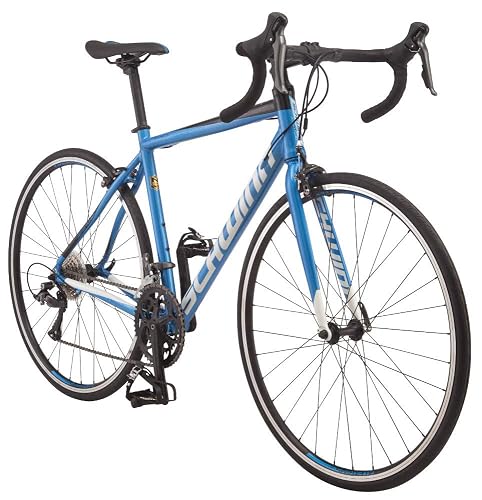
Schwinn Phocus 1.6 Disc Road Bike, 700c, 16-Speed, Aluminum Frame, Carbon Fork, Disc Brakes
Schwinn has been making bikes for over a century, and the Phocus 1.6 Disc brings that heritage to the entry-level triathlon market at a price that’s genuinely hard to ignore. You get disc brakes and a carbon alloy fork together in one package – that combination normally pushes bikes above the $1,000 mark on most brand sites.
The 16-speed drivetrain is a bit lower than the 24-speed setups on the Tommaso bikes, but for sprint triathlons on relatively flat courses, it’s enough. The aerodynamic riding position from the drop bar setup helps you cut through wind during the bike leg, which is where most time is gained or lost in a sprint race.
The carbon fork is the standout spec here. Even in an “alloy-carbon” build, that fork takes a real bite out of road chatter compared to a standard steel or alloy fork. Your hands and shoulders will thank you after 20-40km of racing. The disc brakes mean you’re not white-knuckling it on wet descents either.
This is the pick for budget-focused triathletes who still want a premium touch. The Schwinn name brings broad availability and solid customer support. If you want the most bike for the least money – and you’re willing to stay at 16 speeds – the Phocus 1.6 Disc is a clever buy.
- Frame:Lightweight aluminum
- Fork:Alloy-carbon
- Speeds:16
- Brakes:Disc
- Wheels:700c
- Tires:700x25C
- Handlebar:Drop bar, aerodynamic position
- Best For:Budget-conscious beginners, sprint triathlons
- Brand:Schwinn (100+ year heritage)
- Pedals:Included
-
Vilano Forza 4.0 Aluminum Integrated Shifters Road Bike, 24 Speed
Vilano’s FORZA line has been pointed at triathletes since the beginning – the name alone tells you something about who they designed it for. The Forza 4.0 specifically features Shimano STI integrated brake-lever shifters, which means you can brake and shift from the same hand position. That matters a lot in a race where every second of fumbling around counts.
The 6061 aluminum frame is tried-and-tested for this price bracket – light enough, strong enough, and plenty stiff for pushing hard on the flats. The 24-speed drivetrain gives you the range to spin up climbs without destroying your legs before the run. CNC machined double-wall rims add durability without the price hit of higher-end wheelsets.
Where the Forza 4.0 shines most is as a first triathlon bike. It ships with free pedals, the STI shifters keep gear changes intuitive, and the brand has been serving the triathlon community long enough to understand what beginners actually need from a bike in this category. Setup is relatively straightforward with some mechanical patience.
If you’re newer to road bikes and want shifting controls that feel familiar and easy to use, the Forza 4.0 is a smart entry point. Complement it with a good pair of triathlon goggles for race day and you’ll be checking gear boxes without stress.
- Frame:6061 aluminum
- Fork:Carbon racing fork (12K)
- Speeds:24
- Shifters:Shimano STI integrated brake-lever
- Wheels:Double-walled CNC machined rims
- Tires:700c road tires
- Brakes:Caliper
- Best For:Beginners, first triathlon bike
- Pedals:Included free
- Brand:Vilano (dedicated triathlon line)
-
Schwinn Fastback AL Claris Adult Performance Road Bike, 700c Wheels, 16-Speed Drivetrain
The Fastback AL Claris earns its Runner Up spot by delivering a well-rounded road bike with legitimate components at a price that doesn’t require a financing conversation. The N LITENED GOLD triple-butted aluminum frame is one of the nicer frame materials in this price bracket – triple-butting means the tube walls are thinner in the middle and thicker at the joints, saving weight while keeping strength exactly where it’s needed.
Shimano Claris 16-speed with a 50/34T compact crank gives you that efficient spinning cadence that triathletes chase. Pair that with the Sunrace 11-34T cassette and you have a wide range for climbing without killing your legs before T2. Alex X2200 double-wall rims are a solid spec choice – they’re stiff and durable without the weight hit of box rims.
The aluminum fork with alloy steerer isn’t the most plush ride over rough pavement, but Schwinn’s road-tuned frame geometry keeps the handling precise. Promax aluminum caliper brakes stop predictably, and the S2 saddle with cork bar tape shows Schwinn paid attention to finishing details. This is a bike that feels more expensive than it is.
Where the Fastback AL shines is as an everyday trainer that doubles as a race bike. You can log serious training miles on this and then pin a number on it without feeling underprepared. Check out our full triathlon gear hub to round out your race day kit.
- Frame:N LITENED GOLD triple-butted aluminum
- Fork:Aluminum with alloy steerer
- Groupset:Shimano Claris
- Speeds:16
- Crank:50/34T compact
- Cassette:Sunrace 11-34T
- Wheels:Alex X2200 double-wall rims
- Tires:Schwinn 700x25C
- Brakes:Promax aluminum caliper
- Best For:Training and racing, beginner to intermediate
-
Giordano Aversa Aluminum Road Bike, 700c
The Giordano Aversa is as no-frills as it gets in this lineup – and that’s not a knock. If you just need a bike to show up at a sprint triathlon, finish the bike leg, and not fall apart under you, the Aversa checks those boxes with money to spare. It’s the bike to buy when the budget is tight and the goal is simply to cross the finish line.
The 6061 aluminum frame is race-ready in the sense that it’s light and stiff. The 14-speed Shimano drivetrain is on the simpler end of what you’ll find in this roundup, but it shifts cleanly and gives you enough range for moderately hilly courses. The 32-hole double wall 40mm alloy rims are notably deep for a budget bike – that extra depth gives you a small aerodynamic benefit and makes the wheelset feel more premium than the price suggests.
The steel fork is worth noting. It absorbs road vibration better than a cheap alloy fork, which is the opposite of what you might expect – steel’s natural flex smooths out bumps nicely. The dual pivot alloy caliper brakes stop predictably in dry conditions. Just don’t expect disc-brake confidence in the wet.
The Aversa is the right choice for someone who wants to try a triathlon before committing to a higher-end setup. Get through a few races on this, figure out what you actually need from a bike, then upgrade with knowledge. Grab a triathlon wetsuit to round out your beginner kit.
- Frame:6061 aluminum
- Fork:High tensile steel
- Speeds:14
- Drivetrain:Shimano equipped
- Wheels:32-hole double wall 40mm alloy rims
- Tires:700x25C
- Brakes:Alloy dual pivot caliper
- Best For:Budget triathletes, sprint distance
- Rim Depth:40mm (light aero benefit)
- Brake Style:Caliper rim brakes
-
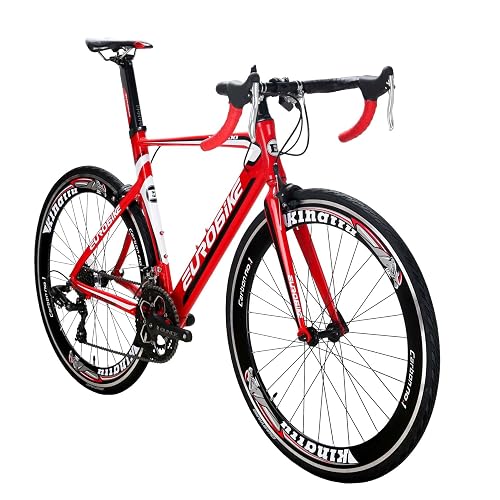
EUROBIKE Adult Road Bike, Light Weight Aluminum Frame, Shimano 14 Speeds, 700C Racing Bike
The EUROBIKE stands out in this price range for one practical reason that most budget bikes skip: internal cable routing. That means the shift and brake cables run inside the frame instead of along the outside – it’s cleaner looking, cables are protected from weather and UV, and it reduces the chance of cable housing damage during transport to race venues.
The 54cm aluminum frame fits riders in the 5’5″ to 6’0″ range well, and the double caliper brake system is easier to modulate than disc brakes for newer riders – you get very precise speed control, which matters when you’re navigating technical bike course sections or descending quickly into T2. The 700x25C tires keep rolling resistance low for race-day speed.
It ships 85% pre-assembled with an installation video – EUROBIKE did their homework on making first-time bike ownership less intimidating. The 14-speed range is the lowest count in this roundup, which keeps things simple but limits your flexibility on serious climbs. For flatter sprint courses, that won’t matter much at all.
The EUROBIKE is a clean, well-assembled budget racer for athletes who care about details like cable routing and brake precision. It’s a great starter bike for anyone doing their first sprint triathlon on a flat local course.
- Frame:54cm aluminum
- Fork:Alloy
- Speeds:14
- Groupset:Shimano 14-speed
- Cable Routing:Internal
- Brakes:Double caliper
- Wheels:Dual aluminum rims, 700c
- Tires:700x25C
- Best For:Flat sprint courses, first-time tri bike buyers
- Assembly:85% pre-assembled, video guide included
How to Choose a Triathlon Bike Under $1,000
Picking the right bike at this price point isn’t just about the number on the sticker. The choice you make here will shape how your first race feels and how fast you progress. Here’s what actually matters.
TT Bike vs. Road Bike: What Should a Beginner Buy?
Dedicated time trial (TT) bikes with aero bars, steep seat tube angles, and aggressive forward positioning are fast – but they’re not forgiving. A true TT bike requires specific bike fit, a lot of saddle time to get comfortable in the position, and handling skills that take time to build. For most beginner triathletes, a road bike is the smarter starting point. It’s more versatile for training, easier to handle in groups, and can be turned into a pseudo-tri setup with clip-on aero bars and a setback seatpost. The Tommaso Monza and Vilano Forza 4.0 both adapt well to clip-on aero bars when you’re ready for that upgrade.
Groupset: Does the Drivetrain Brand Matter?
In this price range, you’ll see Shimano on almost everything – specifically Claris (8-speed), Sora (9-speed), and Tiagra (10-speed). Each step up in the hierarchy means lighter components, crisper shifting, and better long-term durability. The Tommaso Monza’s Tiagra groupset is meaningfully better than the Claris on the Imola – the shift feel is sharper and it holds tune longer. For your first bike, Claris is fine. But if you plan to race more than twice a year, the Tiagra upgrade is worth it.
Disc vs. Rim Brakes for Triathlon
Both the Hiland and Schwinn Phocus 1.6 Disc use disc brakes, while the rest of the list uses caliper rim brakes. Disc brakes give you consistent stopping power in wet conditions – early morning races and courses near water can get slippery. The trade-off is slightly more maintenance complexity and marginally heavier weight. For riders doing wet or technical courses, disc wins. For flat, dry sprint courses, rim brakes are lighter and perfectly capable.
Frame Geometry: Aero vs. Endurance
Triathlon bike geometry sits between a road race bike (very aggressive) and an endurance road bike (more upright). For your first few races, an endurance geometry like the Schwinn Fastback AL or Giordano Aversa is actually more comfortable and lets you run well off the bike. As your fitness and flexibility improve, you’ll naturally want to drop into a more aggressive position. The Tommaso bikes sit in a compact road geometry that’s a good middle ground – aero enough to be fast, upright enough to be comfortable over 40km.
Wheel and Tire Setup: What to Look for
All 8 bikes on this list use 700c wheels, which is the standard road racing size. The tire width varies – 25C tires (Tommaso, Vilano, Schwinn, EUROBIKE, Giordano) are faster on smooth pavement, while the 28C on the Hiland is more stable on varied surfaces. Double-wall alloy rims are the minimum you want – they’re significantly stiffer and stronger than single-wall rims. The Giordano Aversa’s 40mm deep section rims are a nice bonus that most budget bikes skip, giving a small aerodynamic advantage without stepping up to dedicated aero wheels.
Triathlon Bike Comparison
Numbers side by side so you can see exactly where each bike fits in the lineup.
| Bike | Speeds | Groupset | Fork | Brakes | Tires | Best For |
|---|---|---|---|---|---|---|
| Tommaso Monza | 24 | Shimano Tiagra | Carbon | Caliper | 700x25C | Olympic distance, serious beginners |
| Tommaso Imola | 24 | Shimano Claris | Alloy | Caliper | 700x25C | First triathlon, sprint distance |
| Hiland 21-Speed Disc | 21 | Shimano 21-speed | Alloy | Disc | 700x28C | Wet conditions, varied terrain |
| Schwinn Phocus 1.6 Disc | 16 | Generic 16-speed | Alloy-Carbon | Disc | 700x25C | Budget, disc brakes priority |
| Vilano Forza 4.0 | 24 | Shimano STI | Carbon (12K) | Caliper | 700C | Beginners, easy shifting |
| Schwinn Fastback AL Claris | 16 | Shimano Claris | Aluminum | Caliper | 700x25C | Training + racing, beginner/intermediate |
| Giordano Aversa | 14 | Shimano 14-speed | Steel | Caliper | 700x25C | Tight budget, sprint distance |
| EUROBIKE Road Bike | 14 | Shimano 14-speed | Alloy | Double Caliper | 700x25C | Flat courses, clean cable routing |
Frequently Asked Questions
These are the questions I see come up over and over when people are looking at their first tri bike. Let’s get them out of the way.
Can I use a regular road bike for a triathlon?
Absolutely. Most beginner and intermediate triathletes race on road bikes, and many experienced athletes do too – especially on hilly courses where road bike geometry is actually faster. Every bike on this list is a road bike, and every one of them is a totally legitimate triathlon machine. Add clip-on aero bars when you’re ready to simulate a TT position without buying a dedicated TT frame.
What’s the minimum number of speeds I need for a triathlon?
Technically you could race a fixie if you were determined enough, but for a typical sprint or Olympic triathlon course, 14 speeds is workable and 21-24 speeds is comfortable. The Giordano Aversa and EUROBIKE have 14 speeds – fine for flat courses. If your local race has serious hills, step up to the 21-speed Hiland or the 24-speed Tommaso options.
Should I get disc brakes or rim brakes on my first triathlon bike?
Rim brakes are lighter and simpler – the Tommaso Monza, Tommaso Imola, Vilano Forza, and Schwinn Fastback all use caliper rim brakes and they’re excellent. Disc brakes like on the Hiland and Schwinn Phocus 1.6 are worth it if you race in wet conditions or want more stopping confidence. Either works fine in dry conditions. Don’t overthink it for your first race.
Do triathlon bikes come with pedals?
Some do, some don’t. The Tommaso Imola, Vilano Forza 4.0, and Schwinn Phocus 1.6 Disc include pedals. The Tommaso Monza and some others may not. You’ll want to budget for clipless pedals and cycling shoes eventually – or at minimum flat platform pedals to start. Check the Amazon listing details before ordering so you’re not surprised. For accessories to pair with your new bike, check out our full triathlon gear guide.
How much should I spend on a first triathlon bike?
Anywhere from $400 to $900 is a reasonable range for a first-timer, which puts everything on this list in play. The sweet spot for value is the Tommaso Imola or Schwinn Fastback AL – solid components, reputable brands, and enough bike to race on for years without feeling like you’re holding back. If you’re serious about the sport from day one, bump the budget to the Tommaso Monza’s Tiagra-level territory and you won’t need to upgrade the drivetrain for a long time.
What other gear do I need besides the bike?
At minimum: a helmet (required at every triathlon), a pair of cycling shorts or triathlon shorts you can swim and run in, shoes, and a race belt for your number. If your race involves an open water swim, a triathlon wetsuit is worth having depending on water temperature. Good triathlon goggles are also worth the investment – you don’t want to spend the swim leg fussing with leaky eye wear.
🚲 Free: The Smart Bike Buyer’s Cheat Sheet
Get our 2-page PDF - budget tiers, the components that actually matter, and a 12-point used-bike inspection. We'll email you the download link. No spam, unsubscribe anytime.
By subscribing you agree to our Privacy Policy.

Dear Volata Cycles,
I read that you have a bicycle in your range that features LEDs integrated into the frame. Unfortunately, I couldn’t find this model on your website, even though I’ve seen photos of it. I really love this lighting feature, and it would be a must-have for me in a new bike. Could you please let me know which model it is and how much it costs?
Thank you!
Regards
André Heinze