
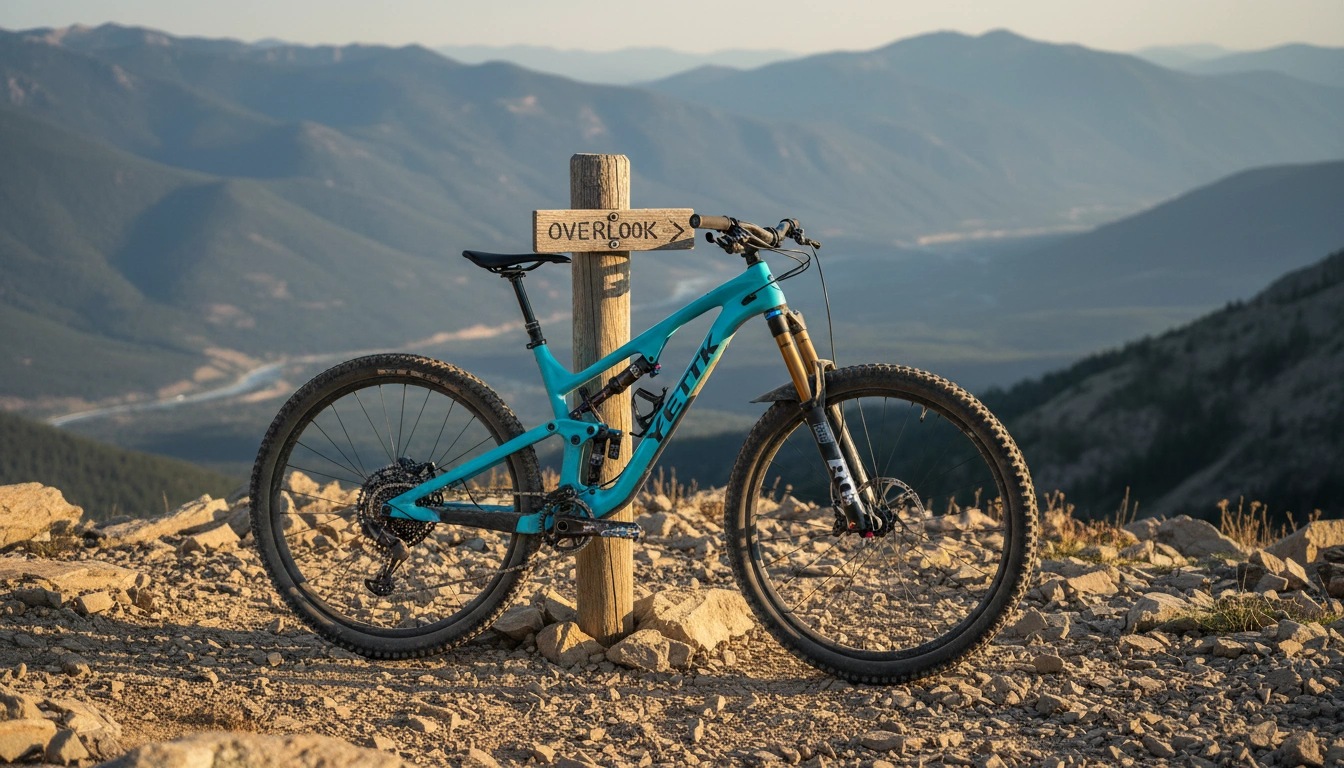
There are two kinds of mountain bikers in the world: people who know what a Yeti is, and people who are about to find out. Yeti Cycles builds some of the most obsessed-over bikes on the planet – the kind where guys spend six months researching and another six months saving up. If you’ve typed “best Yeti mountain bikes” into Google, you already know the brand has a reputation that travels faster than the bikes themselves.
This guide covers the full Yeti lineup – the SB130, SB140, SB150, SB160, ARC, and ASR – what each one is actually good for, the Switch Infinity suspension technology that makes Yeti bikes feel different on trail, and when it genuinely makes sense to buy one versus a capable alternative. Because at $4,000 to $12,000+, a Yeti is a real investment, and you deserve a straight answer on whether it’s right for you. For alternative bikes and gear you can pick up right now, the products below are solid picks at every budget level.
Let’s get into it.
Key Takeaways
Here’s the short version if you’re in a hurry.
- Yeti’s current trail lineup runs from the XC-leaning SB130 to the enduro-focused SB160, with the SB140 being the sweet spot for most all-mountain riders.
- Switch Infinity suspension is the defining Yeti technology – a floating link that keeps the shock in its most active zone throughout the travel, reducing pedal bob without a lockout lever.
- Yeti bikes are not sold on Amazon – they come through authorized dealers starting around $4,500 for a build. The products in this roundup are quality alternatives and accessories available now.
- The Diamondback Release 4 C Carbon and Marin Rift Zone 2 are the closest you’ll get to Yeti-level ride characteristics at a fraction of the price.
- If you’re already riding a Yeti or building toward one, the Fox Ranger Jersey and Troy Lee Designs Stage Helmet are the standard kit choices in the Yeti crowd.
| Diamondback Bicycles Release 4 C Carbon Full Suspension Mountain Bike |  |
Best Overall Alternative | Frame: Carbon fiber full suspension | Travel: 130mm rear / 140mm fork | Wheels: 29-inch | VIEW LATEST PRICE | Read Our Analysis |
| Marin Rift Zone 2 29er Full Suspension Mountain Bike |  |
Best Value Full Suspension | Frame: Series 3 aluminum | Travel: 120mm rear / 120mm fork | Wheels: 29-inch | VIEW LATEST PRICE | Read Our Analysis |
| Diamondback Bicycles Recoil Comp 29er Full Suspension Mountain Bike |  |
Runner Up | Frame: Aluminum full suspension | Travel: 100mm air suspension front and rear | Wheels: 29-inch | VIEW LATEST PRICE | Read Our Analysis |
| Mongoose Impasse HD Mountain Bike 29-Inch Wheels | 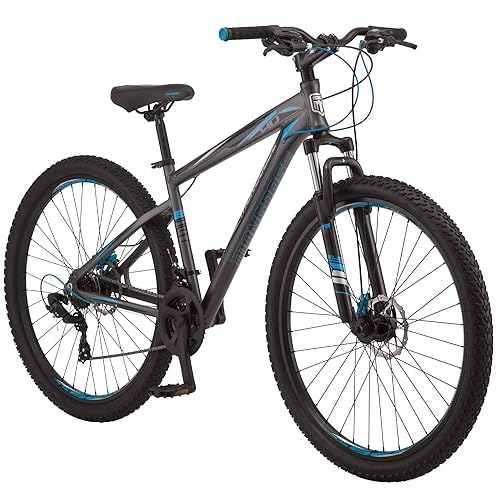 |
Best Budget Hardtail | Frame: Aluminum hardtail | Speed: 21-speed drivetrain | Wheels: 29-inch | VIEW LATEST PRICE | Read Our Analysis |
| Schwinn Protocol 1.0 Full Suspension Mountain Bike |  |
Best Entry-Level Full Suspension | Frame: Lightweight aluminum | Speed: 21-speed drivetrain | Brakes: Mechanical disc | VIEW LATEST PRICE | Read Our Analysis |
| Fox Racing Men’s Ranger Short Sleeve Mountain Bike Jersey |  |
Best MTB Jersey | Material: Stretch recycled fabric | Fit: Mountain bike specific drop tail | Feature: Zip chest pocket | VIEW LATEST PRICE | Read Our Analysis |
| Fox Racing Men’s Ranger Mountain Bike Short |  |
Best MTB Shorts | Material: TruDri stretch ripstop | Feature: DWR water repellent finish | Liner: Optional removable padded liner | VIEW LATEST PRICE | Read Our Analysis |
| Troy Lee Designs Stage Helmet MIPS Mountain Bike |  |
Best MTB Helmet | Protection: MIPS + EPP/EPS dual foam | Vents: 16 high-flow intake/exhaust | Buckle: FIDLOCK magnetic | VIEW LATEST PRICE | Read Our Analysis |
More Details on Our Top Picks
-
Diamondback Bicycles Release 4 C Carbon Full Suspension Mountain Bike
If you’re looking at Yeti SB130s and SB140s but the price tag isn’t happening right now, the Diamondback Release 4 C Carbon is the bike that comes up in the same conversation. It’s a full carbon frame, 130mm rear travel paired with a 140mm fork – the same geometry formula that makes a Yeti SB130 so popular with the all-mountain crowd.
The carbon frame is genuinely impressive at this price point. Diamondback’s Release series has always been their “take it seriously” line, and the 4 C sits at the top of it. You get a 29-inch wheel setup that rolls over trail chatter with authority, and the front-to-rear travel balance keeps the bike playful on climbs without getting washed out on the descents.
Where Diamondback closes the gap with Yeti is in the frame design itself – modern geometry, internal cable routing, and a build spec that matches what riders actually need on trail. The components aren’t EWS-race level, but they’re solid enough to ride hard without constantly needing upgrades. Personally, I’d take this bike and spend the savings on tires and a dropper post before worrying about spec bumps.
This one is for the rider who wants real carbon, real suspension, and real trail performance without booking a second mortgage. If you’re in the all-mountain bike market and want to maximize what your dollar gets you, start here.
- Frame Material:Carbon fiber full suspension
- Rear Travel:130mm
- Fork Travel:140mm
- Wheel Size:29-inch
- Suspension Design:Link-based full suspension
- Brakes:Hydraulic disc
- Drivetrain:1x compatible
- Cable Routing:Internal
- Best For:All-mountain trail riding
- Rider Type:Intermediate to advanced
-
Marin Rift Zone 2 29er Full Suspension Mountain Bike
Marin has been quietly making excellent trail bikes for years without getting the hype treatment. The Rift Zone 2 is a 29er full suspension bike built on a Series 3 aluminum frame with their MultiTrac suspension design – and it handles trail riding duties better than bikes at twice the price used to.
The 120mm of rear travel paired with a RockShox Recon RL fork makes this a capable XC-to-trail bike. It’s not going to eat gnarly enduro lines the way a Yeti SB160 does, but for flowy singletrack, moderate tech, and all-day rides, it covers the territory that most riders actually ride 90% of the time. The 29-inch wheels keep momentum through rough sections, and Marin’s geometry on the Rift Zone is notably more modern than budget bikes of similar spec.
Compared to something like the SB130, the Marin obviously doesn’t have Switch Infinity suspension or the same frame refinement – but it gets you the core experience: a full suspension 29er with good geometry that pedals well and descends confidently. I’ve seen a lot of newer riders start on a Rift Zone and genuinely get a few seasons of progression out of it before they felt the need to upgrade.
This bike makes the most sense for riders who want real full suspension at a price that doesn’t require a payment plan. Check out our best hardtail mountain bike guide if you’re also considering going rigid up front to save even more.
- Frame Material:Series 3 aluminum
- Suspension Design:MultiTrac full suspension
- Rear Travel:120mm
- Fork:RockShox Recon RL 29″ 120mm
- Wheel Size:29-inch
- Brakes:Hydraulic disc
- Drivetrain:2x with Shimano derailleurs
- Intended Use:XC to trail
- Best For:All-day trail riding, beginner to intermediate
- Standout Spec:Modern geometry for the category
-
Diamondback Bicycles Recoil Comp 29er Full Suspension Mountain Bike
The Recoil Comp sits in an interesting spot in the Diamondback lineup – it’s a 100mm travel trail bike on 29-inch wheels, which puts it squarely in the “fast, fun, do-everything” territory that Yeti’s XC and trail bikes have always dominated. If you’re drawn to the Yeti ARC or ASR but want to get out riding sooner, the Recoil Comp gets you in the door.
What makes this bike work is the 100mm air suspension both front and rear combined with 29-inch wheel geometry. Air spring suspension means you can tune it to your weight and riding style, something you rarely get at this price bracket. The bike climbs efficiently – which matters – and it doesn’t feel sluggish when the trail points upward.
It’s not a burly enduro bike, and it’s not trying to be. This is a pedal-focused machine that rewards riders who like covering ground efficiently and throwing in some technical sections along the way. Think XC races, marathon rides, or aggressive trail days where you’re as focused on the climb as the descent.
The Recoil Comp is also a solid pick for someone who has ridden hardtails for a few years and wants to understand what full suspension actually adds to their riding – without spending five figures to find out. Pair it with some quality trail tires and you’ll be surprised what it can handle.
- Frame Material:Aluminum full suspension
- Suspension Type:Air spring front and rear
- Travel:100mm front and rear
- Wheel Size:29-inch
- Suspension Design:Single pivot
- Brakes:Hydraulic disc
- Best Use:XC to light trail
- Geometry:Optimized for 29er efficiency
- Rider Profile:XC-focused, efficiency-minded
- Upgrade Path:Strong base for component upgrades
-
Mongoose Impasse HD Mountain Bike 29-Inch Wheels
Before anyone saved up for their first Yeti, most of them rode something like the Mongoose Impasse HD. It’s a no-frills aluminum hardtail with 29-inch wheels – the format that teaches you how to ride a bike properly, because you can’t rely on rear suspension to absorb your mistakes. There’s something to be said for that.
The Impasse HD runs front suspension with disc brakes front and rear, which gives it the two things that matter most for actual trail riding: traction control on descents and stopping power on loose terrain. The 21-speed drivetrain covers enough range for varied terrain, and the double-wall alloy rims are noticeably more durable than cheaper single-wall alternatives.
This isn’t a bike that’s going to feel like a Yeti ARC – let’s be honest about that. But it’s a genuine way to get on dirt with 29-inch wheels and disc brakes without spending more than a few hundred dollars. A lot of serious riders keep a hardtail like this around for commuting, bikepacking, or loaner rides when friends visit. It fills a different role than the premium bikes, not a lesser one.
If you’re deciding between a hardtail and full suspension at the entry level, the hardtail almost always wins for rider development. You learn trail reading, weight distribution, and body positioning faster on a rigid rear end. The Impasse HD is a good teacher.
- Frame:Aluminum hardtail
- Wheel Size:29-inch
- Fork:Front suspension (coil)
- Drivetrain:21-speed
- Shifters:Twist shifters
- Brakes:Front and rear disc
- Rims:Double-wall alloy
- Tire Width:2.35-inch knobby
- Rider Profile:Beginners, budget riders, skills trainers
- Frame Cable Routing:Internal
-
Schwinn Protocol 1.0 Full Suspension Mountain Bike
The Schwinn Protocol is what full suspension looks like when the goal is accessibility rather than performance. That’s not a criticism – it’s a category. If someone wants to take their family to a trail system on a weekend, or a newer rider wants to feel what dual suspension does before committing to a bigger buy, the Protocol fills that slot without complaint.
It comes with a lightweight aluminum frame, full suspension design, and mechanical disc brakes – all the checklist items for someone who wants to get off the road and onto dirt paths. The 26-inch wheel option (this listing covers both 26 and 27.5) with a 21-speed drivetrain handles the basics of varied terrain without making the rider work too hard against the bike.
The suspension won’t be tunable the way a RockShox or Fox unit is, and the component spec reflects the price. But there’s a reason Schwinn has been putting people on bikes for over 100 years – they understand what entry-level riders actually need versus what sounds good on a spec sheet. This is a good first full suspension bike, full stop.
Worth noting: if someone tells you the Schwinn Protocol rides like a Yeti SB160, they’re lying to you. But if you’ve never ridden full suspension trail and want to know what it feels like before spending real money, this is the honest answer. Pair it with our mountain bike buying guide to understand what to look for next.
- Frame:Lightweight aluminum full suspension
- Wheel Size:26-inch or 27.5-inch options
- Drivetrain:21 or 24-speed options
- Brakes:Mechanical disc
- Suspension:Front and rear coil
- Target Rider:First-time trail riders
- Use Case:Casual trail, park paths, light singletrack
- Assembly:Partial assembly required
- Frame Warranty:Lifetime Schwinn limited warranty
- Availability:Multiple color options
-
Fox Racing Men’s Ranger Short Sleeve Mountain Bike Jersey
Walk into any trailhead parking lot near a Yeti dealer and count how many Fox jerseys you see. It won’t take long. Fox Racing and the premium MTB crowd have been overlapping for decades, and the Ranger jersey is the model that shows up most consistently – because it’s genuinely good and not overbuilt for what it needs to do.
The stretch recycled fabric is the big selling point here. It moves with you rather than fighting your body position, which matters more on a mountain bike than any road or casual cycling jersey. The drop tail panel gives you rear coverage when you’re hunched over the bike descending – a detail that cheap jerseys skip and that you notice the moment you first slam your saddle into a steep switchback.
There’s a zip chest pocket for a phone, the fit is relaxed enough to wear over a light base layer when it’s cool, and the collar doesn’t chafe when you’re wearing a helmet for four hours. Fox’s moisture management on the Ranger is solid without being marketing speak – it’s a real technical fabric doing its job quietly.
If you’re already riding a Yeti or working toward one, this is exactly what you put on in the parking lot before you unload it. It’s also the most approachable price point on Fox’s jersey line without dropping into kit that feels cheap in your hands.
- Fabric:Stretch recycled material
- Sleeve:Short sleeve with MTB-specific cut
- Fit:Relaxed trail fit with drop tail
- Pocket:Zip chest pocket
- Moisture Management:TruDri technology
- Collar:Scoop neck
- Sustainability:Recycled materials construction
- Sizes Available:S through XXL
- Intended Use:Trail and all-mountain riding
- Brand:Fox Racing
-
Fox Racing Men’s Ranger Mountain Bike Short
The Ranger shorts are Fox’s answer to the question every mountain biker eventually asks: “Why do trail shorts cost this much?” The answer is in the details – TruDri stretch ripstop fabric that keeps up with your movement without blowing out at the seams, a DWR water repellent finish that sheds trail spray and light rain, and a waistband that actually stays where you put it when you’re getting bounced around on rocky descents.
The adjustable waist closure gives you a proper fit rather than just pulling a drawstring, and the secured zip pockets mean your phone isn’t launching into the bushes the first time you case a jump. These are the kinds of features that sound basic until you’ve ridden in shorts without them.
Fox offers this model with or without a removable padded liner, depending on how you prefer to ride. If you’re someone who wears padded bibs underneath, skip the liner version. If you prefer to keep it simple and wear one layer, the built-in chamois version covers you for most trail rides.
Pair these with the Ranger jersey above and you’ve got the standard kit for the type of rider who rides a Yeti. It’s the right gear for the riding you’re doing, without crossing into race team apparel that’s overkill for trail days.
- Fabric:TruDri stretch ripstop
- Water Resistance:DWR finish
- Waist:Adjustable closure system
- Pockets:Secured zip pockets
- Liner Option:Available with or without padded liner
- Chamois:Dual density (liner version)
- Fit:Relaxed trail cut
- Sizes:28 through 40 waist
- Intended Use:Trail, all-mountain
- Brand:Fox Racing
-
Troy Lee Designs Stage Helmet MIPS Mountain Bike
Troy Lee Designs makes helmets that show up at every enduro race and on every trail system where the locals take things seriously. The Stage is their all-mountain open-face helmet – built for the rider who descends hard enough to want real protection, but also climbs enough that a heavy full-face isn’t practical. It’s the helmet category that Yeti riders live in.
The MIPS liner is the standard now for any helmet worth talking about. It adds rotational protection on angled impacts, which is how most real crashes happen – not straight into a flat surface, but glancing off a trail feature at speed. The co-molded EPP/EPS dual foam construction means the Stage passes CPSC and ASTM certifications while staying light enough that you forget you’re wearing it by mile two.
Sixteen ventilation ports keep airflow moving on climbs, and the FIDLOCK magnetic buckle is the kind of thing you use once and wonder why all helmets don’t have it. You can clip it with one hand while your other is on the handlebar, which sounds small until you’re trying to fasten a standard buckle in cold gloves at the trailhead.
This is the helmet that matches the riding style of Yeti’s customer base – aggressive enough for real enduro terrain, comfortable enough for long trail days, and good-looking enough that you’re not embarrassed when you pull it off at the coffee stop. It’s one of the better-value MIPS helmets on the market for what it delivers.
- Safety Standard:MIPS rotational protection
- Construction:Co-molded EPP/EPS dual foam
- Certification:CPSC + ASTM certified
- Ventilation:16 high-flow intake and exhaust ports
- Buckle System:FIDLOCK magnetic
- Fit:Adjustable dial fit system
- Visor:Adjustable with tool-free breakaway
- Weight:Lightweight EPP/EPS shell
- Sizes:XS/S through XL/2X
- Brand:Troy Lee Designs
What Makes Yeti Mountain Bikes Special
This is the part most guides skip, and it’s actually the most useful section if you’re trying to decide whether a Yeti is worth it for you.
Switch Infinity Suspension: The Technology Behind the Reputation
Every full suspension bike has some form of rear linkage that controls how the shock moves. Most designs have the shock working through its entire range – which means the early and late parts of the travel are less active than the middle zone. Yeti’s answer to this is Switch Infinity (SI), a floating pivot point that keeps the shock operating in its most active portion throughout the entire travel range. The practical result is a bike that feels more supple on small trail chatter, more progressive under braking, and more controlled at speed. It’s a real engineering difference you can feel in the saddle.
The Yeti Lineup Breakdown: Which Model is Which
Yeti builds six core bikes right now, and each one is genuinely different rather than just a marketing rebadge. The ASR is a short-travel XC hardtail focused on speed and efficiency – razor-sharp and demanding. The ARC is Yeti’s do-it-all hardtail with a more relaxed geometry for trail riding. Moving into full suspension, the SB130 runs 130mm of travel and is Yeti’s most popular all-mountain bike – the one that wins “best of” lists most consistently. The SB140 updated the formula with a more enduro-friendly geometry while keeping the climbing manners intact. The SB150 crosses into pure trail-enduro territory, and the SB160 is the race-ready enduro machine, designed around World Cup Enduro circuits. If you’re shopping Yeti, the SB130 and SB140 are where 80% of buyers land.
When to Actually Buy a Yeti
If you’ve been riding for a few years, you know the difference between components, you understand what suspension tuning means, and you’re not going to trash a $6,000 bike because you don’t know how to pick a line – a Yeti makes total sense. The frame quality, suspension performance, and component spec at the SB130 and SB140 price points genuinely deliver above their cost. Resale value is also strong, which matters for bikes at this tier. Buy used if budget is a concern – Yeti bikes hold up well and the used market has solid options.
When to Buy an Alternative Instead
If you’re newer to technical trail riding, still figuring out what kind of terrain you like, or you’re buying your first “serious” mountain bike – the Diamondback Release 4 C Carbon or Marin Rift Zone 2 in this roundup will serve you better. Not because they’re better bikes, but because the performance ceiling on a Yeti is above where most riders operate for the first few years. Spend the difference on coaching, trail access, and kit. You’ll progress faster and enjoy it more.
The Yeti Accessories Question
Yeti Cycles doesn’t have a major direct presence on Amazon – their bikes come through authorized dealers like REI, local shops, and directly at yeticycles.com. What you can outfit yourself with on Amazon is the kit that serious Yeti riders actually ride in: Fox Racing apparel and Troy Lee Designs helmets show up in the Yeti crowd at nearly every trailhead. The Fox Ranger Jersey, Ranger Shorts, and Troy Lee Stage Helmet reviewed above are the standard combination, and they’re priced accessibly enough that you can gear up properly regardless of what bike you’re on.
Mountain Bike Alternatives Comparison
Here’s how the bike options in this roundup stack up side by side on the specs that matter most for trail riding decisions.
| Bike | Frame | Suspension Type | Travel | Wheel Size | Best For |
|---|---|---|---|---|---|
| Diamondback Release 4 C Carbon | Carbon | Full suspension link | 130mm / 140mm fork | 29″ | All-mountain trail |
| Marin Rift Zone 2 | Aluminum | Full suspension MultiTrac | 120mm / 120mm fork | 29″ | XC to trail |
| Diamondback Recoil Comp | Aluminum | Full suspension air | 100mm front and rear | 29″ | XC / efficiency |
| Mongoose Impasse HD | Aluminum | Hardtail (front only) | Front suspension fork | 29″ | Entry level trail |
| Schwinn Protocol 1.0 | Aluminum | Full suspension coil | Entry-level travel | 26″ or 27.5″ | Casual trail / intro |
| Yeti SB130 (reference) | Carbon | Switch Infinity full suspension | 130mm / 140mm fork | 29″ | All-mountain premium |
| Yeti SB160 (reference) | Carbon | Switch Infinity full suspension | 160mm / 170mm fork | 27.5″ or 29″ | Enduro / race |
Frequently Asked Questions
Are Yeti mountain bikes worth the money?
For experienced riders who have outgrown mid-range bikes and understand what they’re getting, yes – the Switch Infinity suspension, carbon construction, and component packages at Yeti’s price points deliver real value. For newer riders or anyone still figuring out what terrain they prefer, the Diamondback Release 4 C Carbon or Marin Rift Zone 2 are better starting points. You get 80% of the ride experience at 30-40% of the cost, and you preserve the option to upgrade once you know exactly what you want.
What is Switch Infinity suspension and why does it matter?
Switch Infinity is Yeti’s patented rear suspension linkage design. A floating pivot keeps the shock operating in its most active travel range throughout the entire stroke, unlike traditional designs where the shock gets progressively stiffer or more dead at the extremes. The practical result is a more supple, consistent feel – especially noticeable over high-frequency trail chatter and under braking forces. It’s one of the few suspension innovations in MTB that riders consistently say they can actually feel the difference of.
Can I buy Yeti bikes on Amazon?
No – Yeti Cycles sells exclusively through authorized dealers and their own website at yeticycles.com. You won’t find genuine Yeti bikes on Amazon. What you can find on Amazon are quality alternative mountain bikes at various price points, and the apparel and helmets that the Yeti riding community typically runs – Fox Racing kit and Troy Lee Designs helmets, both of which are reviewed above. For similar premium MTB brands, Evil Bikes follows a comparable direct-to-consumer model worth exploring.
What Yeti model should a first-time buyer get?
Most first-time Yeti buyers end up on an SB130 or SB140. The SB130 is the better climber and more versatile for mixed terrain, while the SB140 has a slightly more enduro-ready geometry with more fun on descents. If you’re coming from a Marin Rift Zone or Diamondback level bike, both will feel like a significant upgrade. The SB160 is typically for riders who are already racing enduro or riding consistently technical terrain. The ARC hardtail is worth considering if you want a Yeti without the full suspension complexity.
What gear do Yeti riders typically use?
The Yeti community gravitates toward Fox Racing apparel (the Ranger jersey and shorts are the most common), Troy Lee Designs helmets (Stage for trail, A3 for enduro), and component brands like SRAM GX or XX Eagle drivetrains, Fox or RockShox suspension, and SRAM Guide or Shimano XT brakes. The Fox Ranger Jersey and Troy Lee Stage Helmet reviewed in this guide are the right starting point for building out a solid kit regardless of what bike you’re currently on.
🚲 Free: The Smart Bike Buyer’s Cheat Sheet
Get our 2-page PDF - budget tiers, the components that actually matter, and a 12-point used-bike inspection. We'll email you the download link. No spam, unsubscribe anytime.
By subscribing you agree to our Privacy Policy.

Functional bicycles automatically generate electricity without the need to recharge the battery
An advanced device for producing electrical energy through cycling activity without the need to recharge the battery, as it is charged automatically by this device.
For the level of bicycles development improve the bicycle system with a device that produces electrical energy instead of recharging the battery. This device makes the bicycles with continuous activity filled with electrical energy.