
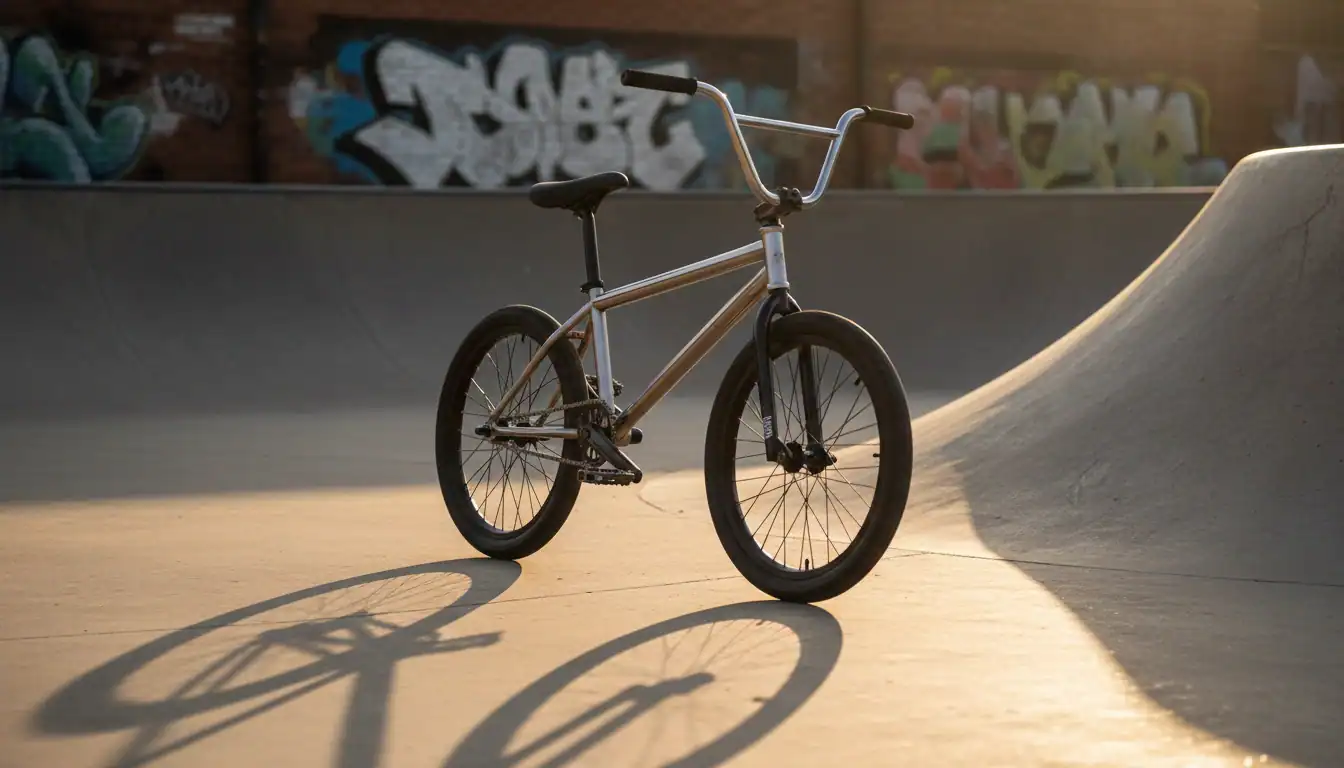
Every pound you shave off your BMX bike translates directly into higher air time, snappier manuals, and faster acceleration out of corners. Whether you’re hitting trails, street spots, or a park bowl, a lighter setup lets you ride harder with less effort. The good news is you don’t need to buy a brand-new build to feel the difference – strategic upgrades to your current ride can drop serious weight without draining your bank account.
This guide walks you through every component on the bike, shows you exactly where the grams are hiding, and gives you a prioritized plan to reduce BMX bike weight based on actual savings per dollar spent.
How Much Does a BMX Bike Weigh?
A complete stock BMX from a mid-range brand typically weighs between 26 and 30 lbs (11.8 – 13.6 kg). Entry-level bikes with hi-tensile steel frames and basic components sit at the heavier end. Purpose-built park or street riders running chromoly frames with quality lightweight BMX parts can get into the 22 – 24 lb range. Elite custom builds with titanium hardware and carbon fiber components have been pushed below 20 lbs, though that territory gets expensive fast.
If you’re on one of the best BMX bikes under $200, you’re almost certainly carrying extra weight from budget-grade steel and heavier components. That’s actually great news – you have the most to gain from targeted upgrades.
Where the Weight Is: Component Breakdown
Before you start spending money, you need to know which parts are costing you the most weight. Here’s a typical breakdown for a mid-range complete BMX:
| Component | Typical Weight (Hi-Ten) | Typical Weight (Chromoly) | % of Total Bike |
|---|---|---|---|
| Frame | 5.5 – 6.5 lbs | 4.0 – 5.0 lbs | ~20% |
| Fork | 2.0 – 2.5 lbs | 1.4 – 1.8 lbs | ~8% |
| Wheels (rims + hubs + spokes) | 5.5 – 7.0 lbs | 4.5 – 5.5 lbs | ~22% |
| Tires | 2.0 – 2.8 lbs | 1.4 – 2.0 lbs | ~9% |
| Bars & Stem | 2.0 – 2.6 lbs | 1.4 – 1.8 lbs | ~8% |
| Cranks & BB | 2.2 – 2.8 lbs | 1.6 – 2.2 lbs | ~9% |
| Pedals | 0.9 – 1.4 lbs | 0.5 – 0.9 lbs | ~4% |
| Seat & Post | 0.8 – 1.2 lbs | 0.5 – 0.8 lbs | ~3% |
| Grips, pegs, extras | 1.5 – 3.0 lbs | 0.4 – 1.5 lbs | ~7% |
The big three are clear: frame, wheels, and tires account for more than half your total bike weight. Any serious BMX weight savings strategy starts there.
Top 10 Ways to Reduce BMX Weight
These are ranked by the combination of real-world impact and value for money. Start at the top and work your way down.
-
Upgrade to a Full Chromoly Frame
If you’re still on a hi-tensile steel frame, this is your single biggest lever. A quality 4130 chromoly frame shaves 1.0 – 1.5 lbs compared to hi-ten while being significantly stronger. Look for frames that use chromoly throughout – not just the main tubes – since some budget frames advertise “chromoly” but only use it in the top tube. Brands like Sunday, Cult, and WeThePeople offer solid mid-tier chromoly frames in the $200 – $350 range. For younger or smaller riders, check out options on the best 18-inch BMX bikes page where lighter geometry options are available.
Estimated savings: 1.0 – 1.5 lbs
-
Switch to a Lightweight Chromoly BMX Fork
A heavy hi-ten BMX fork is almost as punishing as a heavy frame. Chromoly forks not only weigh less but absorb road buzz better and hold their geometry under load. Tapered legs add stiffness without bulk. Expect to drop 0.5 – 0.8 lbs here. If your frame uses an integrated headset, make sure your new fork has the correct steerer tube diameter before buying.
Estimated savings: 0.5 – 0.8 lbs
-
Run Double-Wall Rims (or Go Lighter Single-Wall)
Budget completes often come with single-wall rims that are surprisingly heavy for what they offer. Moving to quality double-wall rims – which are stronger and actually lighter in many cases because manufacturers use less raw material to achieve greater rigidity – can drop 0.3 – 0.6 lbs per wheel. Options like the Odyssey Hazard Lite or Shadow Optimum are popular choices. If you’re a lighter rider focused purely on weight, some riders do run single-wall alloy rims on the rear for weight savings, though durability takes a hit.
Estimated savings: 0.6 – 1.2 lbs (both wheels)
-
Replace Heavy Tires with Performance Options
Stock tires on budget bikes are often overbuilt and overweight. Swapping to a lighter BMX-specific tire can remove 0.3 – 0.5 lbs per tire. Thinner sidewall tires work well for park and flatground; street riders need something more robust. Check out the best BMX tires guide for options broken down by riding style and weight. Also consider running a slightly lower tire pressure to improve feel without adding weight – a common trick that costs nothing.
Estimated savings: 0.6 – 1.0 lbs (both tires)
-
Ditch Steel Bars for Chromoly or Alloy BMX Bars
Your BMX bars see a lot of stress, so don’t go too light here – but switching from heavy stock steel bars to a chromoly or 6061 alloy set is a safe and meaningful upgrade. Rise height affects weight too; taller bars use more material. Many quality chromoly bars come in under 900g. Combined with a lighter BMX stem, you can realistically cut 0.4 – 0.7 lbs from your front end.
Estimated savings: 0.4 – 0.7 lbs
-
Remove or Downsize Pegs
Four full-length steel pegs add 2.0 – 3.0 lbs to your bike. If you ride park or trails and rarely grind, running two pegs on one side drops about 0.8 – 1.0 lbs. Switching to aluminum pegs cuts weight further but reduces durability on rails and concrete. Running no pegs at all is the obvious choice if you don’t grind – and it’s the fastest free weight saving on this list.
Estimated savings: 0.5 – 2.5 lbs (depending on peg count and material)
-
Upgrade Your Bottom Bracket
Heavy loose-ball bottom brackets are common on stock bikes. Switching to a quality mid BB or Spanish BB with sealed bearings saves weight and dramatically improves pedaling efficiency. Mid BBs are the most popular standard for modern BMX – they’re lighter and more widely supported than older American BB setups. Sealed bearings also last longer and require less maintenance, so this upgrade pays for itself twice over.
Estimated savings: 0.1 – 0.3 lbs
-
Swap to a Pivotal Seat Setup
Traditional seat and post combos with separate clamps, rails, and bolts add up. A pivotal seat system uses a single bolt through a curved seat base, eliminating the rail system entirely. Most pivotal setups weigh around 200 – 280g combined, compared to 400 – 600g for traditional rail setups. The weight saving is modest but it’s also a simpler, cleaner system with fewer parts to break.
Estimated savings: 0.2 – 0.4 lbs
-
Replace Steel Pedals with Alloy or Nylon Pedals
Heavy platform pedals in steel are a stealth weight penalty. Alloy pedals offer excellent grip and durability at a fraction of the weight of steel. Nylon pedals go even lighter and are surprisingly durable for park riding – many pros run them. The Odyssey Twisted PC and Shadow Ravager are popular nylon options. Alloy picks like the Odyssey Trailmix hit the sweet spot for street and park riders who want grip without weight.
Estimated savings: 0.3 – 0.6 lbs
-
Use Titanium Bolts on High-Priority Points
Replacing stem bolts, seat post bolts, and crank bolts with titanium bolts is the classic “marginal gains” upgrade. Individually each bolt saves just a few grams, but replacing 8 – 12 key bolts across the bike can remove 40 – 80g total. This is firmly in the enthusiast territory – the cost-per-gram savings ratio is poor compared to bigger component swaps. Do this last, after you’ve already made the meaningful changes above.
Estimated savings: 0.1 – 0.2 lbs
Upgrades That Aren’t Worth It
Not every “lightweight” upgrade delivers real-world benefits. Here’s where diminishing returns kick in hard:
- Carbon fiber bars: Extremely expensive and controversial for BMX. Carbon doesn’t absorb impact the same way chromoly does – it can fail catastrophically rather than bending. The weight savings over quality chromoly bars is minimal (50 – 100g) and the cost difference is significant. Stick with chromoly.
- Super-light rims below 380g: At this weight, rims become prone to denting and warping under regular street or park use. Unless you’re a lightweight rider on a smooth park surface, you’ll spend more time truing wheels than riding.
- Drilling out components: “Lightening holes” drilled into cranks, stems, and frames were popular in the early 2000s. Modern component design has moved past this – you’re just removing structural material and creating stress risers. Don’t do it.
- Hollow axles on budget hubs: Quality sealed bearing hubs with hollow axles are great. But cheap hollow axle hubs bend and fail under load. The weight savings aren’t worth buying a hub twice.
- Skipping a rear brake entirely for weight: If you already ride brakeless, fine. But removing a working rear brake just to save the weight of a lever and cable (roughly 150g total) is a poor trade for most riders. If you do ride brakeless, make sure it works for your riding style – check resources like bikes built for manuals and wheelies to understand the setups that work without brakes.
Budget vs Premium Weight Savings
How much weight reduction can you realistically expect at different budget levels? Here’s a practical breakdown for someone starting with a stock hi-ten complete in the 28 – 30 lb range:
| Budget | Key Upgrades | Estimated Weight Saved | New Bike Weight |
|---|---|---|---|
| $0 (free) | Remove pegs, cut bar ends, remove chain tensioners | 0.5 – 2.0 lbs | 26 – 29 lbs |
| Under $100 | Nylon pedals, pivotal seat, lighter tires | 1.0 – 1.5 lbs | 25 – 27 lbs |
| $100 – $300 | Double-wall rims, chromoly bars + stem, mid BB | 1.5 – 2.5 lbs | 23 – 26 lbs |
| $300 – $600 | Chromoly fork, quality crankset, sealed bearing hubs | 2.0 – 3.0 lbs | 21 – 24 lbs |
| $600+ | Full chromoly frame, complete parts overhaul | 4.0 – 7.0 lbs total from stock | 20 – 23 lbs |
If you’re starting fresh rather than upgrading, browsing the best BMX bikes for adults can help you find a complete that’s already spec’d with lighter components from the factory, saving you the upgrade cost later.
Pro Tips for Lightening Your BMX Bike
- Weigh everything before and after. A postal scale or kitchen scale is your best friend. Actual numbers keep you honest and help you prioritize your upgrade budget. Many riders are surprised to find their “heavy” frame is actually fine and the real culprit is the wheels.
- Rotational weight matters more than static weight. Weight in your wheels and tires has a disproportionate effect on how the bike feels because it has to accelerate rotationally. A 200g saving in your rims feels more noticeable than 200g off your frame.
- Check compatibility before buying anything. BMX standards – headset types, BB shell sizes, axle standards – vary between frames. An integrated headset frame needs a different fork than a traditional threaded setup. A frame drilled for a mid BB won’t work with a Spanish BB without an adapter. Always confirm specs before ordering.
- Buy used components when possible. BMX parts have a strong used market. A lightly used chromoly frame from a rider who upgraded can cost 40 – 60% less than new. Weight savings don’t care whether the parts are new or used.
- Don’t forget the rider. This sounds obvious, but 2 lbs of upgrade spending might equal what you’d lose by simply riding more. Fitness affects air time and manual distance just as much as bike weight. Upgrades complement fitness – they don’t replace it.
- Keep the link how to make your BMX bike lighter bookmarked so you can revisit your upgrade plan as your budget and riding style evolve.
Frequently Asked Questions
What is the lightest BMX bike you can build?
Purpose-built competition BMX setups with titanium hardware, high-end chromoly frames, carbon fiber components, and ultra-light wheelsets have been pushed below 19 lbs. However, these builds cost thousands of dollars and sacrifice durability for weight. A realistic “light but rideable” street or park build lands around 21 – 23 lbs using quality chromoly parts without going into exotic territory.
Is chromoly or hi-tensile steel better for BMX?
Chromoly (4130 chromoly steel) is stronger and lighter than hi-tensile steel at equivalent wall thicknesses, which is why it’s the standard for quality BMX builds. Hi-tensile steel is cheaper to manufacture, which is why it appears on budget completes. For serious riding, chromoly frames and forks are worth the investment. The weight difference is real and so is the strength advantage.
How much does a BMX wheel weigh?
A complete BMX wheel – rim, hub, spokes, nipples, and rim tape – typically weighs between 1.8 and 2.8 lbs (800 – 1,270g) depending on the components. Budget single-wall builds with basic hubs sit at the heavy end. Quality double-wall rims paired with sealed bearing hubs can bring a complete wheel closer to 1.8 – 2.2 lbs. Since rotational weight is felt more acutely than static weight, investing in lighter wheels gives you one of the most noticeable ride improvements on the bike.
Should I run mid BB or Spanish BB to save weight?
Both a mid BB and a Spanish BB are lighter than the older American BB (1.375″ threaded) setup. Mid BB is the most common modern standard and has the widest parts availability. Spanish BB uses an external bearing design that’s slightly lighter but requires more frame clearance. The weight difference between mid and Spanish is minimal (20 – 40g). Choose based on what your frame is drilled for – don’t modify your frame just to chase a marginal weight saving.
Do lighter BMX bikes help with tricks?
Yes, meaningfully so – especially for tricks that require lifting or spinning the bike. Tailwhips, barspins, and 360s all become easier when the bike is lighter because you’re moving less mass through the rotation. Manuals and nose manuals become more controllable because you can make finer balance adjustments. Even basic bunny hops feel snappier. The effect compounds over a session – less energy spent moving a heavy bike means more energy left for pushing your riding further.
🚲 Free: The Smart Bike Buyer’s Cheat Sheet
Get our 2-page PDF - budget tiers, the components that actually matter, and a 12-point used-bike inspection. We'll email you the download link. No spam, unsubscribe anytime.
By subscribing you agree to our Privacy Policy.
