
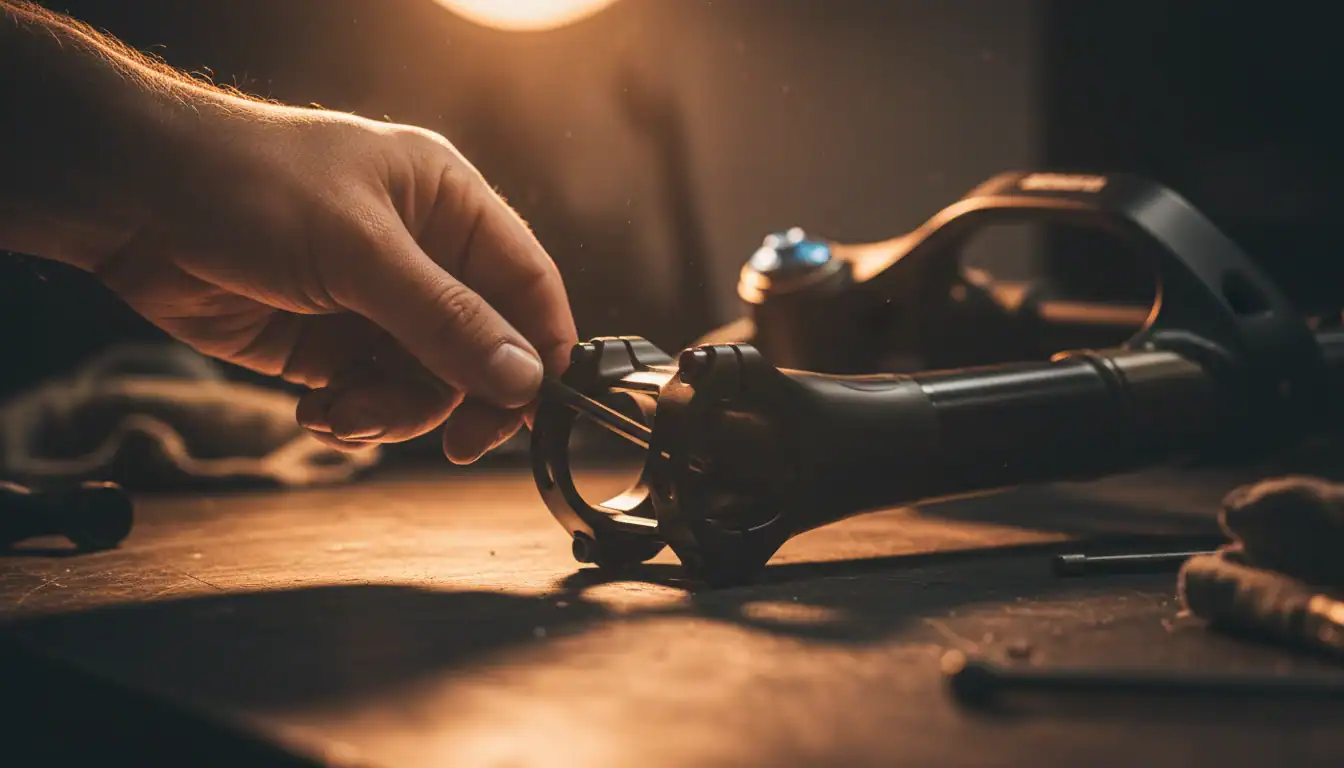
If you’ve ever finished a ride with a sore back, tight shoulders, or numb hands, your handlebar height might be the culprit. Handlebars that sit too low force you into an aggressive, hunched-over position that works great for racing but punishes casual and trail riders during longer outings. Raising your handlebars is one of the simplest bike fits you can do at home, and it can transform your riding comfort overnight.
This guide walks you through every method available – from moving spacers around to swapping components entirely – so you can pick the right approach for your bike and budget. Before you grab an Allen key, though, you need to identify what type of headset your mountain bike uses, because the method depends entirely on that one detail.
Threadless vs Threaded Headsets: Know Which You Have
Almost every mountain bike sold in the last 25 years uses a threadless headset (also called an “Ahead” headset). In this system, the fork’s steerer tube slides through the head tube and is clamped by the stem directly. A top cap and star nut hold tension, but the stem does all the clamping.
Older bikes – and some budget models still produced today – use a threaded headset with a quill stem. Here, the steerer tube has threads cut into it, and the stem inserts down inside the tube and locks in place with a wedge bolt.
Getting this identification right is essential. The methods for threadless and threaded systems are completely different. Check the full guide to bike handlebar types if you want a broader overview of how stems and bars interact across different setups.
Method 1: Rearranging Headset Spacers (Threadless)
This is the fastest, cheapest, and most common way to raise the handlebars on a modern mountain bike. Headset spacers are small aluminum or carbon rings that sit on the steerer tube above and below the stem. By moving spacers from below the stem to above it, you effectively raise the stem’s position on the steerer tube.
What you’ll need
- 4 mm and 5 mm Allen keys
- Torque wrench (recommended)
- Carbon assembly paste (if your steerer or stem is carbon)
Step-by-step process
- Loosen the top cap bolt by turning it counter-clockwise. You only need to back it off a few turns.
- Loosen the stem’s side clamp bolts. These are usually two bolts on the back face of the stem. Loosen both evenly but do not remove them.
- Slide the stem upward off the steerer tube.
- Remove the spacers below the stem and place them above where the stem will sit.
- Slide the stem back onto the steerer tube above the repositioned spacers.
- Add remaining spacers on top, reinstall the top cap. There must always be at least 2-3 mm of steerer tube space above the stem.
- Tighten the top cap bolt until you feel slight resistance, then check for headset play by squeezing the front brake and rocking the bike.
- Align the stem with the front wheel, then tighten the stem clamp bolts. Most stems require 4-6 Nm.
Maximum height gain is limited by how many spacers exist on the steerer tube. Most bikes come with 30-50 mm of spacers.
Method 2: Adjusting a Quill Stem (Threaded)
If your mountain bike has a threaded headset and quill stem, raising the handlebars is even more straightforward. The quill stem can slide up or down inside the steerer tube within a set range.
What you’ll need
- 6 mm Allen key (sometimes 8 mm)
- Rubber mallet (optional)
Step-by-step process
- Locate the bolt on the very top of the quill stem. Turn it counter-clockwise to loosen the internal wedge.
- Turn the bolt 3-4 full rotations. If the stem doesn’t move freely, tap the top of the bolt gently with a rubber mallet.
- Pull the stem straight up to the height you want. Never raise the stem above the minimum insertion mark.
- Align the stem with the front wheel and tighten the top bolt firmly.
- Stand in front of the bike, grip the front wheel between your knees, and try to twist the handlebars. If they move, tighten further.
The range of adjustment on a quill stem is typically 50-80 mm.
Method 3: Installing a Higher-Rise Stem
When you’ve run out of spacers and still want more height, swapping to a stem with a higher rise angle is the next step. Stems are rated by their rise angle – a 0-degree stem is flat, a 6-degree tilts slightly upward, and stems with 17, 25, or even 35-degree rise are available.
Step-by-step process
- Before removing the old stem, photograph the current handlebar position.
- Loosen and remove the faceplate bolts on the stem’s handlebar clamp.
- Loosen the top cap and the stem clamp bolts, then slide the old stem off.
- Slide the new stem onto the steerer tube. Note which way the rise goes – stems can often be flipped.
- Reinstall and torque the top cap, then the stem clamp bolts. Reattach the handlebar using the faceplate.
- Tighten the faceplate bolts evenly in a cross pattern.
When shopping for stems, double-check the clamp diameter for both the steerer tube and handlebar. Getting the right mountain bike handlebars and a compatible stem together will save you return shipping headaches.
Method 4: Switching to Riser Handlebars
If you’re currently running flat bars, switching to riser bars adds height at the bar itself. Riser bars sweep upward from the center clamp area, typically by 20 mm to 50 mm. This also brings the bars slightly closer to you, which many riders find more natural.
Step-by-step process
- Remove the faceplate from your stem and slide out the existing bars. You’ll need to loosen brake levers, shifters, and grips.
- Slide the new riser bars into the stem clamp. Center them using the knurl mark.
- Loosely attach the faceplate so the bar can still rotate. Position the bars at a comfortable angle.
- Remount your brake levers, shifters, and grips. If you use bar ends, check the best mountain bike bar ends guide for compatible options.
- Tighten everything to spec. Handlebar stem faceplates typically require 5-6 Nm.
Comparison of All Four Methods
| Method | Headset Type | Typical Cost | Difficulty | Height Gain |
|---|---|---|---|---|
| Rearranging spacers | Threadless | Free | Easy | Up to ~40 mm |
| Raising quill stem | Threaded | Free | Easy | Up to ~70 mm |
| Higher-rise stem | Threadless | $20-$80 | Moderate | 20-50 mm additional |
| Riser handlebars | Both | $25-$100+ | Moderate | 20-50 mm at bar |
How High Should Your Handlebars Be?
For general trail riding and recreational use, your handlebars should sit roughly level with your saddle or up to 2-3 cm higher. For cross-country racing, bars are often set 2-5 cm below saddle height. For enduro and beginner trail riding, higher bars generally improve handling.
If you’re newer to mountain biking, check the best mountain bikes for beginners guide. Understanding how to measure a bike frame correctly can also help confirm your overall fit.
Pro Tips
- Always re-check headset play after adjusting spacers. A loose headset will feel like a subtle knock when braking.
- Use a torque wrench on carbon components. Carbon steerer tubes have tight torque limits – often as low as 4 Nm. Pick up a basic torque wrench from the list of essential bicycle repair tools.
- Flip your stem before buying a new one. Most stems can be flipped 180 degrees to point upward instead of downward, adding 10-30 mm of height for free.
- Move in small increments. Raise your bars 10 mm at a time and ride between adjustments.
- Don’t forget the saddle-handlebar relationship. Raising bars without adjusting saddle height can make you feel too upright or cramped.
- Mark your current position before experimenting. Use a marker or tape to note where your stem sits before making changes.
Frequently Asked Questions
Can I raise the handlebars on any mountain bike?
Yes, but the method depends on your headset type and how much steerer tube is exposed. Threadless systems are limited by steerer tube length above the stem. If your steerer has been cut short and you have no spacers left, you’ll need to replace the stem or handlebars.
How much does it cost to raise mountain bike handlebars?
Rearranging spacers or adjusting a quill stem costs nothing. A higher-rise stem runs $20-$80. Riser handlebars cost $25-$100+. Start with the free spacer method before spending anything.
Is it safe to raise the stem above the maximum insertion mark?
No. The minimum insertion mark exists because the steerer tube needs enough stem contact to safely handle steering forces. Raising above the mark increases the risk of the stem pulling out, which can cause a crash.
Will raising my handlebars affect my shifting or braking?
In most cases, no. Brake and shifter cables have enough slack for moderate height changes. If you install a significantly higher stem or riser bars, you may need to add cable length.
What is the difference between stem rise and handlebar rise?
Stem rise is the angle the stem tilts upward from the steerer tube. Handlebar rise is how far the grip sections sit above the center clamp. Both contribute to total height and they stack – a 17-degree stem with 30 mm riser bars gives more total height than either alone.
🚲 Free: The Smart Bike Buyer’s Cheat Sheet
Get our 2-page PDF - budget tiers, the components that actually matter, and a 12-point used-bike inspection. We'll email you the download link. No spam, unsubscribe anytime.
By subscribing you agree to our Privacy Policy.
