
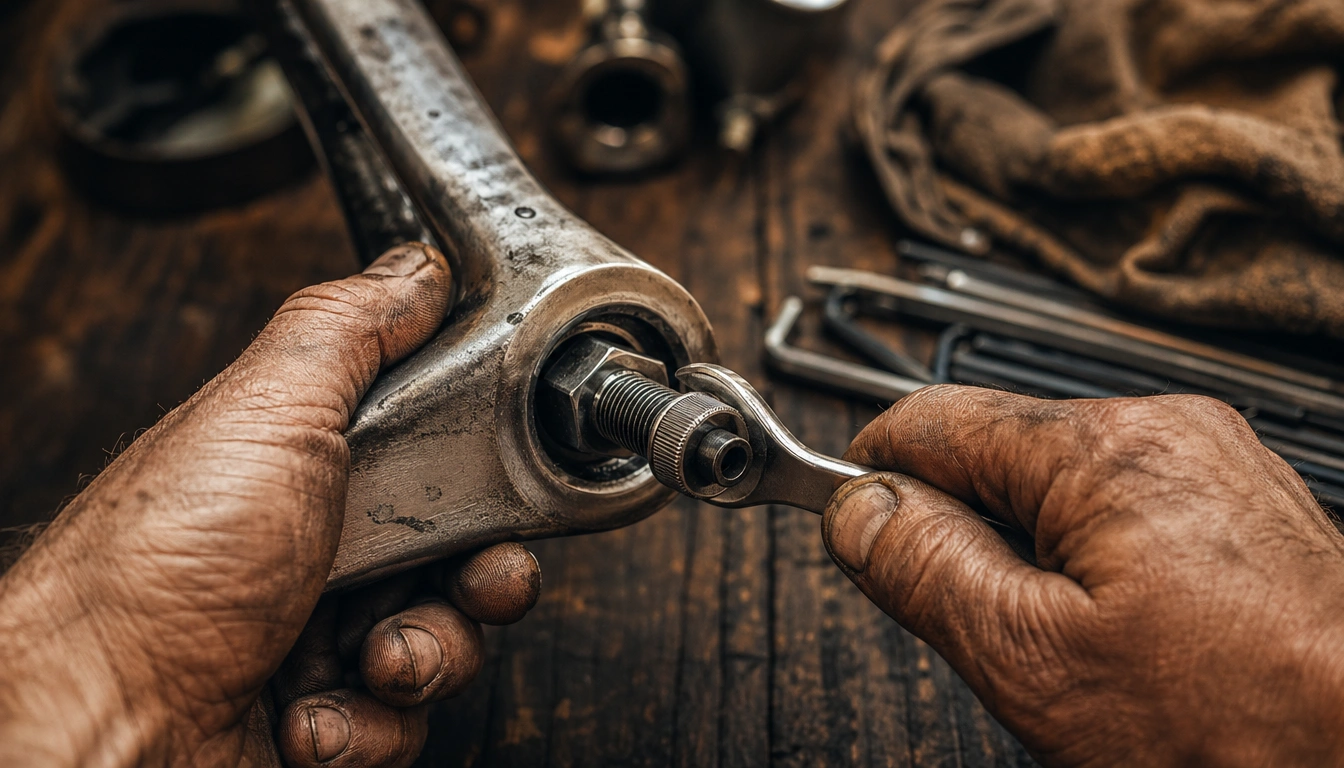
Your crank arm is stuck, you need to swap the chainset, or you’re finally doing that bottom bracket service you’ve been putting off for six months. Either way, you’ve landed here wondering how to remove a bike crank – and whether you actually need that specialized tool to do it. Good news: this guide covers both scenarios, with or without a crank puller.
The process varies quite a bit depending on what kind of crank you have. Square taper cranks need a different approach than Shimano Hollowtech II, and newer self-extracting designs are different again. Get the method wrong and you can strip threads or damage the spindle taper – so let’s figure out your crank type first.
How to Identify Your Crank Type
This is the step most people skip, and it’s the one that matters most. Using the wrong removal method on the wrong crank type is how expensive bottom brackets get destroyed.
Square Taper
The most common type on older bikes and budget bikes. Look at the crank bolt – if there’s a dust cap you unscrew (8mm hex or a flat coin) hiding a bolt underneath, and the spindle where the crank meets it looks like a tapered square, that’s square taper. ISIS drive looks similar but has a splined interface instead of a plain square – both use a crank puller tool.
Hollowtech II / External Bottom Bracket (Modern Shimano)
Common on mid-range and higher-end bikes from the last 15 years. The crank spindle is hollow and extends all the way through the bottom bracket. The non-drive side arm has two small pinch bolts (usually 4mm or 5mm hex) and a black plastic preload cap. No traditional crank bolt, no crank puller needed.
Self-Extracting Crank (Modern Shimano, some SRAM)
Looks like a Hollowtech II crank but the dust cap does double duty – it’s a self-extracting mechanism. When you unscrew the bolt, it pushes the crank off the spindle automatically. Common on newer Shimano GRX, 105, Ultegra, and some SRAM Force cranksets.
Cottered Cranks (vintage bikes)
Very old bikes use a cotter pin to hold the crank on. You’ll see a bolt going through the crank arm sideways. These need a hammer and drift pin to remove, and they’re beyond the scope of this guide – but worth knowing exists if your bike is pre-1980s.
Tools You Need to Remove a Bike Crank
You don’t need a full workshop for this. But you do need the right tool for your specific crank – the wrong tool won’t just fail to work, it can actually cause damage.
| Crank Type | Tools Required | Nice to Have |
|---|---|---|
| Square Taper / ISIS | 8mm hex key OR 14mm socket, crank puller (Park Tool CWP-7) | Torque wrench, penetrating oil |
| Hollowtech II | 5mm hex key, 10mm hex key (preload cap), BB tool (BBT-9) | Torque wrench, grease |
| Self-extracting (modern Shimano) | 8mm hex key | Torque wrench |
| Any seized crank | Penetrating oil, rubber mallet, crank puller | Heat gun |
The Park Tool CWP-7 crank puller costs around $25 and works on square taper, ISIS, and Octalink cranks. If you’re doing any regular bike maintenance, it’s worth owning. For Hollowtech II bottom bracket cups, the Park Tool BBT-9 is the standard tool.
How to Remove a Bike Crank with a Crank Puller (Square Taper / ISIS)
This is the proper method for square taper and ISIS cranks, and it’s genuinely satisfying when it works cleanly. The crank puller basically uses a threaded bolt to push the crank off the spindle – simple physics, very effective.
- Remove the dust cap. Use an 8mm hex key or a flat coin and turn counterclockwise. Some older dust caps are plastic and fragile – go easy. The dust cap just sits over the crank bolt to protect it from dirt.
- Remove the crank bolt. You’ll see either an 8mm hex bolt or a 14mm socket bolt underneath. Turn counterclockwise to loosen. A long-handled 8mm hex key gives you more leverage here. Remove the bolt and any washers completely.
- Thread the crank puller into the crank. The crank puller has two threaded parts – the outer body threads into the crank arm itself (clockwise), and the inner driving bolt pushes against the spindle. Thread the body in by hand until snug – don’t force it. Crossed threads here will ruin the crank.
- Tighten the driving bolt. Use a wrench on the central bolt of the crank puller and turn clockwise. As it tightens, it presses against the spindle end and forces the crank arm off. You may hear a loud pop when the taper breaks free – that’s completely normal.
- Remove the crank arm. Once it’s off the taper, slide it off and set aside. Repeat the whole process on the drive-side crank (usually attached to the chainrings).
One thing I see people mess up: they thread the crank puller in only a few turns, then crank hard on the driving bolt. That strips the threads inside the crank arm. Thread the body all the way in – at least 5-6 full threads of engagement before you start applying pressure.
How to Remove a Hollowtech II / External Bottom Bracket Crank
This one’s actually easier than square taper once you know the sequence. No crank puller needed – Shimano designed Hollowtech II to be tool-friendly, and they mostly succeeded.
- Loosen the pinch bolts on the non-drive side arm. Look on the non-drive side (left side when you’re sitting on the bike). You’ll see two small bolts – usually 4mm or 5mm hex – clamping the crank arm onto the spindle. Loosen both bolts. They don’t need to come all the way out.
- Unscrew the preload cap. There’s a black plastic cap at the end of the left crank arm. Older Shimano versions require a 10mm hex key; newer ones have a spline pattern that fits the Park Tool BBT-9 or similar. Turn counterclockwise to remove it. This cap just sets the bearing preload – it’s not structural.
- Slide the non-drive arm off. With the pinch bolts loose and the preload cap removed, the left crank arm should slide off the spindle by hand. If it’s stiff, a gentle tap with a rubber mallet on the end of the spindle (from the drive side) helps break it loose.
- Pull the drive-side crank and spindle out. From the non-drive side, push the spindle through toward you. The entire drive-side crank, spindle, and chainring assembly slides out as one unit. It might need a firm pull if there’s any corrosion on the bottom bracket bearings.
For related bike maintenance tips including how to remove bike pedals, that guide covers the reverse-thread trap on drive-side pedals that catches a lot of people out.
How to Remove a Self-Extracting Crank (Modern Shimano)
Newer Shimano cranks have a clever self-extracting design that eliminates the need for a separate crank puller tool. Once you know it’s self-extracting, the removal is almost too easy.
- Identify the self-extracting cap. Instead of a plain dust cap, there’s a threaded cap that says “Shimano” or has a hex fitting. On most modern Shimano cranks this takes an 8mm hex key.
- Unscrew the bolt counterclockwise. As you unscrew the bolt, the self-extracting mechanism engages. The bolt threads into the spindle to hold the crank on – but as you back it out, it also pushes against the crank arm to pop it free.
- Remove the crank arm. Once the bolt is fully unscrewed, the crank arm lifts right off. Do the same on the other side if needed.
The only catch with self-extracting cranks: don’t lose the tiny wave washer that sits under the bolt. It’s easy to drop and annoying to find on a workshop floor.
How to Remove a Bike Crank Without a Crank Puller
Let’s address the elephant in the room – this keyword cluster gets a lot of searches, and I get it. You’re in the middle of a repair, don’t own the tool, and you want options. Here’s the honest rundown.
Method 1: The Bolt-and-Washer Trick
This works in a pinch on square taper cranks. Remove the crank bolt, put a large washer over the spindle, then reinstall the crank bolt loosely – just a few threads. Ride the bike (or apply pedaling force with it on a stand). The torque from pedaling can push the crank off the taper. It’s not elegant, and it can scratch the spindle end. I would not do this repeatedly on a nice bike. But stuck at home with no tool? Worth trying.
Method 2: Heat and Leverage
Apply a heat gun or even boiling water to the crank arm near the spindle junction to expand the metal slightly, then try to work the crank off with gloved hands or a rubber mallet. Riskier than Method 1 – too much heat can damage the bottom bracket bearings or temper the crank material. Use this as a last resort, not a first attempt.
Method 3: Just Buy the Park Tool CWP-7
Honestly? This is the real answer for most people. The Park Tool CWP-7 costs around $25, arrives in two days with Prime, and lasts a lifetime. If you’re doing any meaningful bike maintenance, the hacks above are false economy. The tool pays for itself the first time it saves you a stripped crank.
Important disclaimer: Forcing a crank off with improvised methods risks damaging the spindle taper. A damaged taper means the new crank won’t seat correctly, which means uneven pedaling forces, loosening bolts, and eventually a cracked crank. The tool is cheap. The crank is not.
How to Remove a Stuck or Seized Crank
This is where things get a little more interesting – and a little more frustrating. A crank that’s been on the same spindle for 10 years in wet conditions doesn’t want to leave. But it will come off with patience.
- Apply penetrating oil. Spray PB Blaster or similar penetrating oil at the joint between the crank arm and the spindle taper. Let it soak for at least 30 minutes – overnight is better for really seized cranks. The penetrating oil wicks into the micro-gaps and breaks the corrosive bond.
- Apply gentle heat. A heat gun on low, directed at the crank arm body (not the bottom bracket or bearing area), will expand the aluminum and help break the taper bond. 30-60 seconds is enough. Don’t use an open flame.
- Use the crank puller with steady pressure. Thread the CWP-7 in properly and tighten the driving bolt until you feel firm resistance. Don’t crank it with all your force immediately. Instead, apply firm pressure, hold it for 30 seconds, release, apply again. The alternating pressure and thermal cycling often pops a seized crank loose where brute force fails.
- Try light tapping. With the crank puller under tension, a few light taps with a rubber mallet on the body of the puller can provide the shock needed to break the taper bond. Don’t hit it hard – you want vibration, not impact force.
If you’re dealing with a chain that’s also giving you trouble, the guide to removing rust from a bike chain and the how to tighten a bike chain guide are useful companion reads for a full drivetrain overhaul.
How to Install a New Crank Arm
Getting the crank back on is mostly the reverse of removal – but torque specs matter here more than most people realize. Under-torqued crank bolts work loose and cause crank creak. Over-torqued ones can crack the crank arm or strip threads.
Square Taper Crank Installation
- Clean the spindle taper and the crank arm hole thoroughly
- Apply no grease to the taper interface – a dry fit is correct for square taper (grease causes the crank to slide too far on, affecting chainline)
- Hand-thread the crank bolt, then torque to 35-45 Nm with a torque wrench
- Replace the dust cap finger-tight
- Ride for 15-20 minutes, then re-check torque – square taper cranks bed in slightly on first use
Hollowtech II Crank Installation
- Grease the spindle and bearing contact surfaces (unlike square taper, Hollowtech II benefits from grease)
- Slide the drive-side crank through the bottom bracket from the right
- Clip the non-drive arm onto the spindle – make sure it’s fully seated with the alignment marks matching
- Thread the preload cap and tighten until there’s no lateral play in the cranks (snug, not cranked down hard)
- Torque the pinch bolts to 12-14 Nm – alternating sides to seat evenly
If you’re unsure about torque specs or tools, the best bike torque wrench guide covers options from budget to pro-level, and the best cycling multi-tool roundup includes options with built-in torque limiting for on-the-go work.
Common Crank Removal Mistakes
I’ve seen these mistakes come up again and again, and most of them are easily avoided if you know to watch for them.
- Not threading the crank puller deep enough. The crank puller body must engage 5+ full threads in the crank arm. If it’s only 2-3 threads deep, it will strip those threads under load – and then you have a much bigger problem.
- Using the wrong puller for the crank type. There are different crank pullers for different interfaces. The Park Tool CWP-7 covers square taper and ISIS. SRAM GXP and some other splined interfaces need a different tool. Check your crank’s spec before buying.
- Forgetting to remove the crank bolt completely. If the bolt is still in there even a few threads, the puller can’t push the crank off the spindle. It has to be completely out.
- Applying grease to a square taper interface. This is counterintuitive but important – grease on a square taper causes the crank to over-seat on the spindle, moving the chainring inward and creating chainline problems. Square taper = dry fit.
- Skipping the re-torque after initial installation. Square taper cranks in particular bed in on first use. Ride 15-20 minutes, then re-torque. Skipping this step leads to crank creak and eventual loosening.
If you’re working on a broader bike overhaul, the bicycle frame maintenance guide and the bike tune-up cost breakdown are worth reading alongside this one.
Frequently Asked Questions
Quick answers to the questions that come up most often when people are working through this job.
What size hex key do I need for a bike crank?
It depends on the crank type. Square taper crank bolts typically use an 8mm hex key. Hollowtech II preload caps often need a 10mm hex, while the pinch bolts use a 4mm or 5mm hex. Self-extracting Shimano cranks typically use an 8mm hex. Check your crank’s documentation if you’re unsure – using the wrong size can round the bolt head.
Can I remove a bike crank with vice grips?
No. Vice grips will just clamp around the crank arm and slide off – there’s nothing to grip that will pull the crank off a tapered spindle. The only thing you’ll accomplish is scratching the crank. You need either a proper crank puller, or one of the improvised methods described above (with their associated risks).
How tight should crank bolts be?
Square taper crank bolts: 35-45 Nm. Hollowtech II pinch bolts: 12-14 Nm. Self-extracting Shimano bolts: varies by model, but typically 12-14 Nm. Always use a torque wrench rather than guessing – under-torqued cranks work loose and creak, over-torqued ones can crack. Check the spec on the crank arm itself, as many cranks have the torque value stamped right on them.
Do I need a crank puller for Hollowtech II cranks?
No – Hollowtech II cranks don’t use a tapered spindle interface, so there’s nothing to “pull.” You just loosen the pinch bolts and remove the preload cap, and the crank slides off. You may need a bottom bracket tool (like the BBT-9) to remove or install the bottom bracket cups themselves, but for just removing the crank arms, standard hex keys are all you need.
Why is my crank arm stuck?
The most common cause is corrosion between the aluminum crank arm and the steel spindle. Over time, especially in wet conditions, galvanic corrosion bonds these two metals together. The longer it’s been on, and the wetter the conditions it’s been ridden in, the worse it’ll be. Penetrating oil and patience are your best tools here. The good news: almost every stuck crank will eventually come off with the right technique – they’re designed to be removed, after all.
🚲 Free: The Smart Bike Buyer’s Cheat Sheet
Get our 2-page PDF - budget tiers, the components that actually matter, and a 12-point used-bike inspection. We'll email you the download link. No spam, unsubscribe anytime.
By subscribing you agree to our Privacy Policy.