
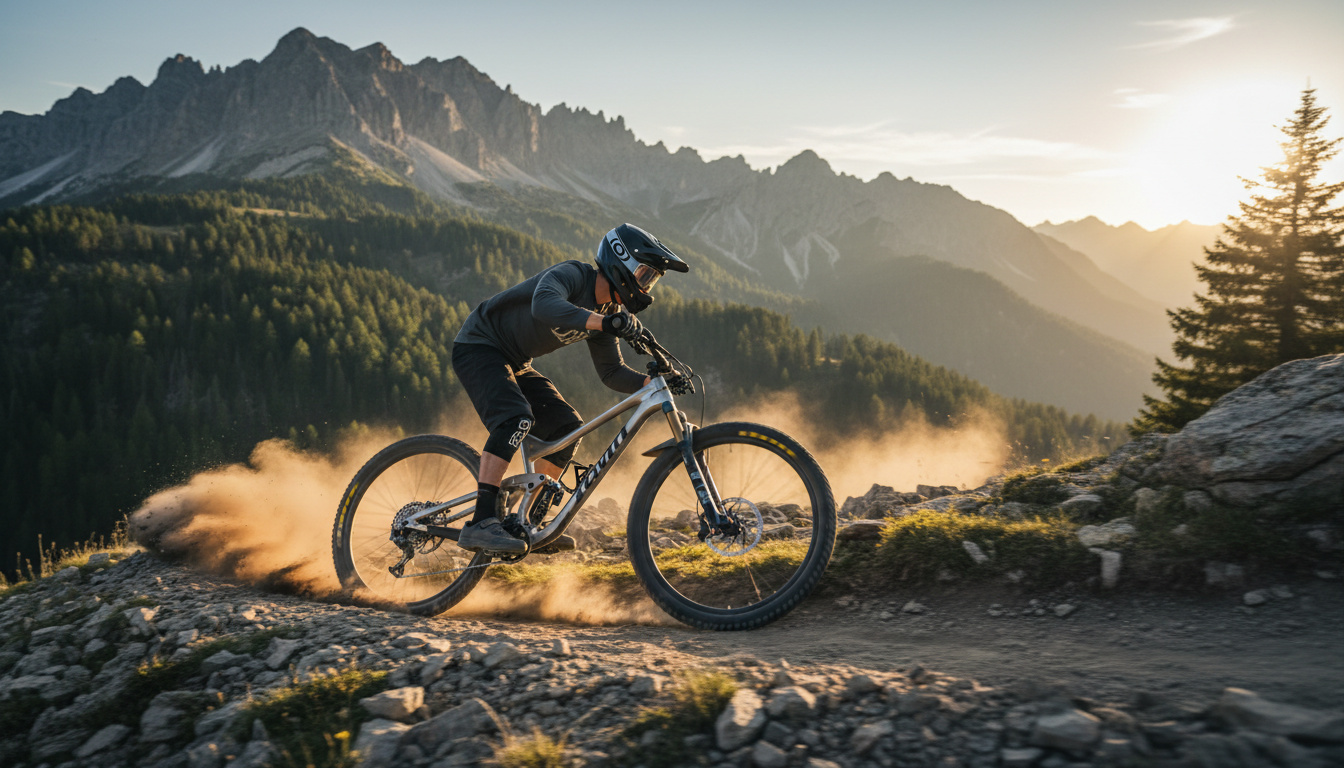
You know you’re dealing with a serious brand when every bike in the lineup costs as much as a used car – and the waiting list is still months long. Pivot Cycles isn’t trying to sell volume. They’re building bikes for riders who’ve done the research, tried the alternatives, and decided they want something better.
Founded in 2007 by Chris Cocalis in Tempe, Arizona, Pivot built its reputation on one thing: dw-link suspension. That’s Dave Weagle’s dual short-link design, engineered to keep the rear wheel active whether you’re grinding up a fire road or sending a double black descent. Every full-suspension Pivot runs this system, and it’s still one of the most pedal-efficient suspension platforms on the market. In this guide we’ve broken down the full lineup – Trail 429, Switchblade, Firebird, Phoenix DH, Mach 4 SL, and Shuttle LT – so you can figure out exactly which one fits your riding.
The lineup covers a lot of ground: XC race bikes, aggressive trail rigs, enduro sleds, a proper downhill machine, and e-MTBs. Let’s get into it.
Key Takeaways
- The Trail 429 (120mm) is Pivot’s best all-rounder – fast enough to race, rowdy enough to hang on technical descents
- The Switchblade (142mm) hits the sweet spot for riders who want one bike that does everything without compromise
- The Firebird (165mm) is Pivot’s enduro weapon – a big-travel bike that actually climbs well thanks to dw-link efficiency
- The Phoenix DH (210mm) is a dedicated downhill race machine with a unique dual-chain drive system
- The Mach 4 SL (110-120mm) is for XC and cross-country racers who want Pivot performance at lighter weights
- The Shuttle LT (162mm) brings dw-link efficiency to the e-MTB space – the best-pedaling motor bike in the enduro category
- All Pivot full-suspension bikes use dw-link – manufactured in Taiwan with aerospace-grade carbon and cold-forged alloy
| Pivot Trail 429 |  |
Best All-Rounder | Travel: 120mm rear / 130-140mm fork | Wheel Size: 29″ | Price: From $5,599 | VIEW LATEST PRICE | Read Our Analysis |
| Pivot Switchblade |  |
Best Trail / Enduro | Travel: 142mm rear / 160mm fork | Wheel Size: 29″ (MX capable) | Price: From $6,399 | VIEW LATEST PRICE | Read Our Analysis |
| Pivot Firebird |  |
Best Enduro | Travel: 165mm rear / 170mm fork | Wheel Size: 29″ / MX | Price: From $10,000 | VIEW LATEST PRICE | Read Our Analysis |
| Pivot Phoenix DH |  |
Best Downhill | Travel: 210mm rear / 200mm fork | Wheel Size: MX (29″/27.5″) | Price: From $6,799 | VIEW LATEST PRICE | Read Our Analysis |
| Pivot Mach 4 SL |  |
Best XC / Cross-Country | Travel: 110-120mm rear / 120mm fork | Wheel Size: 29″ | Price: From $6,399 | VIEW LATEST PRICE | Read Our Analysis |
| Pivot Shuttle LT |  |
Best E-MTB | Travel: 162mm rear / 170mm fork | Wheel Size: 29″ / MX | Price: From ~$9,500 | VIEW LATEST PRICE | Read Our Analysis |
More Details on Our Top Picks
-
Pivot Trail 429
The Trail 429 is the bike Pivot gets asked about the most, and it’s not hard to see why. It does two things that usually conflict with each other – climbs efficiently and descends with genuine confidence – and it does both without feeling like a compromise. The 120mm of rear travel through the dw-link platform gives you traction where you need it without wallowing on the pedal strokes you’re counting.
The latest version brought a slackened head tube angle, longer reach, and a flip-chip that lets you toggle between rowdy and racy geometry settings. With the Enduro kit (140mm fork, longer travel tune), this bike genuinely blurs the line between trail and light enduro territory. The trunnion-mounted high-volume shock gives it more sensitivity early in the travel and better bottom-out resistance than earlier generations.
If you’re deciding between this and the Switchblade, the Trail 429 is the better choice if you do a lot of cross-country mileage, XC racing on the side, or prefer a bike that feels fast and nimble over one that’s built for deep gnarliness. It also fits riders from 4’10” to 6’7″ across XS through XL.
This is probably the most versatile bike in the Pivot lineup. If you can only own one bike and you ride varied terrain, start here.
- Rear Travel:120mm
- Fork Travel:130-140mm (Enduro kit)
- Wheel Size:29″
- Frame:Hollow Core Carbon, dw-link
- Flip Chip:Yes (geo adjust)
- Tire Clearance:29×2.6″ or 27.5×2.8″
- Intended Use:Trail, XC, Light Enduro
- Price Range:$5,599 – $12,499
- Made In:Taiwan
-
Pivot Switchblade
There’s a reason the Switchblade is Pivot’s best-selling trail bike. It’s the one that most closely represents what the brand is about: a serious amount of capability packed into a bike that doesn’t punish you on the way back up. At 142mm rear travel with a 160mm fork, it sits squarely in the all-mountain category, but rides more like an enduro bike when the terrain gets rough.
The V6 version brought a reworked lower link – longer and positioned similarly to the Firebird – which changes the wheel path and gives the rear end a more rearward arc under compression. That translates to better square-edge bump absorption and a more planted feel in rough, high-speed chunder. Yet Pivot managed to keep the climbing efficiency the Switchblade has always been known for. You can run it as a full 29er or flip to MX (29″ front, 27.5″ rear) for tighter, more playful handling.
Compared to the Trail 429, the Switchblade is more confident at speed on technical terrain. Compared to the Firebird, it’s the better choice for mixed-terrain riding with real climbs in the itinerary. Think of it as the Firebird’s more practical sibling that you’d actually want to pedal for six hours straight.
If you ride everything from singletrack to flow trails to occasional bike park laps, the Switchblade is the most honest answer to “which Pivot should I get?”
- Rear Travel:142mm
- Fork Travel:160mm
- Wheel Size:29″ (MX capable)
- Frame:Hollow Core Carbon, dw-link
- Flip Chip:Yes (High/Low)
- Version:V6 (2024-present)
- Intended Use:Trail, All-Mountain, Light Enduro
- Price Range:$6,399 – $11,599
- Made In:Taiwan
-
Pivot Firebird
The Firebird is the bike Pivot builds for people who take enduro racing seriously – or want to pretend they do. At 165mm rear travel with a 170mm fork, it has enough suspension to absorb the gnarliest trail features, and it’s still genuinely rideable on the way back to the top. That last part is what separates it from most bikes in this travel bracket.
The 2025/2026 update added an updated shock pairing (Fox X2), revised geometry with a slacker head angle and longer reach, and geometry adjustability via flip chip. Head angle sits around 63.5-64 degrees depending on setting – slack enough for high-speed stability, but not so slack it becomes a chore to maneuver on tight switchbacks. Pivot says the suspension redesign makes it more progressive with a bottomless feel in the final third of travel.
Independent reviewers at Pinkbike called the 2026 Firebird “well-balanced and refined” – which is saying a lot for a bike with 165mm of travel. The climbing efficiency is genuinely impressive. Where most enduro bikes make you suffer uphill, the Firebird’s dw-link platform keeps you connected and pedaling square even when the trail tilts steep.
This is not a bike for riders new to aggressive terrain. If you’re riding Enduro race stages, gnarly freeride lines, or just spend most of your time on the rowdiest trails in your area, the Firebird is built for exactly that.
- Rear Travel:165mm
- Fork Travel:170mm
- Wheel Size:29″ / MX capable
- Frame:Hollow Core Carbon, dw-link
- Shock:Fox X2 (2025/2026)
- Flip Chip:Yes (geo adjust)
- Intended Use:Enduro, All-Mountain
- Price Range:$10,000 – $14,699
- Made In:Taiwan
-
Pivot Phoenix DH
The Phoenix DH is Pivot’s most specialized bike and probably the most interesting downhill bike on the market right now. It’s the only production DH bike with a dual chain drive system – two separate drivetrains working together to eliminate the chainstay length compromise that plagues conventional DH bikes. On a standard DH bike, you tune the chainstay for climbing or descending – with the Phoenix, you get both without trading one off.
At 210mm rear travel with a 200mm fork, the Phoenix is purpose-built for speed on gravity runs. The mixed-wheel MX setup puts a 29″ up front for roll-over capability and tracking in compressions, with a 27.5″ out back for quicker response and lower center of gravity. The geometry is properly slack – this isn’t a bike you pedal anywhere meaningful.
This bike is for the shuttle crowd, bike park regulars, and anyone who races DH. It costs $6,799 in the entry Ride GX build and goes up from there – which is actually competitive pricing for a bike with this much engineering behind it. Comparable DH rigs from other premium brands run similar money.
If you’re looking at the Phoenix, you already know what it’s for. If you’re asking whether you need a DH bike at all, the answer is probably no – look at the Firebird instead.
- Rear Travel:210mm
- Fork Travel:200mm
- Wheel Size:MX (29″/27.5″)
- Frame:Carbon, Dual Chain Drive
- Geometry:Slack / DH race
- Intended Use:Downhill racing, bike park
- Price Range:$6,799 – $8,499
- Made In:Taiwan
-
Pivot Mach 4 SL
The Mach 4 SL is what Pivot builds for XC racers and cross-country enthusiasts who want dw-link performance without carrying unnecessary travel. At 110-120mm of rear travel (adjustable via the shock tune) with a 120mm fork, it’s built for speed, efficiency, and covering ground fast on technical XC terrain.
The 2026 update added more trail-bike capability without adding weight – longer reach, slacker head angle, revised suspension tuning that gives it more travel in reserve without compromising pedaling stiffness. Bikeradar noted it feels like “trail-bike confidence at XC weights” – which nails it. This bike will keep pace with your fastest riding buddies uphill and still feel in control when the descent goes technical.
The SL in the name stands for Super Light – the carbon frame construction prioritizes weight reduction across the entire package. Top-end builds run complete bike weights that would embarrass most hardtails from five years ago. This is the kind of bike that makes riders question why they ever thought hardtails were the efficient option.
If you’re a dedicated XC racer, a fast trail rider who prioritizes climbing, or you’re doing epic multi-hour rides where every extra pound matters, the Mach 4 SL is the right Pivot. Just know that the price tag scales quickly – from $6,399 at entry spec to nearly $14,000 for top-tier builds.
- Rear Travel:110-120mm
- Fork Travel:120mm
- Wheel Size:29″
- Frame:Super Light Carbon, dw-link
- Weight:Sub-10kg on top builds
- Intended Use:XC racing, epic trail
- Price Range:$6,399 – $13,999
- Made In:Taiwan
-
Pivot Shuttle LT
Most e-MTBs feel like they were designed by someone who added a motor to a regular trail bike and called it done. The Shuttle LT is different – Pivot built this from the ground up as an electric mountain bike, with the motor and battery integrated into the frame design rather than bolted on as an afterthought. The result rides like a Pivot, not like an e-bike that happens to say Pivot on the downtube.
At 162mm rear travel with a 170mm fork, the Shuttle LT sits in enduro e-MTB territory. The dw-link platform works with the Bosch Performance CX motor’s power delivery to maintain traction without the wallowing that plagues heavier e-enduro bikes. The full-carbon frame keeps weight in check – still heavy by acoustic bike standards, but competitive for the class and noticeably more capable than mass-market e-MTBs at lower price points.
The Shuttle lineup actually covers multiple travel options (SL, AM, LT), but the LT hits the best balance between range, travel, and long-travel trail capability. It’s the right pick if you want to keep up on group rides that mix pedaling ability with technical terrain, or if you’re in hilly terrain where the assist genuinely changes what’s possible.
If you’re committed to e-MTB and don’t want to compromise on suspension quality, this is one of the few options at this price point that actually earns its premium over mid-range alternatives.
- Rear Travel:162mm
- Fork Travel:170mm
- Wheel Size:29″ / MX
- Motor:Bosch Performance CX
- Frame:Full Carbon, dw-link
- Intended Use:Enduro e-MTB, long-travel trail
- Price Range:~$9,500 – $13,000
- Made In:Taiwan
How to Choose a Pivot Mountain Bike
Every Pivot is built well – so the real question isn’t “which one is good” but “which one matches how you actually ride.”
Trail vs Enduro: The Travel Question
If most of your rides involve climbing to a summit and descending a mix of trails, 120-142mm (Trail 429 or Switchblade) will serve you better than a heavier enduro bike. The Firebird makes sense if you’re prioritizing the descent quality above all else and doing more shuttle-supported rides. Most riders overestimate how much travel they need – the Switchblade handles 90% of what people think they need the Firebird for.
What Makes dw-link Different
Dave Weagle’s dual short-link design maintains a high anti-squat early in the travel – meaning the suspension stays firm and efficient under pedaling loads. As you compress further, the anti-squat decreases and the suspension becomes more active for rough terrain absorption. You get climbing efficiency and descending compliance from the same design. The wheel also follows a more rearward path under compression, which improves square-edge bump absorption compared to single-pivot designs. No other brand uses dw-link – it’s licensed exclusively to Pivot and Ibis Cycles.
XC vs Trail: Mach 4 SL vs Trail 429
The Mach 4 SL is lighter, racier, and optimized for speed on XC-style terrain. The Trail 429 has more travel, a slacker geometry, and handles more aggressive descents confidently. If you race XC or do fast-paced rides where pedaling efficiency is the priority, go Mach 4 SL. If you ride a mix of XC trails and want more confidence on technical downhill, the Trail 429 is the better call.
Are Pivot Bikes Worth the Price?
Blunt answer: yes, if you’re a serious rider. The dw-link suspension is genuinely better-performing than most alternatives at the same travel. The carbon construction and component spec at each price point are competitive. Where you might hesitate is if you’re newer to aggressive riding – a Pivot Switchblade at $6,400 won’t make you faster unless your skill level is already at a point where the bike’s capability matters. For riders who’ve already maxed out what a mid-range bike can do, stepping up to Pivot is a noticeable improvement.
DH and E-MTB Considerations
The Phoenix DH is only for riders who specifically want a dedicated downhill race machine. Don’t buy it unless you regularly ride bike parks or race DH. For e-MTB, the Shuttle LT is excellent but genuinely expensive – compare it against alternatives from Specialized and Trek before committing, because those brands have more dealer support and service networks.
Pivot Mountain Bike Comparison
Here’s how the full lineup stacks up side by side on the specs that matter most for buying decisions.
| Model | Rear Travel | Fork | Wheel Size | Intended Use | Starting Price |
|---|---|---|---|---|---|
| Mach 4 SL | 110-120mm | 120mm | 29″ | XC Racing / Epic Trail | $6,399 |
| Trail 429 | 120mm | 130-140mm | 29″ | Trail / All-Round | $5,599 |
| Switchblade | 142mm | 160mm | 29″ / MX | Trail / All-Mountain | $6,399 |
| Firebird | 165mm | 170mm | 29″ / MX | Enduro | $10,000 |
| Phoenix DH | 210mm | 200mm | MX (29″/27.5″) | Downhill Racing | $6,799 |
| Shuttle LT | 162mm | 170mm | 29″ / MX | Enduro e-MTB | ~$9,500 |
Frequently Asked Questions
The questions that come up most often when people are seriously considering a Pivot.
Are Pivot bikes worth the price?
For experienced riders who’ve hit the ceiling of what mid-range bikes offer, yes. The dw-link suspension is a real performance advantage, the carbon construction is genuinely high quality, and the component spec at each price tier is competitive. For riders newer to aggressive mountain biking, the bike’s capability will outpace your skill level – you’d be better served by a less expensive bike for the first few years. Once you’re consistently riding technical terrain and want more from your suspension, Pivot becomes worth the investment.
Where are Pivot bikes made?
Pivot bikes are manufactured in Taiwan. The company is headquartered in Tempe, Arizona – that’s where engineering, design, and prototyping happens. Frame production moved to Taiwan when founder Chris Cocalis was still at Titus Cycles, and Taiwan has remained Pivot’s manufacturing home since the brand launched in 2007. Taiwan’s mountain bike manufacturing industry produces some of the world’s highest-quality carbon frames, and Pivot uses that expertise rather than cutting corners with lower-cost production elsewhere.
What makes dw-link suspension special?
Most suspension designs force a compromise between pedaling efficiency and descending performance. The dw-link system manages a variable anti-squat curve – staying firm and resistant to squat under pedaling forces early in the travel, then becoming more active and compliant as you compress deeper into rough terrain. The rear wheel also follows a more rearward path as it compresses, which improves square-edge bump compliance. The system also keeps the suspension active under braking, which prevents the bucking sensation common on simpler suspension designs. Dave Weagle developed the design. Pivot and Ibis Cycles are the two brands that license dw-link across their full-suspension lineups.
Which Pivot is best for beginners to aggressive riding?
The Trail 429 is the most approachable starting point in the Pivot lineup – its 120mm travel works on mixed terrain, the geometry isn’t as demanding as the Firebird, and the lower entry price makes the financial commitment less extreme. That said, “beginner” is relative. Pivot bikes aren’t beginner bikes in the broader cycling sense – they’re premium machines for committed riders. If you’re new to mountain biking overall, check out our best mountain bikes for beginners guide before committing to Pivot-level spending.
How does Pivot compare to Yeti?
Both are premium American-designed mountain bike brands built around proprietary suspension platforms – Pivot uses dw-link, Yeti uses the Switch Infinity system. Both are manufactured in Taiwan. Pricing is comparable across equivalent models. The main difference is suspension feel: dw-link emphasizes pedaling efficiency and active braking compliance, while Yeti’s Switch Infinity focuses on a consistent mid-stroke support feel. Neither is objectively better – they suit different rider preferences. Our Yeti mountain bikes guide has the full breakdown if you’re comparing the two brands. For the full mountain bike landscape, our best mountain bikes pillar guide covers how Pivot fits into the broader premium segment.
🚲 Free: The Smart Bike Buyer’s Cheat Sheet
Get our 2-page PDF - budget tiers, the components that actually matter, and a 12-point used-bike inspection. We'll email you the download link. No spam, unsubscribe anytime.
By subscribing you agree to our Privacy Policy.
